24 Japandi Dining Room Ideas That Feel Calm & Cozy
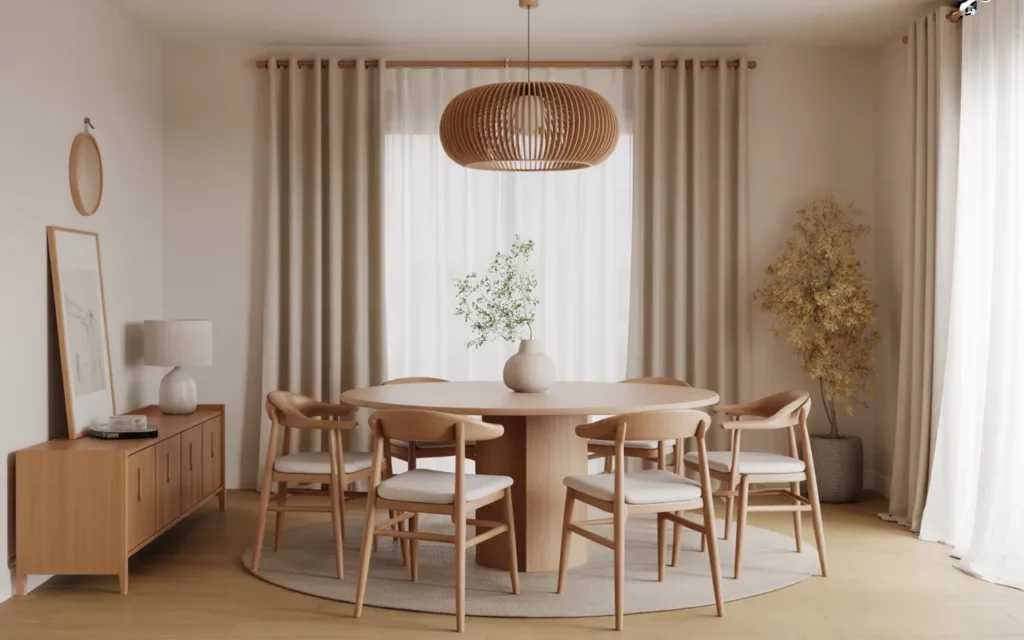
If you love interiors that feel calm, grounded, and effortlessly stylish, Japandi dining rooms are the perfect inspiration. This trend combines the clean simplicity of Japanese design with the cozy comfort of Scandinavian style. Expect natural woods, soft neutrals, and mindful decor that creates a space for connection and peace. Whether you’re redecorating or just exploring new aesthetics, these Japandi dining room ideas will help you design a beautiful, balanced, and timeless dining space you’ll never tire of.
1. Minimalist Wood Accents and Natural Textures
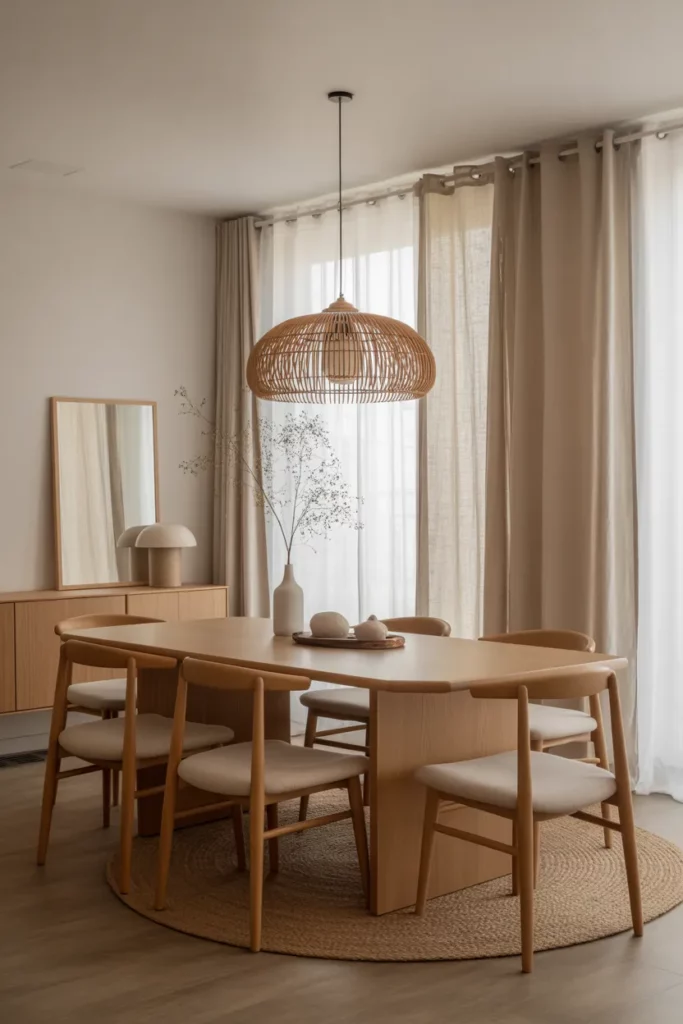
This Japandi dining room highlights the core essence of the style—simplicity and natural beauty. The light wood dining table pairs effortlessly with linen chairs and neutral decor, creating a calm and uncluttered atmosphere. The earthy tones and gentle lighting bring a soothing presence to the room, ideal for mindful dining experiences.
Natural textures like rattan, linen, and soft cotton add depth without overwhelming the space. To recreate this look, focus on functional furniture with clean lines and sustainable materials. The understated design invites comfort while maintaining elegance—a perfect example of Japandi minimalism done right.
2. Black Accents for Modern Contrast
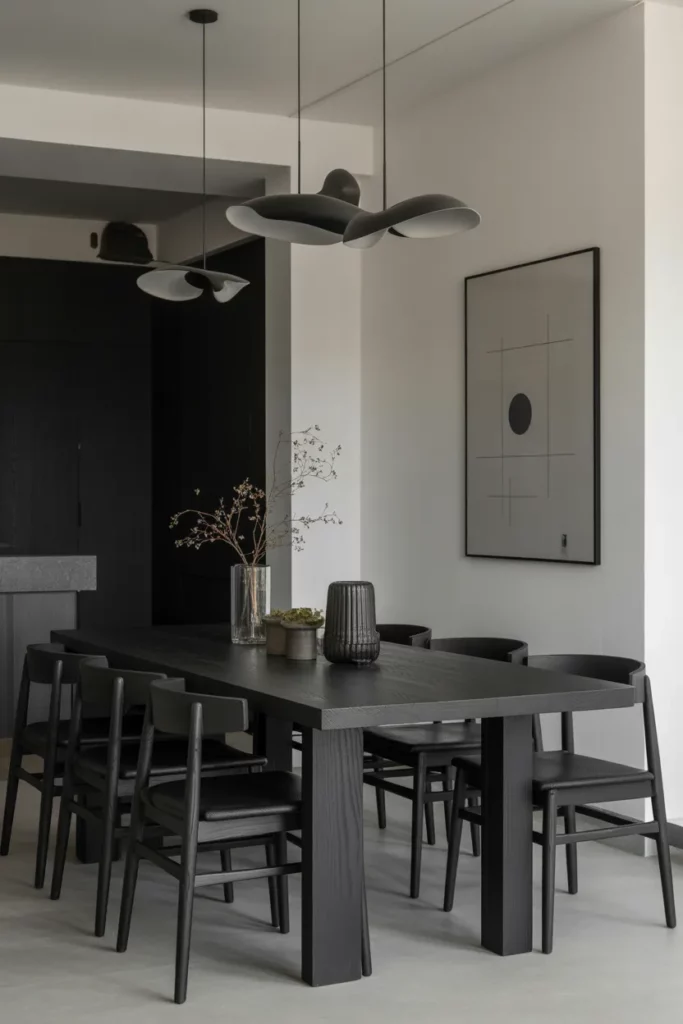
Introducing black accents adds a touch of modern sophistication to Japandi dining rooms. The contrast between light and dark tones enhances depth and balance while staying true to minimalist aesthetics. Black dining chairs and matte-finished tables make a bold statement without overpowering the calm vibe.
Incorporating sleek black pendant lights or framed wall art can help tie the look together. The key is moderation—too much contrast can disrupt the serenity. Keep the palette neutral and textures natural to maintain the warm, inviting energy that defines Japandi design.
3. Soft Beige Palette for Ultimate Calm
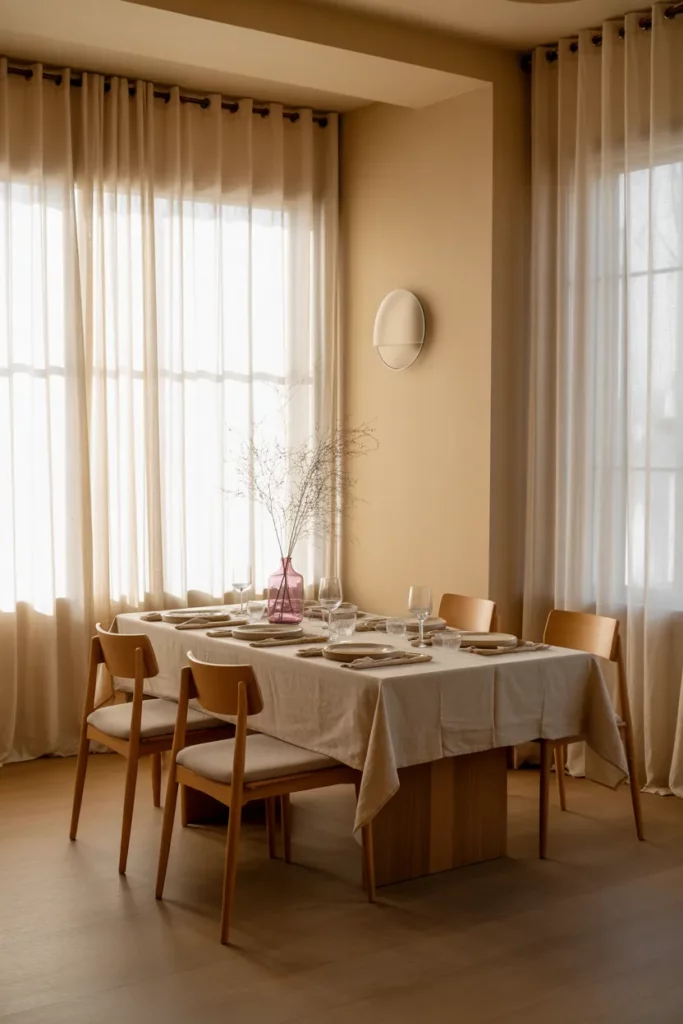
Beige serves as the perfect base color for Japandi interiors, evoking warmth, calmness, and timeless appeal. In this dining room, the neutral palette allows textures and natural light to take center stage. The combination of wood tones and beige linens creates a seamless flow that feels airy yet intimate.
To elevate the look, add handcrafted ceramics or soft cotton table runners. The muted palette promotes relaxation, making meals feel slower and more mindful. For anyone exploring Japandi dining room ideas, beige offers a balanced backdrop for layering organic elements.
4. Low Seating for a Zen-Inspired Feel
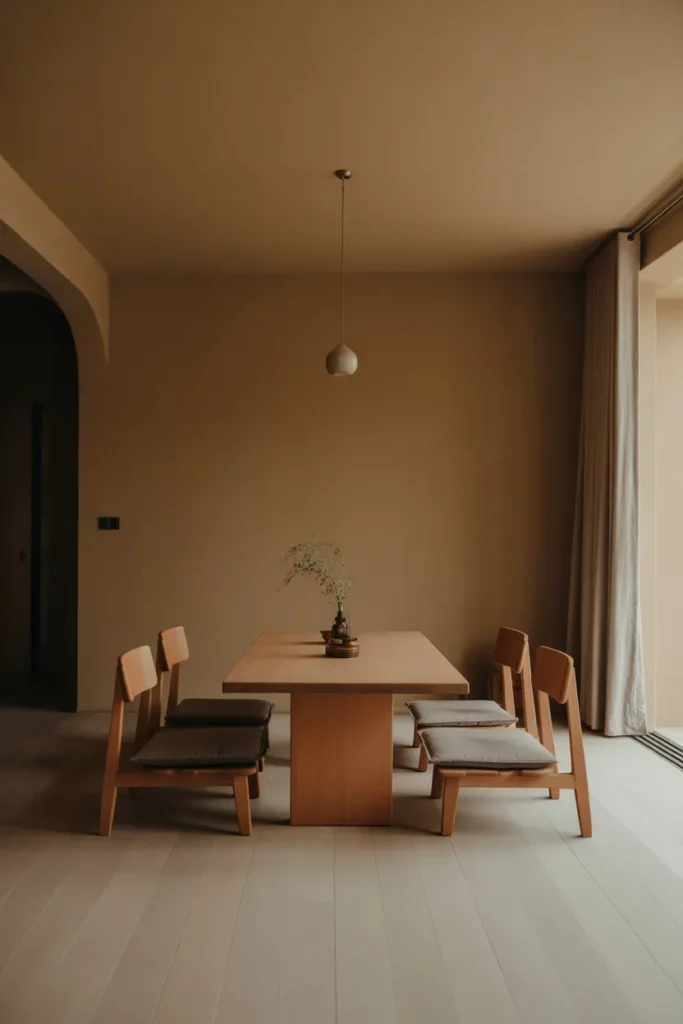
Low seating captures the essence of mindfulness, an essential element in Japandi aesthetics. This approach transforms dining into a grounded, intimate experience where design meets cultural harmony. The table’s clean geometry and soft-toned fabrics make the room both elegant and humble.
Pairing low chairs or cushions with natural rugs enhances tactile warmth. Opt for simple tableware and soft lighting to complete the zen-inspired mood. This setup invites guests to slow down and enjoy moments of calm—perfect for modern homes embracing Japandi style.
Love rustic charm? Don’t miss our Farmhouse Wallpaper Ideas for cozy, character-filled walls that complete your home look.
5. Muted Green Accents for Organic Charm
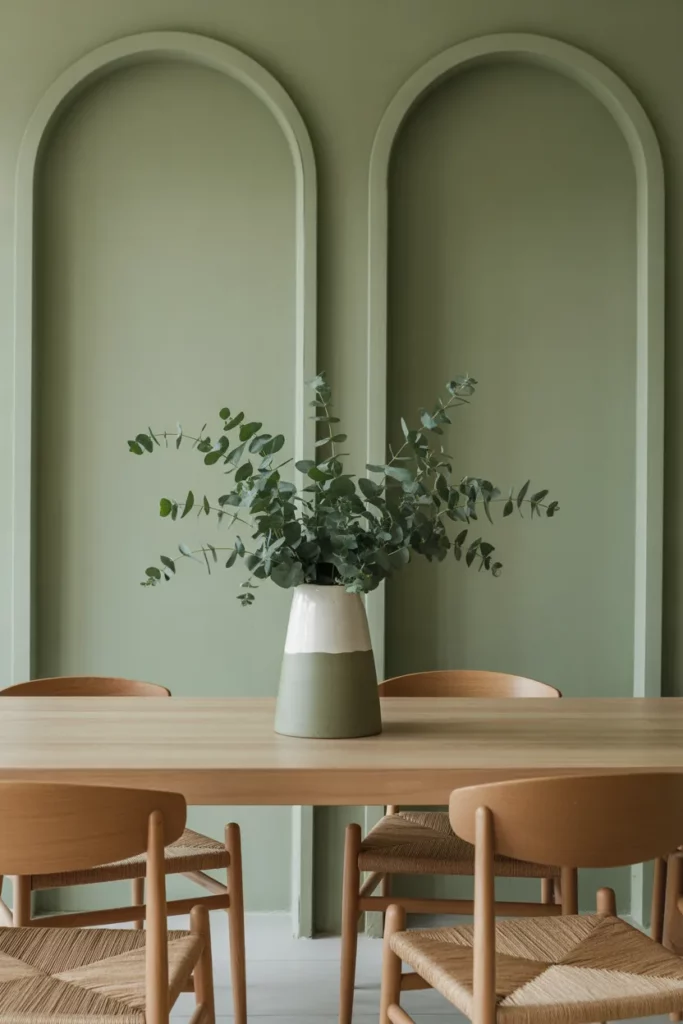
Muted greens like sage and olive add a hint of organic color without overpowering Japandi’s minimalist foundation. The blend of wood and greenery fosters a deep connection to nature, a cornerstone of both Japanese and Scandinavian design philosophies.
Adding plants, ceramic vases, or green-toned cushions can enrich the visual harmony. These accents breathe life into the space while keeping it calm and cohesive. When exploring Japandi dining room ideas, green is a great way to infuse tranquility with subtle vibrance.
6. Wabi-Sabi Dining Corners
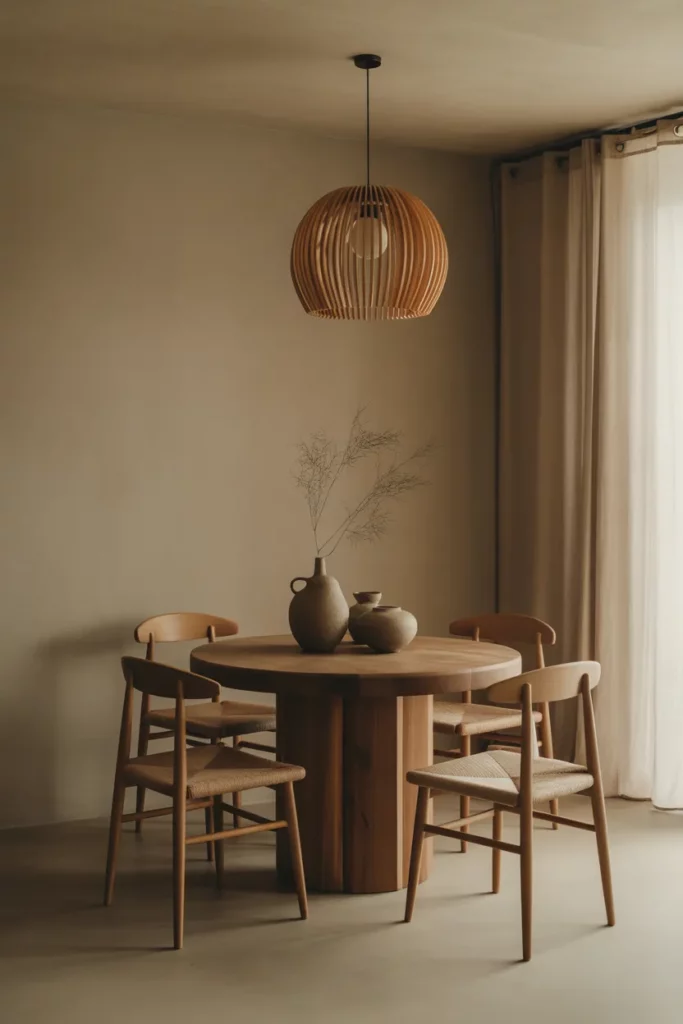
Wabi-sabi perfectly complements Japandi interiors by embracing imperfection and natural wear. In this dining space, the organic table surface and uneven ceramics tell a story of craftsmanship and soul. The raw simplicity evokes calmness while maintaining a lived-in charm that feels personal and meaningful.
Integrating rough textures and handmade pieces adds depth to your dining space. Think clay vases, uneven glaze tableware, and unpolished wood. These imperfections remind us of beauty in simplicity, making wabi-sabi an inspiring direction for your Japandi dining room ideas.
7. Scandinavian Lighting with Japanese Minimalism
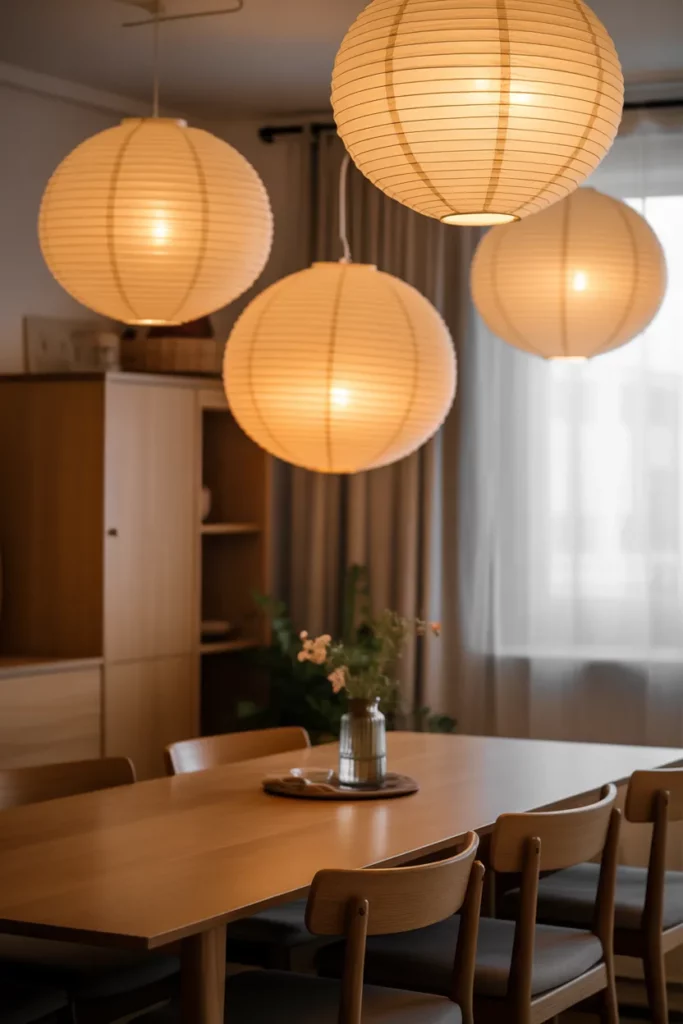
Lighting defines the mood in any Japandi dining space. Scandinavian lighting tends to emphasize warmth, while Japanese lanterns bring soft diffused light — together, they create a serene and intimate setting. The layered illumination complements the clean lines and muted palette beautifully.
Pendant lights made from paper, bamboo, or linen work exceptionally well. Combine natural materials with minimalist forms to maintain harmony. This lighting approach enhances visual comfort, aligning perfectly with Japandi’s philosophy of functional beauty and peaceful simplicity.
8. Clean Lines and Functional Design
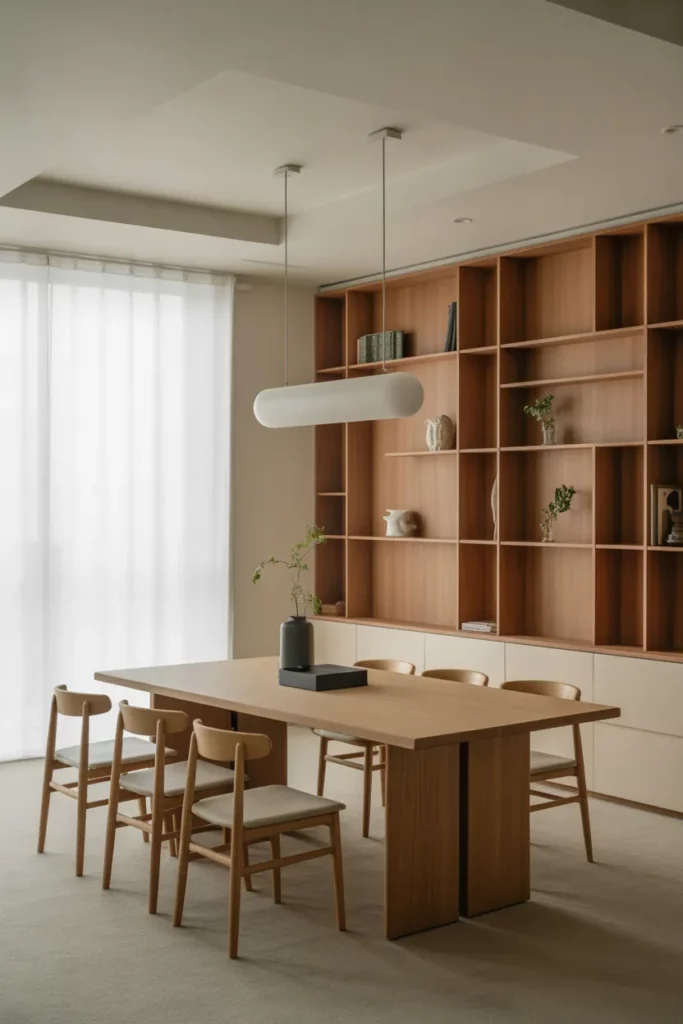
Japandi design thrives on simplicity and function. This space demonstrates that less truly is more — each piece of furniture adds value and balance. The clean lines and clutter-free layout reflect mindfulness and appreciation for open space.
To recreate this aesthetic, focus on high-quality materials and multi-functional furniture. Built-in shelves and hidden storage maintain order while preserving visual lightness. These clean, functional details make the space both beautiful and effortlessly practical — the heart of Japandi living.
9. Textured Neutrals and Layered Fabrics
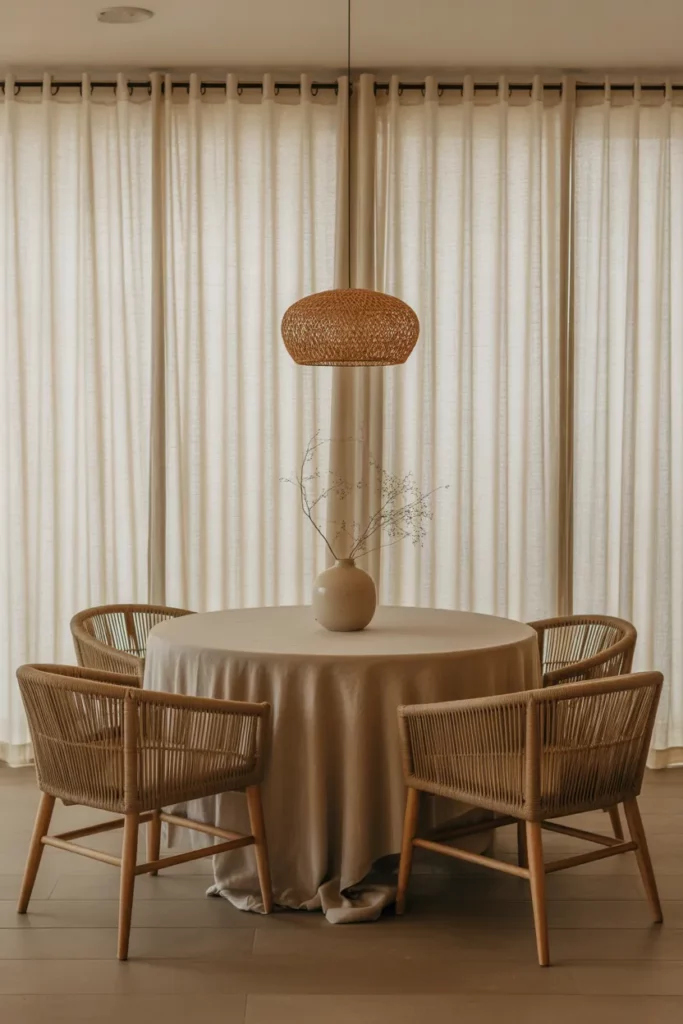
Layering textures is essential in Japandi interiors, especially when working with neutral color schemes. This dining setup uses natural fabrics like linen and cotton to introduce tactile comfort. The space feels grounded yet sophisticated, showcasing how minimalism doesn’t have to mean starkness.
Mixing rough and soft materials — like rattan chairs with linen drapes — builds cozy depth. The key is restraint: keep the palette cohesive and focus on natural fibers. The result is an inviting dining atmosphere that feels calm, organic, and timeless.
10. Natural Light and Open Spaces
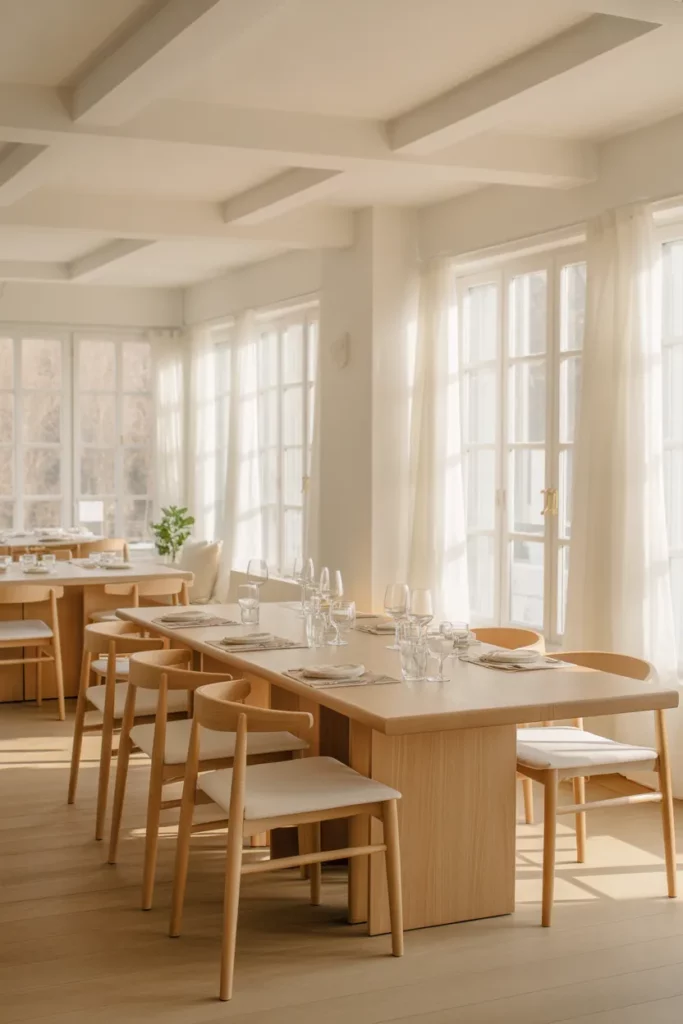
Natural light is a defining feature of Japandi design, creating spaces that feel connected to the outdoors. This dining area embraces openness, allowing sunlight to enhance wood tones and subtle decor details. The result is a space that feels tranquil and alive.
For homes with limited light, use sheer curtains and reflective surfaces to maximize brightness. Avoid heavy furniture that blocks visual flow. Light-filled spaces not only look beautiful but also evoke the calm essence central to Japandi dining room ideas.
11. Neutral Palette with Pops of Warm Wood
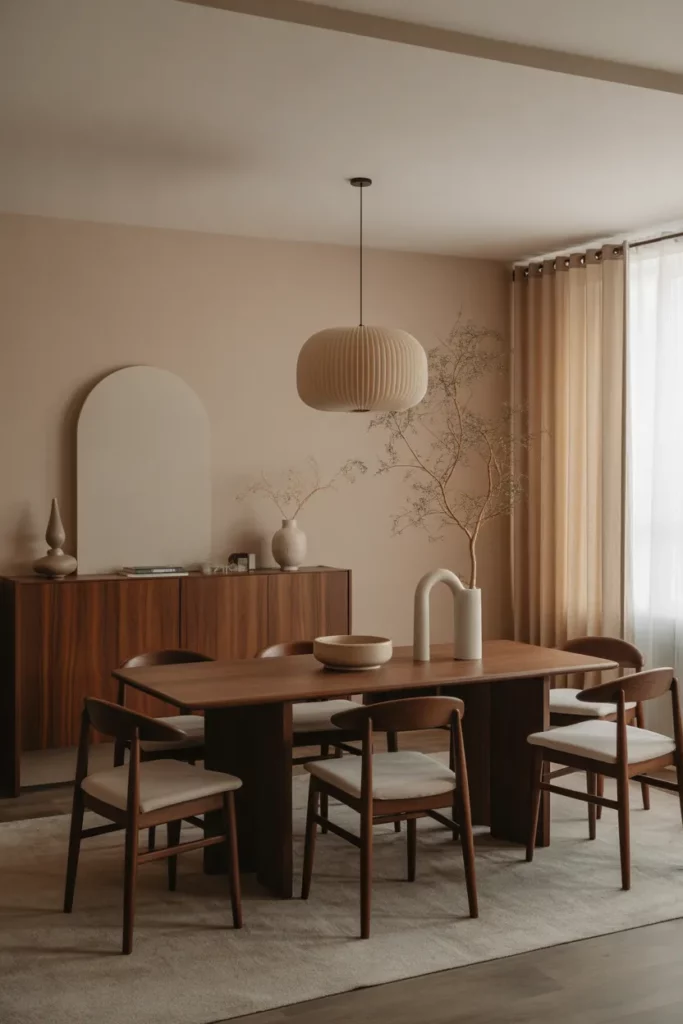
The blend of light and dark wood is a hallmark of Japandi interiors. It balances the airy brightness of Scandinavian style with the earthy grounding of Japanese design. This dining setup uses walnut chairs and oak flooring to create depth within a neutral palette.
Layering wood tones works best when each finish complements rather than competes. Keep other elements muted to let the woods shine. This simple yet thoughtful approach brings warmth, contrast, and a lived-in feel to your Japandi dining room.
12. Statement Lighting with Subtle Elegance
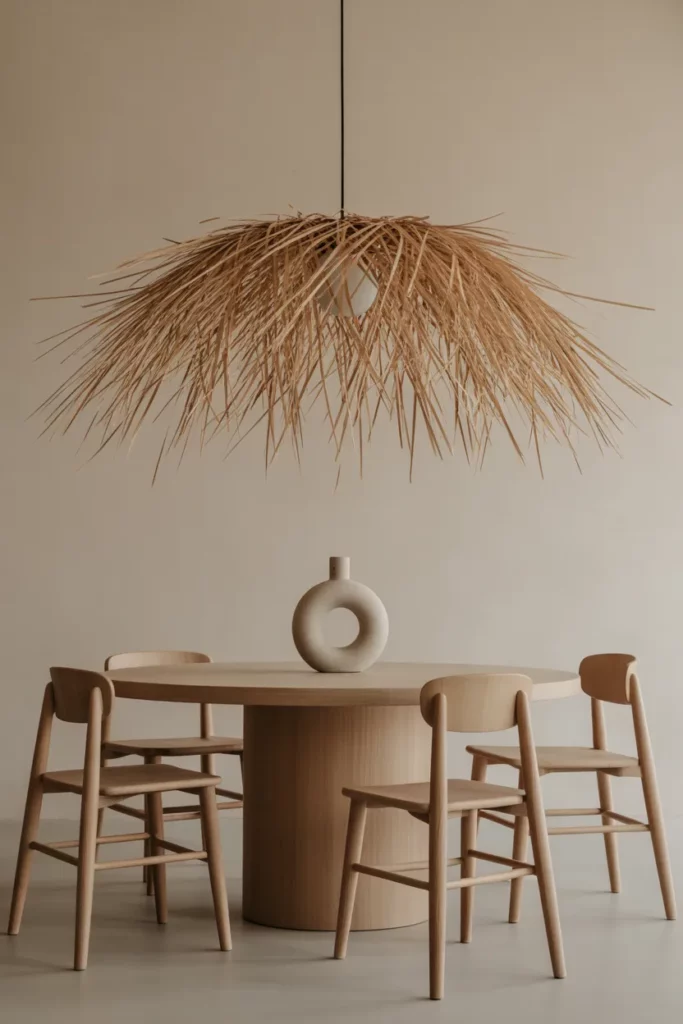
A statement light fixture can elevate a Japandi dining space without disrupting its calm. This woven bamboo pendant provides texture, warmth, and visual interest — all while aligning with the minimalist aesthetic. It draws the eye upward, emphasizing balance and proportion.
Opt for lighting that complements natural materials and forms — paper lanterns, linen shades, or bamboo weaves. The focus is on soft diffusion, not glare. A well-chosen light fixture enhances coziness and anchors your dining area in understated elegance.
13. Earthy Ceramics and Handcrafted Decor
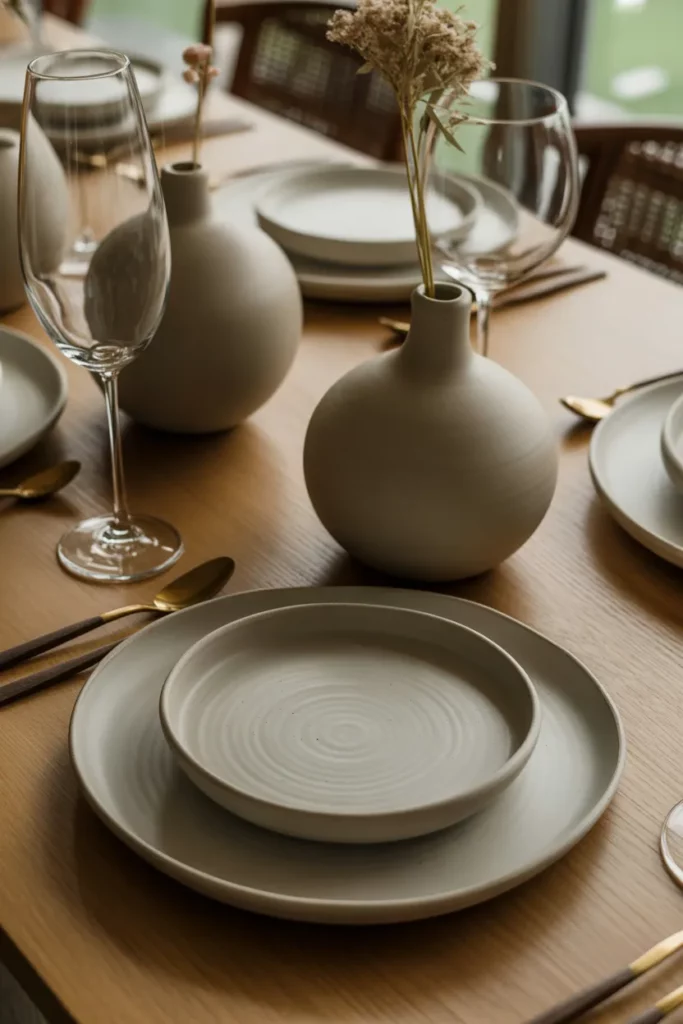
Handcrafted decor embodies the Japandi philosophy of authenticity and mindfulness. Each ceramic piece brings a sense of human touch to the minimalist setting, breaking uniformity with quiet character. These natural textures complement the calm energy of the dining space.
Mix pieces in neutral tones like sand, ivory, and stone gray for a cohesive look. Avoid overly polished finishes — matte and rough textures highlight craftsmanship. This approach transforms dining into a tactile, sensory experience grounded in simplicity.
14. Soft Curves for a Gentle Aesthetic
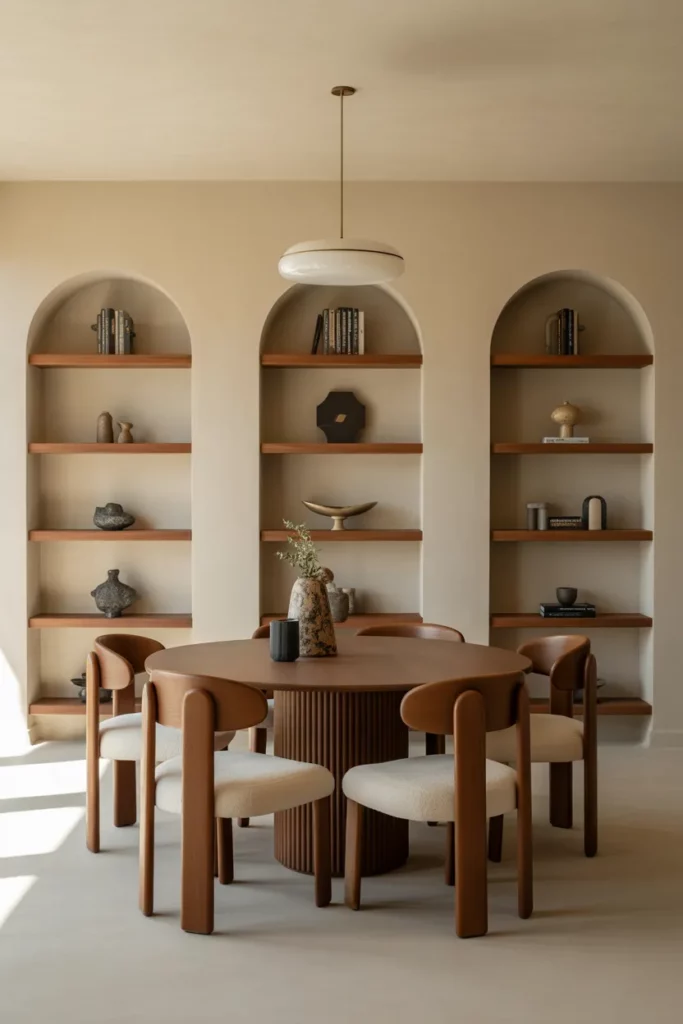
Curved furniture introduces a gentle, organic rhythm into Japandi interiors. Rounded edges soften the minimalist framework, promoting flow and comfort. This dining room demonstrates how subtle curves can make a space feel more welcoming and human.
Incorporate circular tables, oval mirrors, or arched lighting fixtures. These shapes reduce harshness and complement the natural materials used throughout Japandi design. It’s a simple yet powerful way to bring warmth and harmony to your dining area.
15. White Walls and Wood Tones Harmony
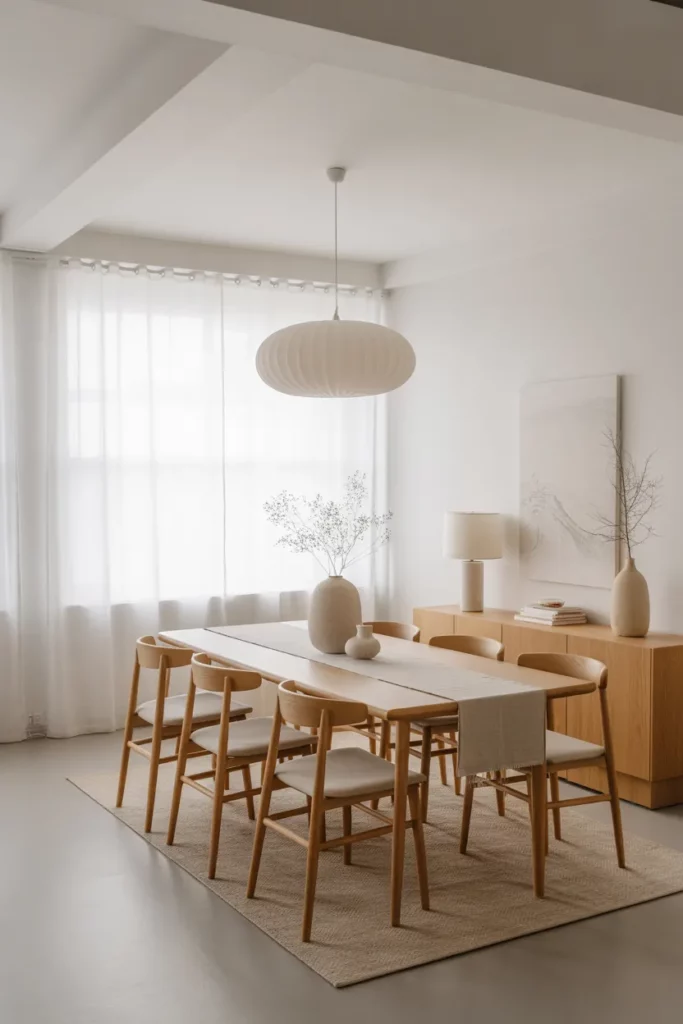
White walls serve as a clean canvas for Japandi interiors, allowing natural wood tones to take the spotlight. This combination of light and warmth defines the style’s balanced character — minimalist yet inviting.
Keep decor minimal and rely on natural accents to avoid sterility. White walls enhance light diffusion, while wood introduces organic comfort. Together, they form the perfect foundation for any Japandi dining room idea focused on clarity and calm.
16. Incorporating Nature Through Indoor Plants
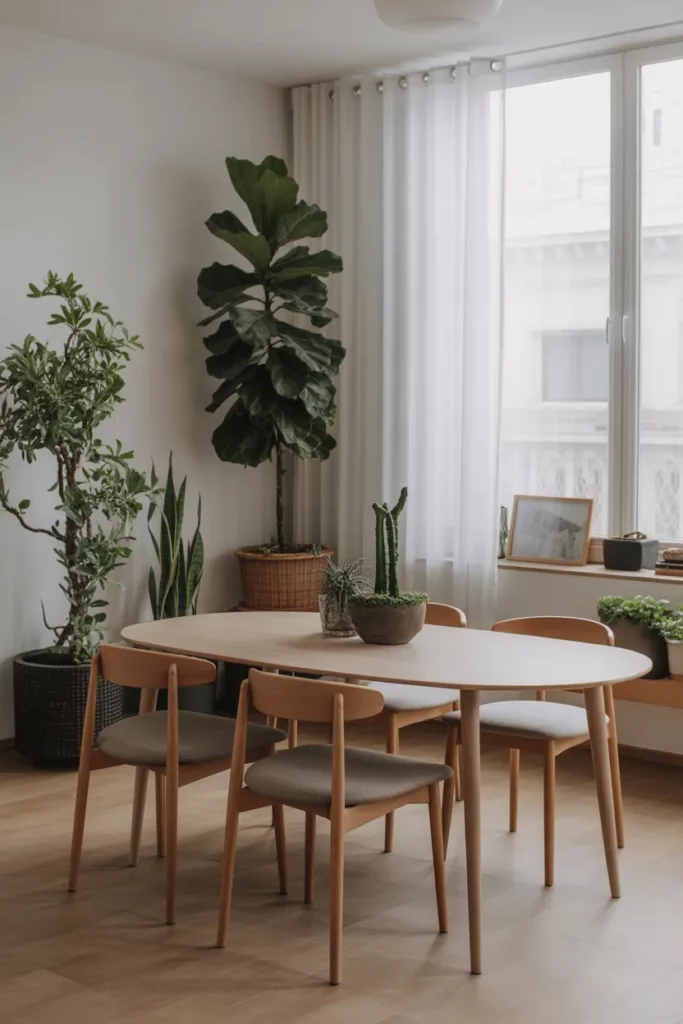
Adding plants instantly breathes life into a Japandi dining room. The natural greenery contrasts beautifully with wood tones and muted palettes, symbolizing harmony between nature and home. Each plant introduces color and texture while maintaining the calming simplicity that defines this design style.
Opt for low-maintenance plants like peace lilies, monsteras, or bonsai. Display them in simple clay or ceramic pots that complement your decor. Indoor greenery not only improves air quality but also strengthens the sense of serenity central to Japandi dining room ideas.
17. Open Shelving with Curated Simplicity
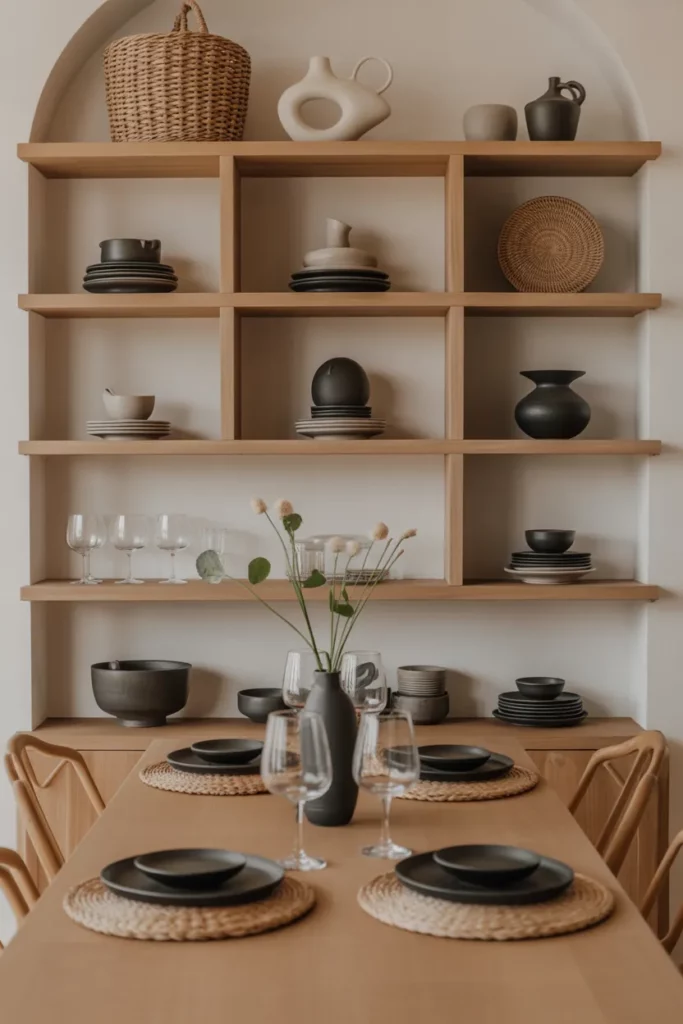
Open shelving is both functional and aesthetic in Japandi spaces. It allows for easy access to essentials while celebrating beautiful craftsmanship. The clean lines and natural materials of wood shelving enhance the organic flow of the room, keeping it uncluttered yet warm.
Keep only items that bring joy or serve a purpose. Curate ceramics, bowls, and utensils in a cohesive color palette. This approach turns storage into art and maintains the mindful simplicity that defines the Japandi aesthetic.
18. Cozy Nooks and Intimate Layouts
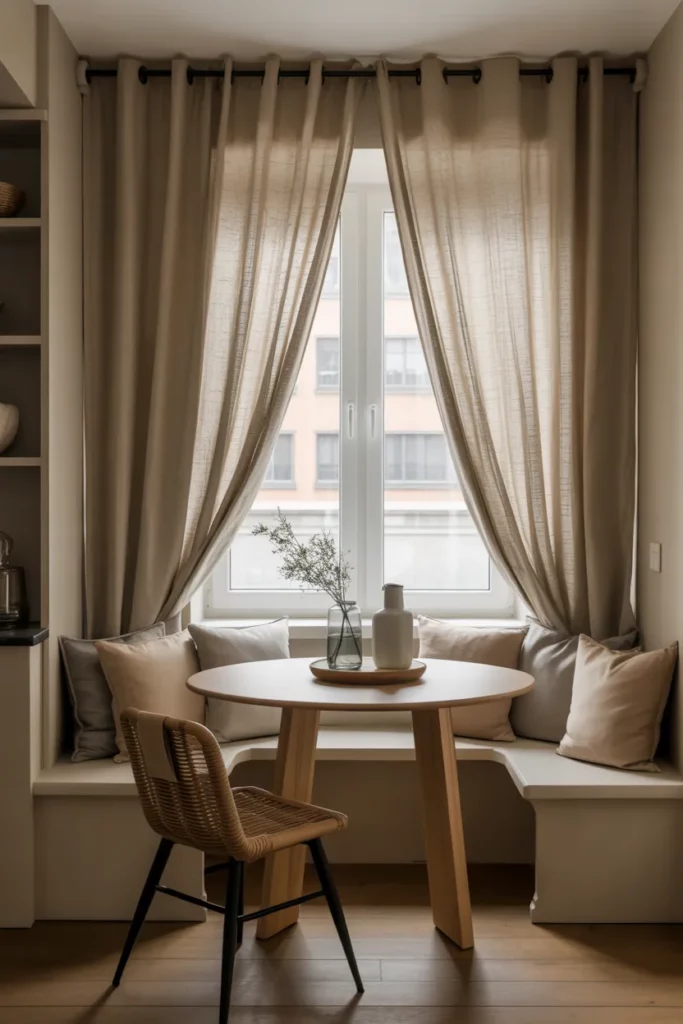
Japandi design thrives on creating cozy, purposeful corners. This dining nook embodies comfort through simple elements — a warm wood table, soft lighting, and natural fabrics. The intimacy of the layout encourages slow meals and meaningful moments.
For smaller spaces, round tables and bench seating maximize flow. Add soft textiles like seat cushions or throws for comfort. With its balance of coziness and simplicity, this setup makes the perfect example of relaxed Japandi dining room ideas.
19. Stone and Clay Accents for Organic Texture
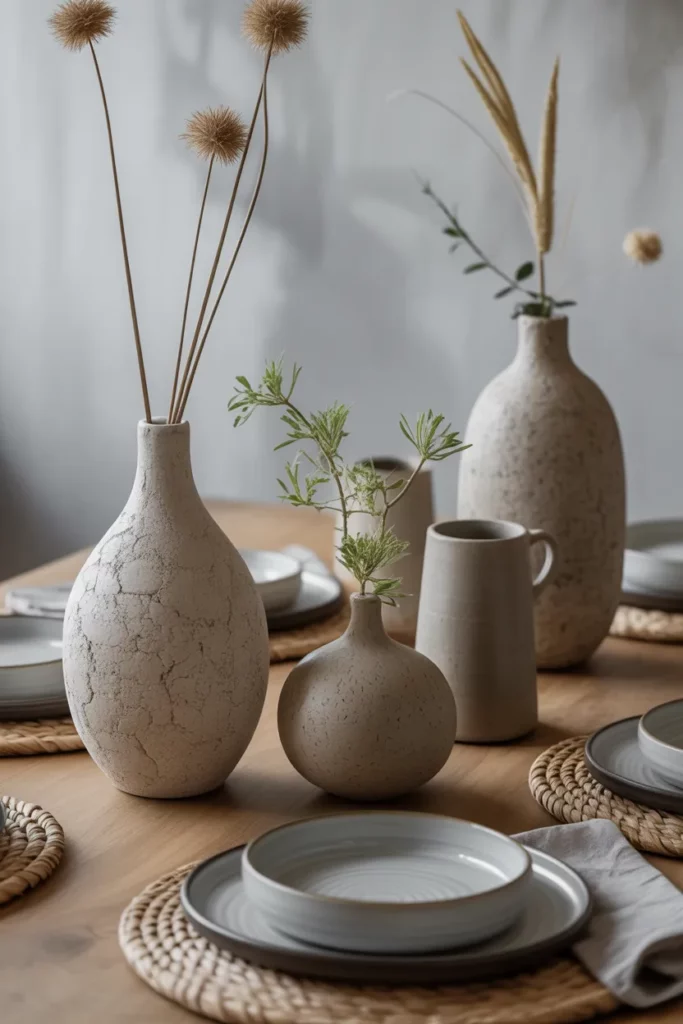
Natural materials like stone and clay add grounding elements to a Japandi dining space. Their tactile surfaces and neutral hues complement the clean lines and wooden tones beautifully. The raw, organic feel reinforces the connection between human design and nature.
Use a stone centerpiece, a clay vase, or handmade pottery to bring depth and authenticity. These subtle textures break up smooth surfaces, making the space feel lived-in and harmonious — key qualities of Japandi dining design.
20. Layered Rugs for Comfort and Warmth
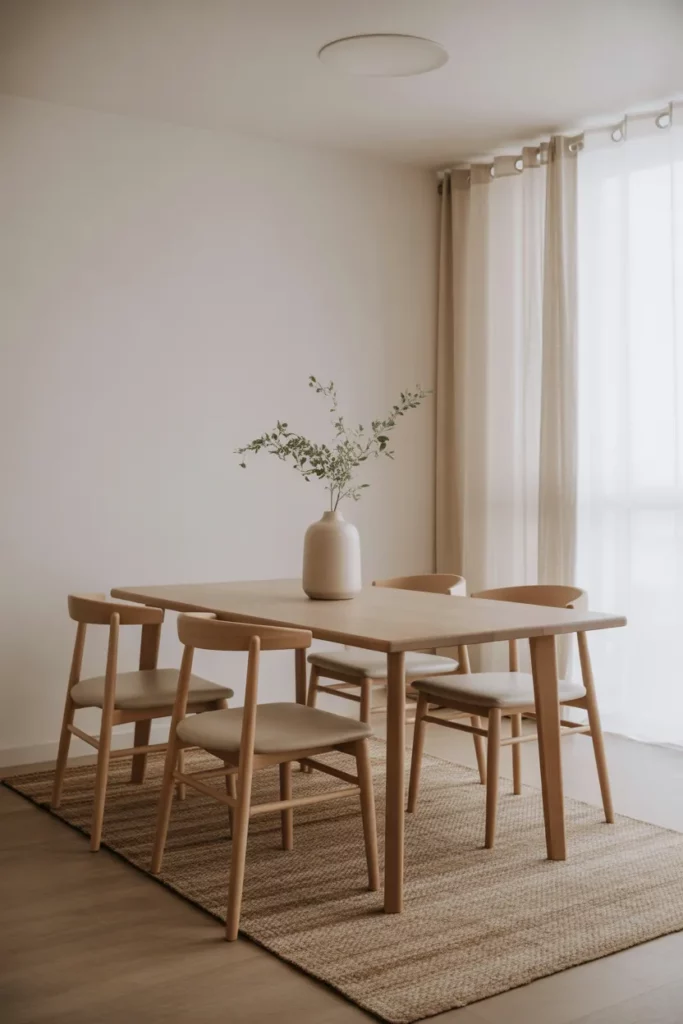
Layering rugs enhances warmth and defines the dining area within open-plan homes. Choose natural fiber options like jute, wool, or cotton for a grounded look. The tactile contrast between the rug and sleek furniture makes the space feel balanced and inviting.
Keep patterns subtle — focus on tone and texture instead. Light neutral rugs complement wooden furniture and natural lighting, reinforcing Japandi’s cozy, calm aesthetic. This simple touch transforms dining into a more comfortable, sensory experience.
21. Neutral Artwork for Balanced Serenity
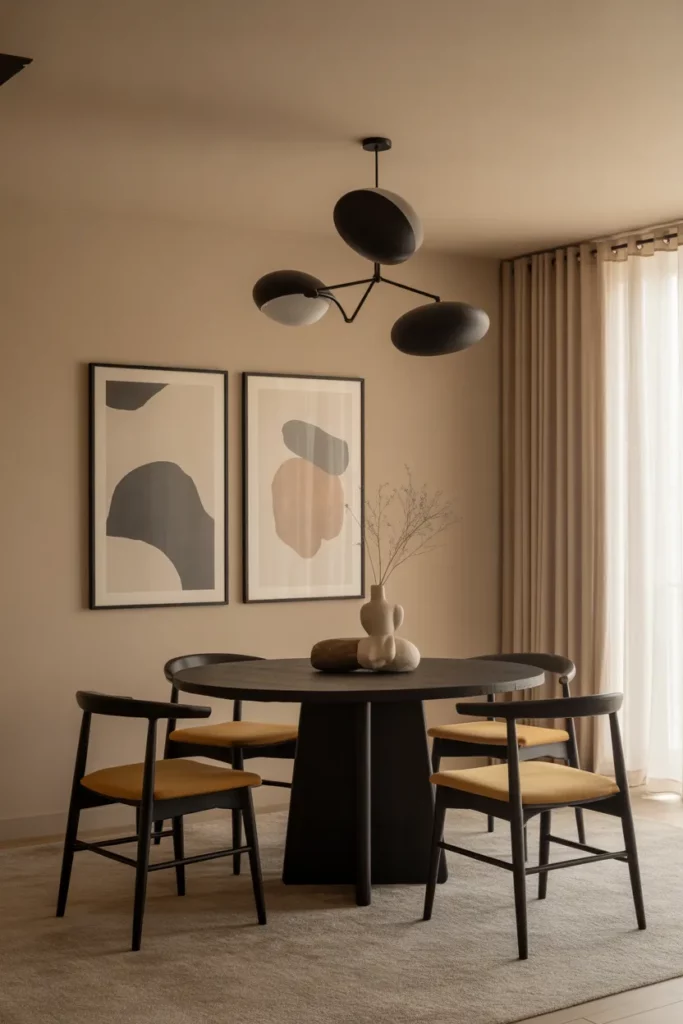
Artwork in a Japandi space should evoke calm rather than command attention. Choose abstract or nature-inspired pieces with soft, neutral tones to maintain balance. The goal is to enhance the overall ambiance, not to distract from it.
Framed art in natural wood or black borders blends seamlessly with minimal interiors. This thoughtful curation adds character while preserving the serene, uncluttered atmosphere central to Japandi dining room ideas.
22. Muted Blues for Coastal Calm
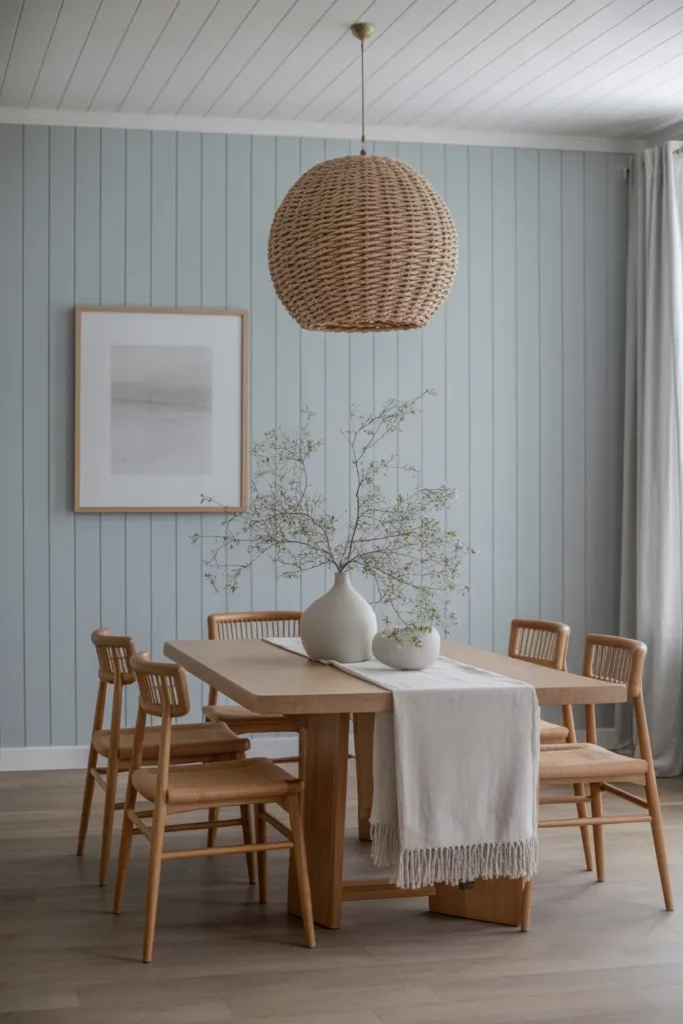
Muted blues complement Japandi design’s neutral palette by adding gentle color without overpowering. The cool tones evoke calmness, echoing nature’s sky and water elements. When paired with warm woods, the effect feels balanced and rejuvenating.
Incorporate blue through wall color, ceramics, or table linens for subtle vibrancy. The key is restraint — soft, dusty shades maintain tranquility while adding emotional depth. This palette works beautifully for coastal-inspired Japandi dining rooms.
23. Blending Old and New for Timeless Appeal
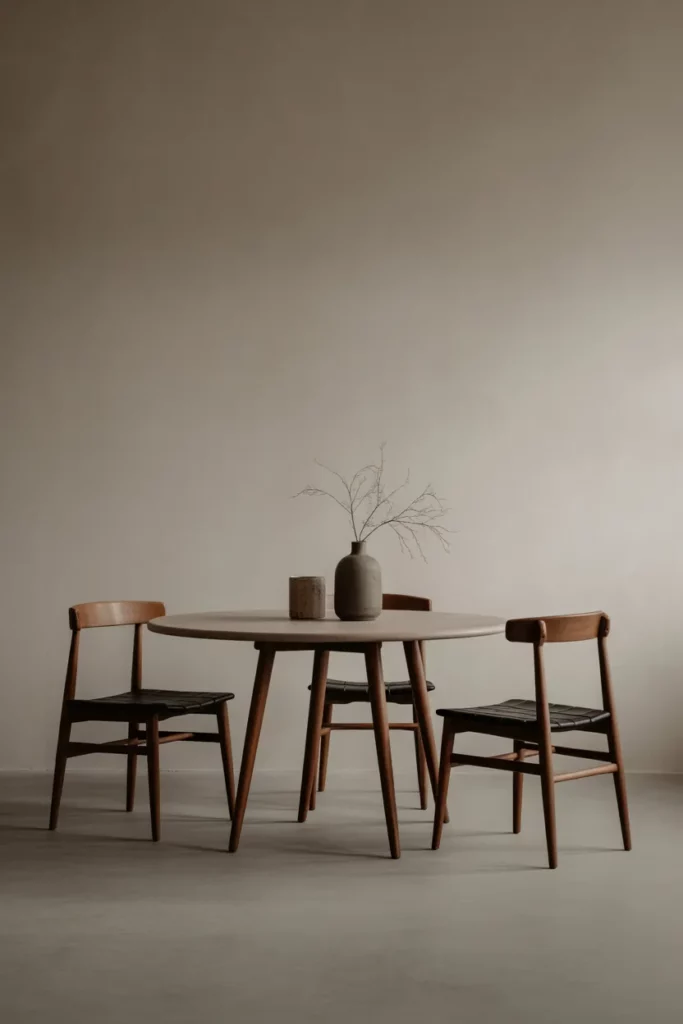
Japandi style thrives on contrast — old meets new, rough meets refined. This blend of vintage furniture and modern elements adds story and soul to the dining room. The patina of age complements clean design, embodying timeless character.
Mix inherited or thrifted pieces with minimalist modern ones. Keep finishes cohesive through neutral tones and natural materials. This approach makes your dining space feel curated and authentic, capturing the true spirit of Japandi dining room ideas.
24. Candlelight Dining for Evening Tranquility
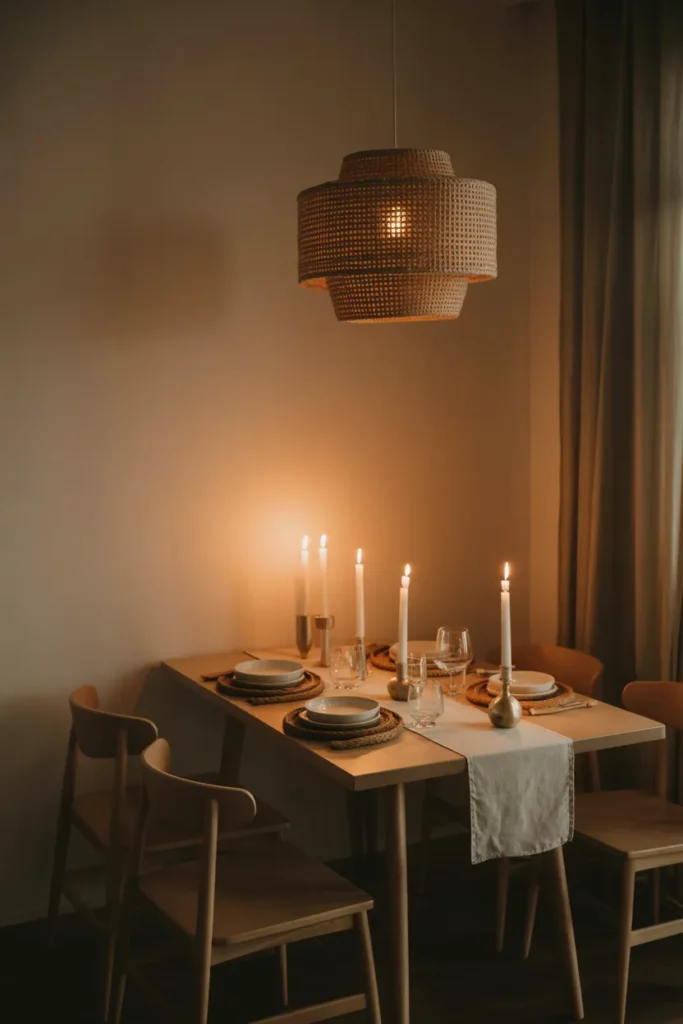
Candlelight beautifully complements Japandi’s focus on calm and mindfulness. The flickering light softens edges and enhances warmth, transforming ordinary meals into meditative moments. The natural flame echoes the organic simplicity of the style.
Use unscented candles in ceramic or glass holders for an authentic, minimalist touch. Paired with linen table settings and neutral decor, the atmosphere becomes effortlessly cozy and serene — a perfect closing note to your Japandi-inspired home.
Conclusion
Japandi dining rooms prove that simplicity and warmth can coexist beautifully. By combining natural textures, minimal lines, and earthy tones, you can create a dining space that feels serene and timeless. Whether you lean toward modern Scandinavian comfort or traditional Japanese calm, these Japandi dining room ideas bring harmony and intention into your home — perfect for every cozy gathering.