
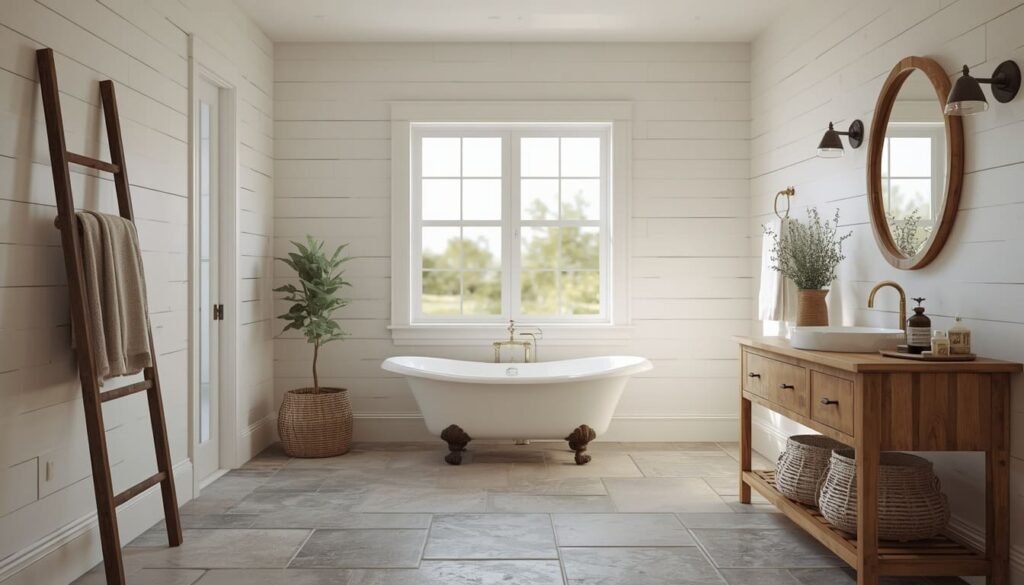
I’ve walked into more builder-grade bathrooms than I can count, and the second a homeowner mentions “farmhouse,” I already know we’re chasing something deeper than white paint and shiplap. It’s about a room that feels lived-in the moment you walk through the door, not staged for a photo shoot. After two decades of pulling these spaces together for clients across the Carolinas, I’ve learned which ideas hold up past the first year and which ones look tired by month six. So let’s get into the 15 farmhouse bathroom ideas I actually trust, the budgets behind them, and a few hard lessons I had to learn on someone else’s dime first.
My Design Notes
A few years back, I worked on a guest bathroom for a client just outside Charlotte, and it taught me more than half my portfolio combined. We went all in on the Pinterest farmhouse look, crisp white walls, matte black hardware, the works. My client loved it the day we finished, and honestly, so did I. Then six months passed, and I got the call every designer dreads: the faucet looked dirty, the grout had gone gray, and nothing we’d installed looked the way it had on day one. I drove over expecting the worst and found hard water spots etched into every black surface and humidity creeping into the white grout lines, since Charlotte summers are no joke on a bathroom that doesn’t have great ventilation. We ended up swapping that faucet for an oil rubbed bronze finish that hides water spots instead of broadcasting them, and I switched to a charcoal tinted grout that actually looks better with age instead of worse. I still use that bathroom as my go to example when a client tells me they want all white and all matte black without asking what their humidity levels look like first.
Mastering an Unforgettable Rustic Farmhouse Bathroom Retreat
1. Start With a Reclaimed Wood Vanity
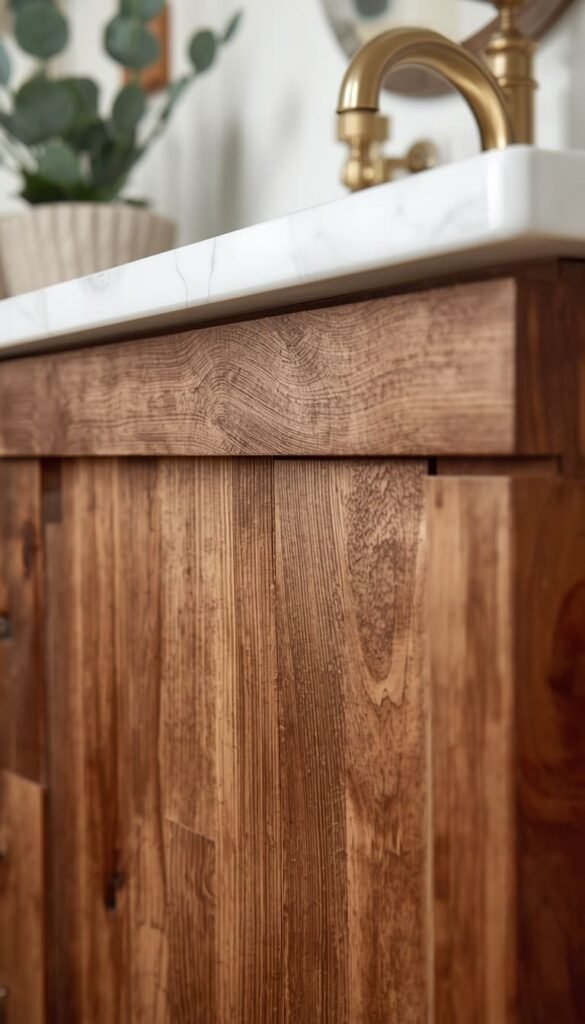
If I had to pick one upgrade that instantly reads “farmhouse,” it’s a vanity built from reclaimed wood. There’s a warmth to it that no amount of factory distressing can fake, every knot and water stain tells you it’s lived a life before it got to your bathroom. You can buy one pre-built from a specialty maker, repurpose an old dresser or buffet table, or have a local carpenter build one to fit your space exactly. Budget wise, a built-to-order piece typically runs anywhere from $800 to $2,500 depending on size and wood type, while a thrifted dresser conversion can land you the same look for under $300 if you’re handy with a drill.
2. Install Shiplap But Know Where to Stop
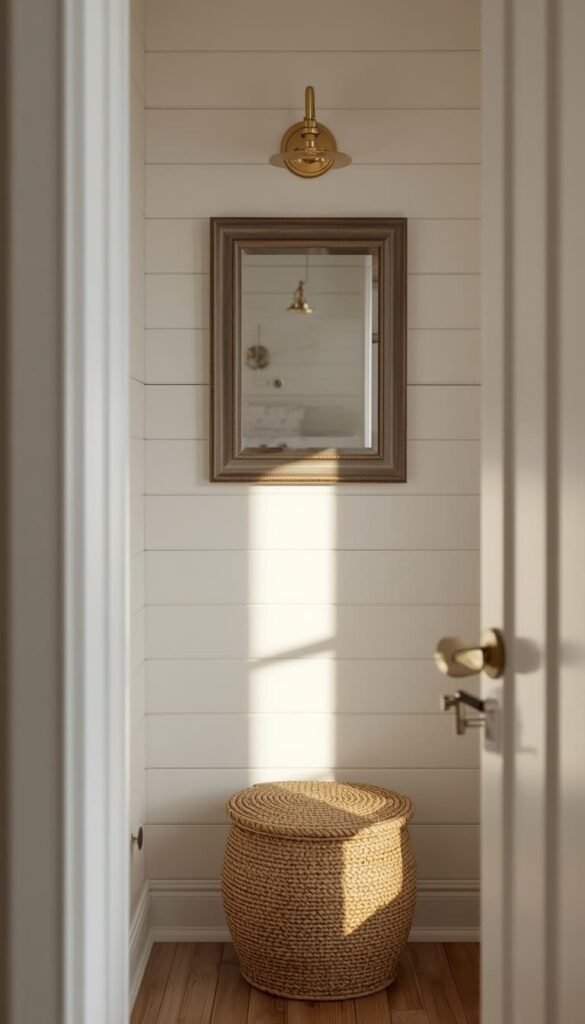
Shiplap is the workhorse of farmhouse design, and I still reach for it on almost every project. But I’ve also walked into bathrooms where every single wall, the ceiling, even the inside of a closet got the shiplap treatment, and it stops feeling cozy and starts feeling like a theme park version of a farmhouse. My rule of thumb is one accent wall or a wainscoting height treatment around the room, not full wall to wall to ceiling coverage. It keeps the texture interesting without tipping into costume territory, and it’s a lot easier on your wallet too.
3. Choose a Statement Clawfoot or Soaking Tub
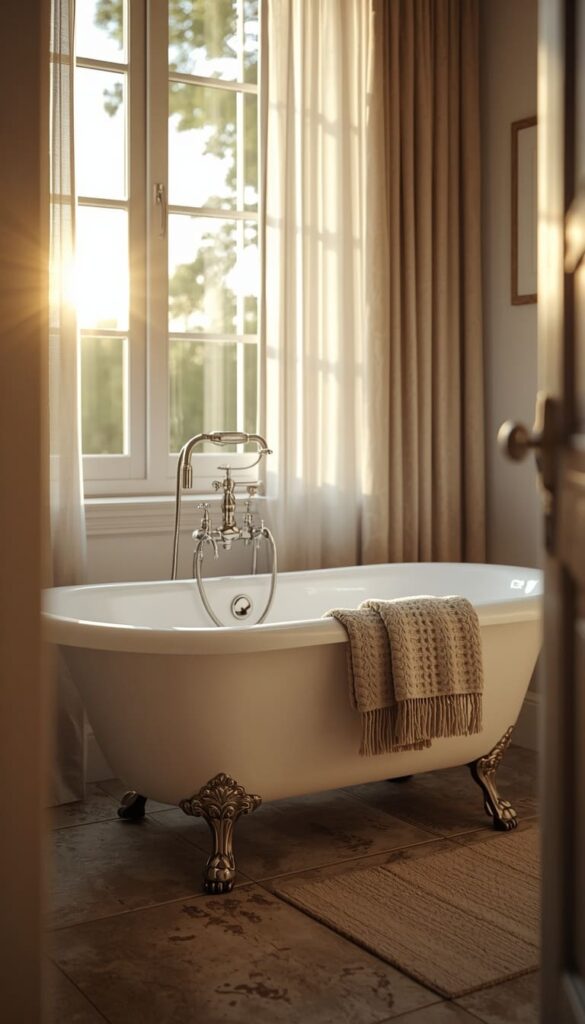
A great tub does more heavy lifting in a farmhouse bathroom than almost any other single piece. New cast iron clawfoot tubs generally start around $1,200 and climb from there depending on the finish, while a genuine antique one sourced from a salvage yard can sometimes be had for less, though you’ll want to budget for refinishing if the porcelain is chipped. A few things to weigh before you commit:
- Cast iron holds heat longer but weighs significantly more, so check your floor joists first
- Acrylic clawfoot versions cost less and are easier to install but don’t have the same substantial feel
- Copper tubs are gorgeous and develop a beautiful patina, though they’re the priciest option by far
4. Mix Metal Finishes the Right Way
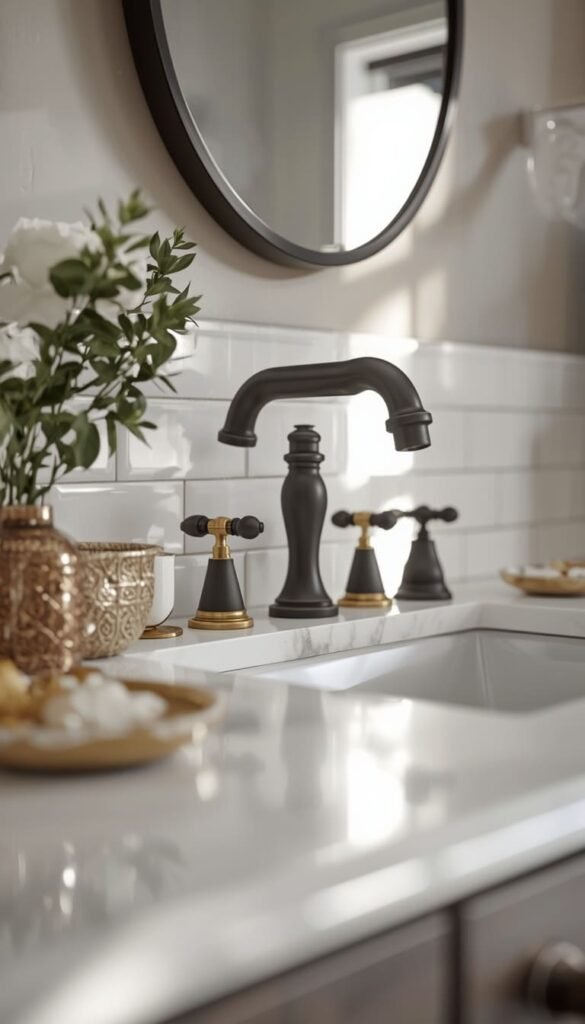
People get nervous about mixing metals, but in farmhouse design it’s actually part of the charm. The trick is sticking to two, maybe three finishes max so it reads intentional instead of accidental. I usually pair a black matte fixture as the anchor, brass or unlacquered brass for warmth, and let one of those carry through the lighting, hardware, and faucets so your eye has something consistent to follow. Going much beyond three finishes in one small room tends to make the space feel cluttered rather than collected.
If you had to redo just one room in your house this year, would it be this bathroom?
5. Go Bold With a Vintage Inspired Rug
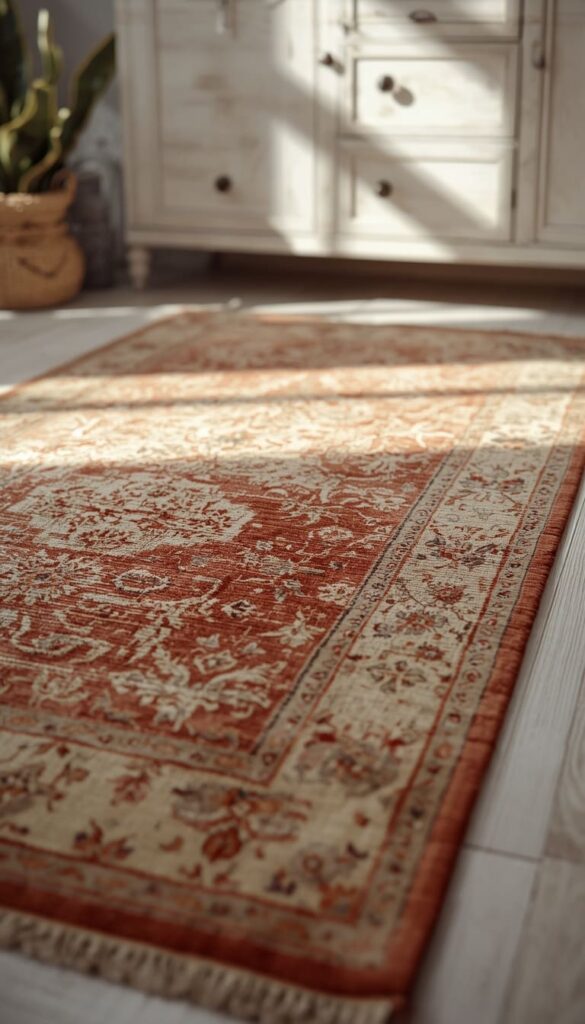
A faded, richly colored rug is one of the easiest ways to bring soul into a farmhouse bathroom without touching a single permanent surface. I love an antique Oushak or a vintage Turkish style runner in front of the vanity, it adds pattern and warmth against all that white tile and shiplap. One thing I always mention to clients with dogs or young kids though, is that these rugs are not low maintenance. Water splashes and muddy paws do not mix well with vintage wool, so if that’s your household, look for a washable reproduction instead. You get the same visual richness without babying it every single day.
6. Small Farmhouse Bathroom Hacks
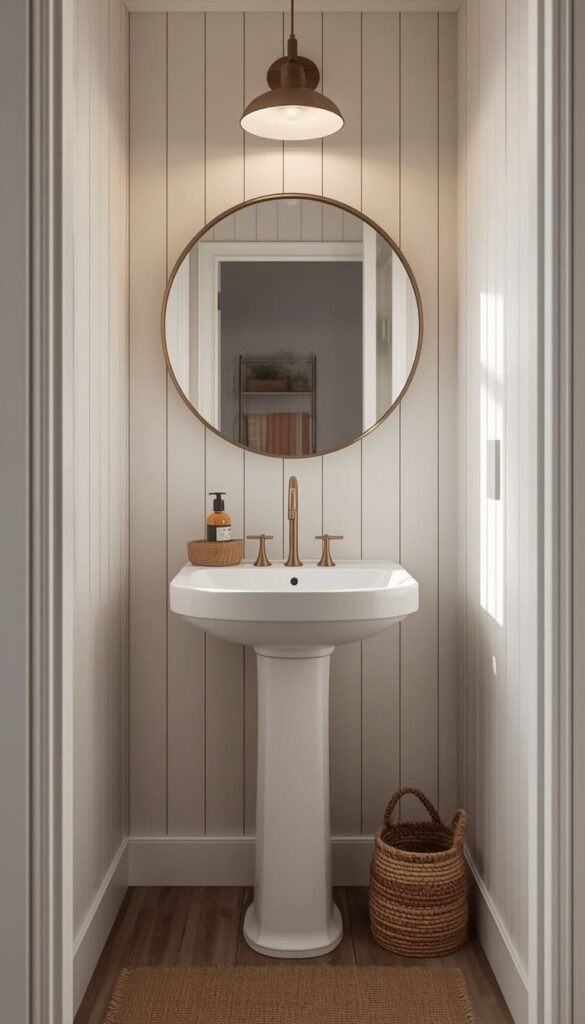
Working with a tiny footprint doesn’t mean giving up the look, it just means being more selective about which farmhouse elements earn their square footage. A pedestal sink instantly opens up visual space compared to a bulky vanity, and floating shelves above the toilet give you storage without eating into the floor plan. I’ve also had great luck with oversized mirrors that bounce light around and make a cramped powder room feel twice its size.
- Skip the full vanity and go pedestal or wall mount instead
- Use vertical shiplap, not horizontal, to draw the eye upward
- Hang a single statement light fixture rather than multiple smaller ones
Top 6 farmhouse bathroom ideas:
| Idea | Estimated Price | Maintenance |
|---|---|---|
| Reclaimed Wood Vanity | $300 – $2,500 | Medium |
| Clawfoot Soaking Tub | $1,200 – $4,000 | Medium |
| Shiplap Accent Wall | $3 – $7/sq. ft. | Low |
| Matte Black Hardware | $40 – $80 | High |
| Vintage Inspired Rug | $150 – $600 | High |
| Pedestal Sink (Small Bath) | $150 – $500 | Low |
7. Open Shelving Styling Formula
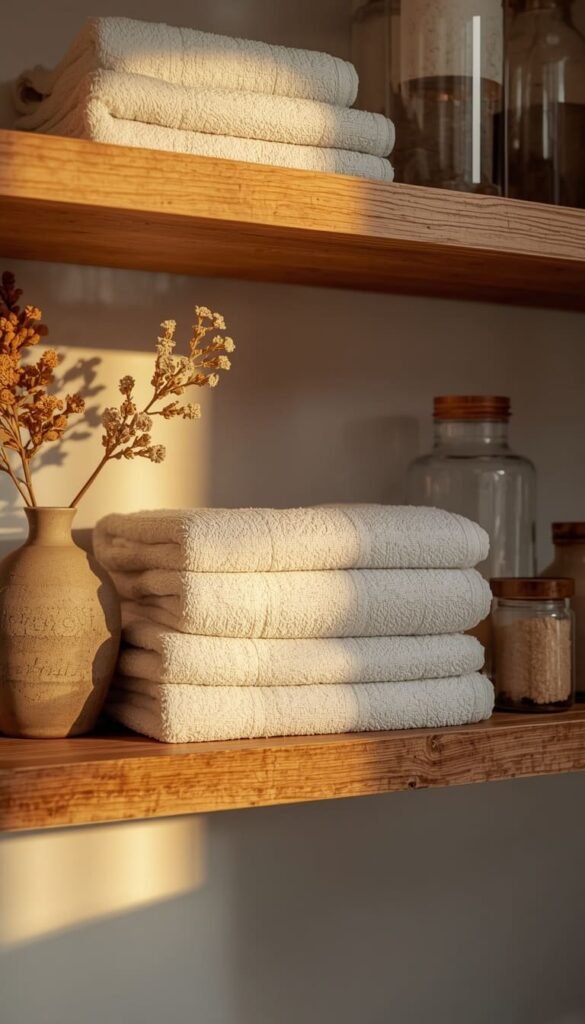
This is the part people either love or completely overdo. My go to formula is groups of three, a stack of folded towels, a single piece of greenery or dried botanical, and one object with a story, an old apothecary jar, a vintage tray, something that isn’t from a big box store. We learned this the hard way on a project in Raleigh where the client kept adding “just one more thing” until the shelf looked like a yard sale. Less really is more here, and leaving a little negative space actually makes the styled pieces stand out more.
8. Barn Door Pros and Cons
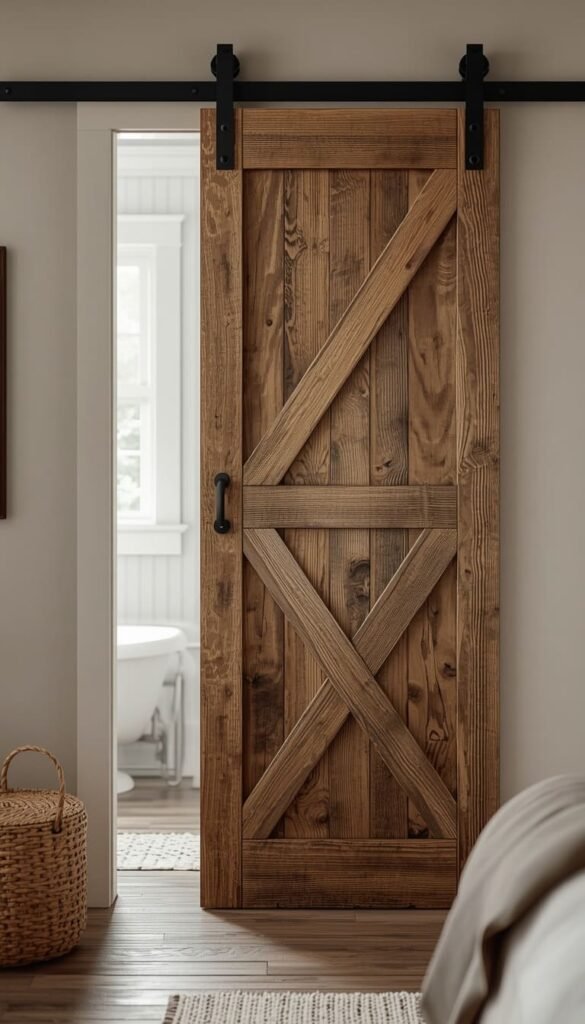
Barn doors are everywhere in farmhouse design right now, and I get why, they’re a striking architectural moment. But before you commit to one for a bathroom, there are a couple of practical issues worth thinking through honestly. Standard barn doors don’t fully seal, which means sound and odor travel more than a normal hinged door, and that’s a real consideration for a primary bathroom shared with guests. They also don’t lock in the traditional sense, so for a powder room off a busy living area, you may want a privacy latch added during installation. I still use them often, I just make sure clients know what they’re signing up for first.
Is your bathroom leaning more toward “starter farmhouse” or are you ready for the full investment remodel?
9. Budget Friendly Farmhouse Bathroom Updates Under 200 Dollars
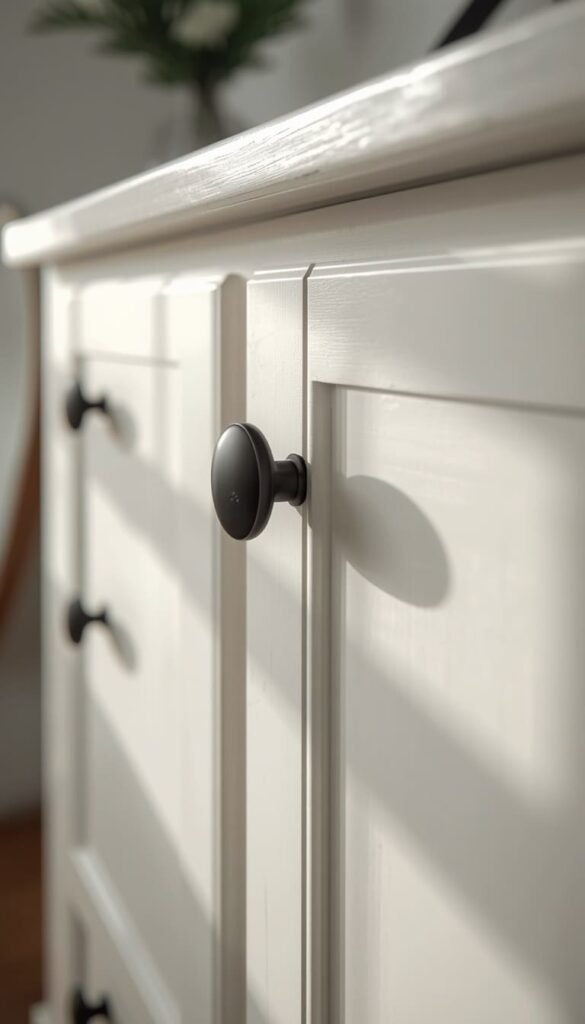
You don’t need a full renovation to get the look, and honestly, some of my favorite transformations have come from a single weekend and a tight budget. Swapping out builder grade hardware for matte black or aged brass pulls runs about $40 to $80 for a full vanity. A coat of paint on dated cabinetry, new towel bars, and a vintage mirror sourced secondhand can completely change the feel of a room for well under $200 total. This is also the route I recommend for renters, since almost everything here is removable when you move out.
10. Mid Range Remodel Ideas
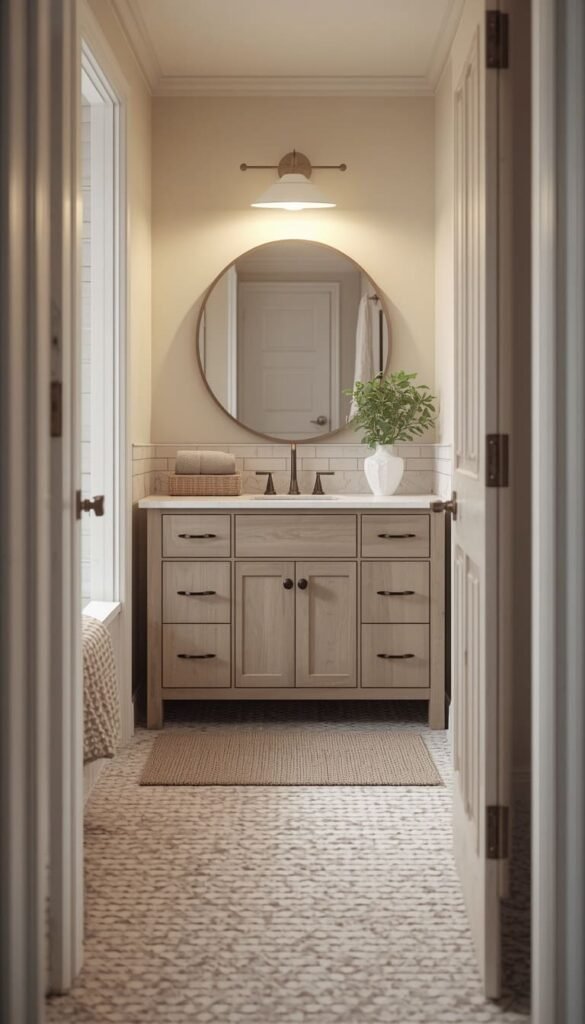
Once you’re ready to invest a bit more, somewhere in the $2,000 to $8,000 range opens up a lot of possibilities. This is typically where a vanity replacement, new tile flooring, updated lighting, and fresh paint all come together without touching plumbing locations. A quick trick I’ve learned on these projects is to keep your toilet and sink in their existing spots, moving plumbing lines is where mid range budgets quietly balloon into full remodel territory. Spend your money on finishes instead, and you’ll get a dramatically different looking room for a fraction of the cost.
11. Full Farmhouse Bathroom Remodel Investment
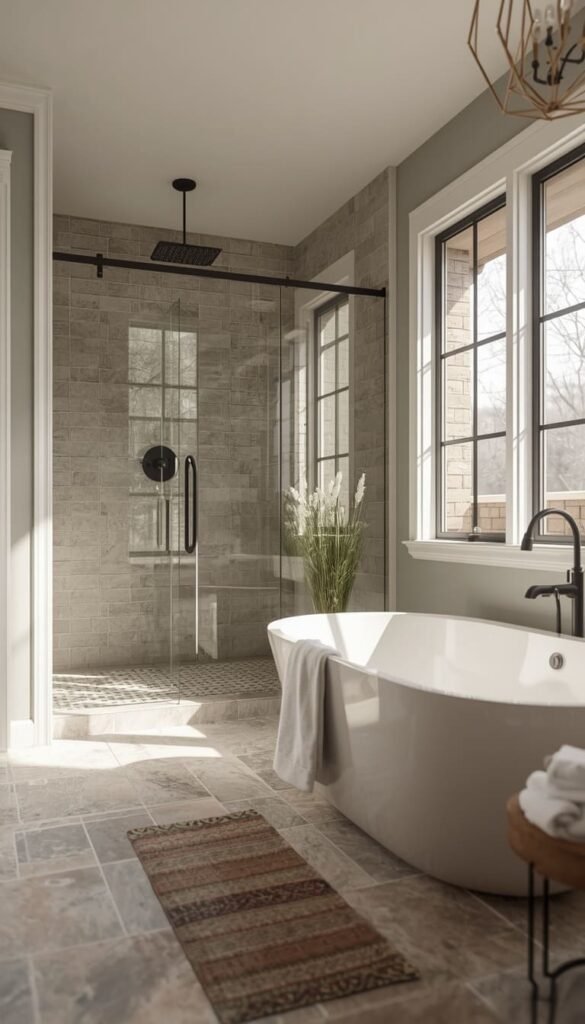
A complete gut renovation, new layout, new plumbing, custom tile work, a vintage style soaking tub, generally starts around $15,000 and can climb well past $30,000 in larger primary suites with high end finishes. This tier is where you get to be genuinely custom, built in shelving, a walk in shower with a barn door enclosure, radiant floor heating under that beautiful tile. It’s a bigger commitment, but for a primary bathroom you’ll use every single day for the next decade or two, I’ve found clients rarely regret going all in once they’ve made the decision.
Which one of these maintenance realities caught you off guard, the matte black or the white grout?
12. Lighting That Actually Works
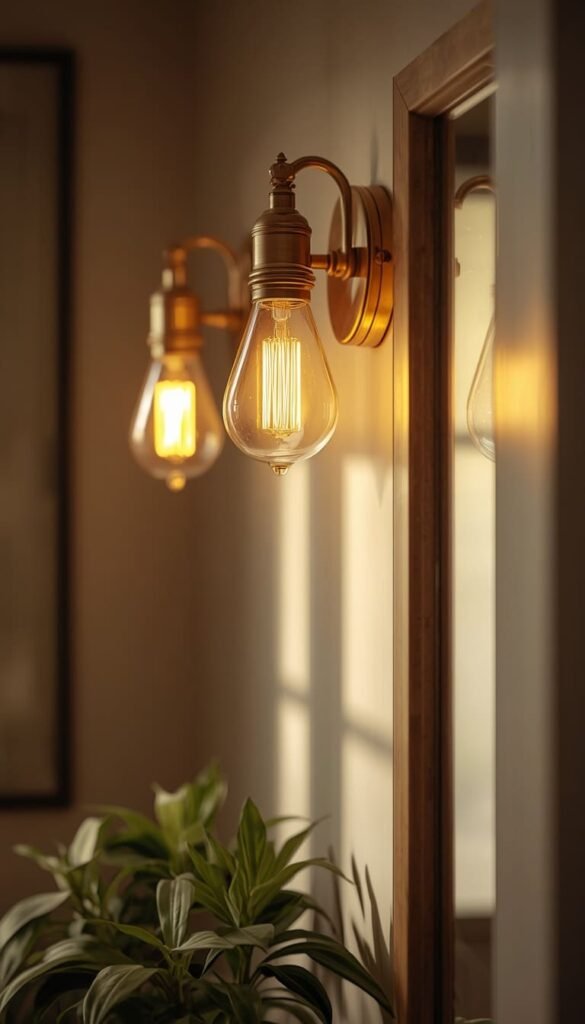
Lighting gets overlooked constantly, and it’s such a shame because it changes everything about how a farmhouse bathroom actually feels at 7am versus how it photographs at golden hour. I aim for sconces mounted at eye level on either side of the mirror rather than one harsh overhead light, it’s far more flattering and far more functional for actually getting ready. Warm white bulbs, somewhere around 2700K to 3000K, keep that cozy glow farmhouse style depends on, cool white bulbs will fight against every other warm element in the room.
13. Black and White Farmhouse Palette Done Right
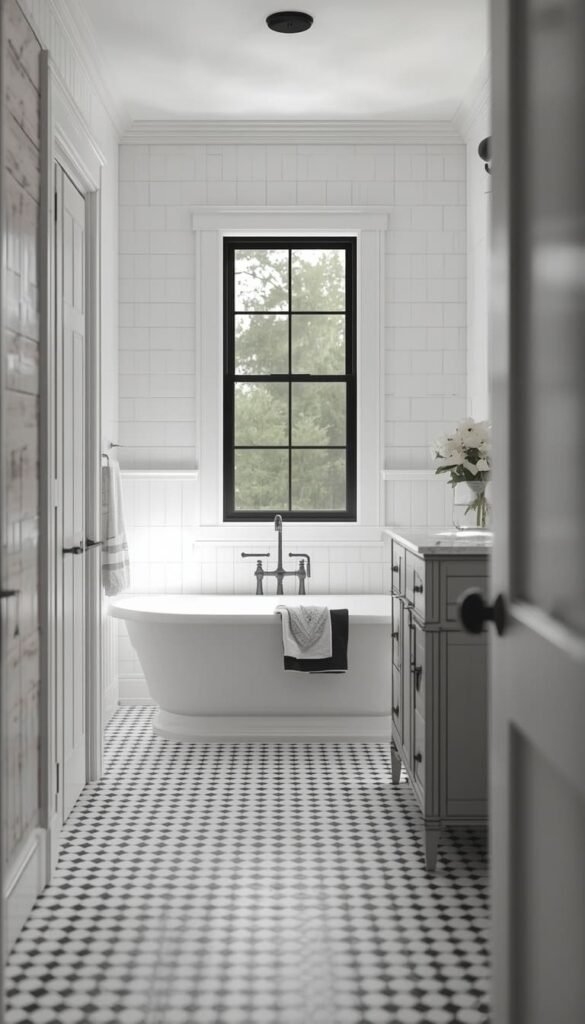
A black and white farmhouse bathroom can look incredibly sharp, but it’s also one of the easiest palettes to get wrong. The mistake I see most often is going fifty fifty, equal parts black and white competing for attention until the room feels busy instead of striking. My approach is roughly eighty percent white or off white as the base, with black reserved for hardware, window frames, or one bold tile moment like a checkerboard floor. That ratio keeps things crisp without veering into stark or clinical territory.
14. Storage Solutions Beyond the Vanity
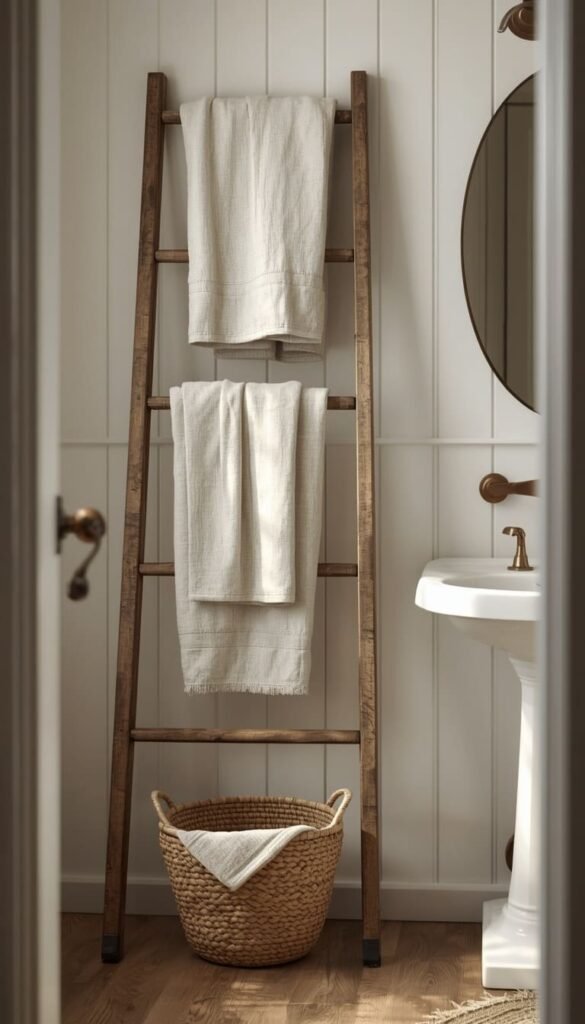
Farmhouse storage should feel collected, not built in, even when it’s doing serious functional work. A few of my favorites that consistently photograph beautifully and actually hold up to daily use:
- A vintage ladder mounted on the wall for hanging towels
- Woven baskets tucked under a pedestal sink for extra essentials
- A skirted sink with fabric concealing plumbing and hiding cleaning supplies behind it
These all add personality while solving the very real problem of where everything actually goes, since farmhouse bathrooms tend to favor open, airy layouts over closed cabinetry.
Got a small bathroom or a bigger primary suite, which path from the decision guide fits your space?
15. Maintenance Realities Nobody Tells You
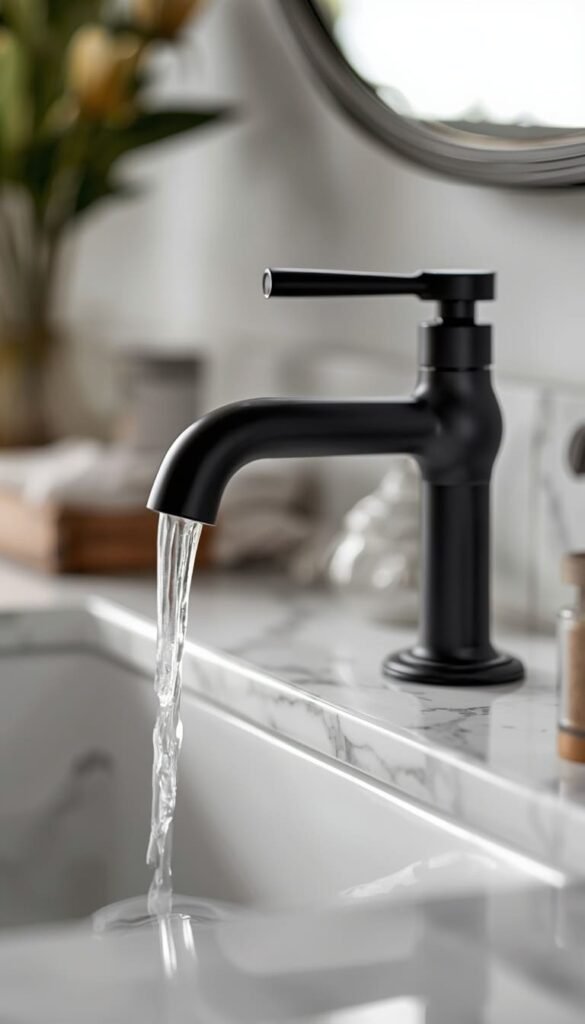
This is the section I wish more articles included, because the photos never show you what these finishes look like six months in. Matte black hardware is gorgeous, but it shows hard water spots more visibly than almost any other finish, so if you have hard water, wipe it dry after every use or consider oil rubbed bronze instead, which hides spotting far better. White grout in a humid bathroom without strong ventilation will gray over time no matter how often you scrub it, a charcoal or warm gray grout solves this before it becomes a problem. And reclaimed or unsealed wood vanities need a proper sealant in humid climates, otherwise you’ll see warping and cracking within a year or two. None of this means you should avoid these finishes, it just means going in with your eyes open so the bathroom still looks this good five years from now.
Which Path Is Yours?
By Budget
- Starter Farmhouse — Hardware swaps, a vintage mirror, fresh paint, a styled open shelf. Weekend project, under $300.
- Mid Range Refresh — New vanity, updated tile, better lighting. Plan for $2,000 to $8,000.
- Full Investment Remodel — Custom tub, layout changes, built ins. Budget $15,000 and up.
By Lifestyle
- Small Spaces — Pedestal sink, vertical shiplap, floating shelves, one statement mirror.
- Busy Families — Skip the vintage wool rug, go washable. Choose oil rubbed bronze over matte black for fewer water spots.
- Renters — Removable hardware, peel and stick options, vintage decor pieces you can take with you.
- Design Purists — Reclaimed wood vanity, clawfoot tub, full commitment to mixed metals and antique sourcing.
Frequently Asked Questions
How much does a farmhouse bathroom remodel cost?
The average full remodel runs between $15,000 and $30,000 depending on tub style and tile choices. Smaller cosmetic updates can come in under $500 if you stick to paint and hardware.
What colors are best for a farmhouse bathroom?
Soft whites, warm taupe, and sage green work best as your base. Black and navy make great accent colors but shouldn’t cover more than twenty percent of the room.
Is shiplap outdated for bathrooms in 2026?
No, it’s still going strong, but full wall coverage is starting to feel dated. One accent wall keeps it fresh.
What’s the difference between modern farmhouse and rustic farmhouse?
Modern farmhouse leans lighter, with crisp white walls and newer finishes. Rustic farmhouse uses darker, weathered wood and antique pieces throughout.
Can I do a farmhouse bathroom in a small space?
Absolutely, a pedestal sink and vertical shiplap make small bathrooms feel larger. Skip bulky vanities and oversized tubs in tight layouts.
Conclusion
Your bathroom doesn’t need a thirty thousand dollar budget to feel like a retreat, it just needs one honest decision made today. Clear off a shelf, grab a paint sample, swap one piece of hardware, whatever feels doable this weekend is the right place to start. Small spaces hold big potential, and I’ve watched enough projects come together piece by piece to know momentum matters more than perfection. So tell me, which one of these fifteen ideas are you tackling first?
