
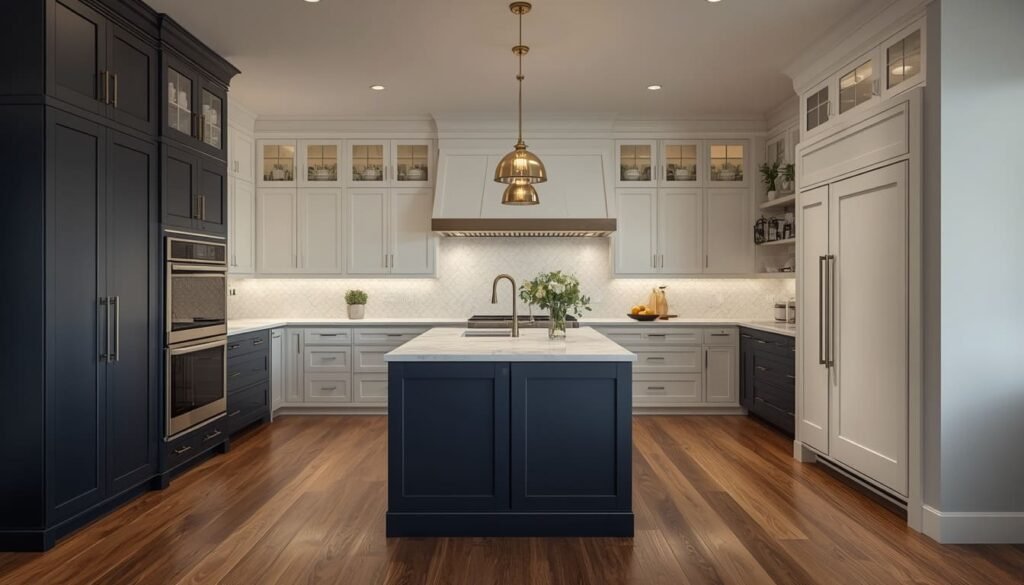
Most people don’t have a bad kitchen they just have a poorly planned one. I’ve walked into hundreds of homes across the US where the bones were beautiful, the budget was reasonable, and yet the kitchen still felt like it belonged to someone else’s house. The difference between a kitchen that looks expensive and one that just looks “updated” almost always comes down to the plan not the price tag. In this guide, I’m sharing the exact kitchen remodeling plans I use with my own clients, from first-budget conversations to final hardware pulls. Whether you’re working with a tight galley or a sprawling open-concept space, this is the roadmap that gets results.
My Design Notes
A few years ago, I worked with a client in Alexandria, Virginia a working mom of three with an $18,000 budget and a 1990s galley kitchen that hadn’t been touched since the Clinton administration. She came to me with a Pinterest board full of $80,000 kitchens and a very real fear that her budget wouldn’t get her anywhere close. My first move was to talk her out of spending $7,000 on quartz countertops right away. Instead, we redirected that money into custom cabinet painting in a warm sage green, a continuous slab backsplash that looked like a million dollars, and a set of unlacquered brass pendant lights above the sink. We finished with $340 worth of brass hardware pulls across every single cabinet and drawer. Total spend: just under $17,500. At her first dinner party after the reveal, three guests assumed she had done a complete gut renovation. She hadn’t. We just had a plan and that plan was smarter than the budget.
Proven Kitchen Renovation Strategies That Turn Ordinary Spaces Into Stunning Custom Kitchens
1. Why Most Kitchen Remodeling Plans Fail Before Demo Day Even Starts
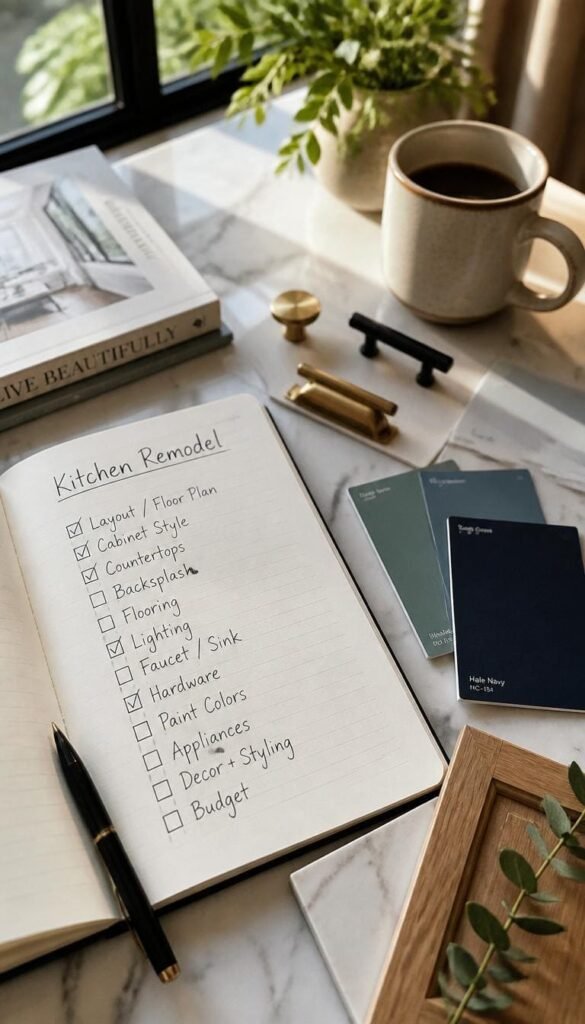
Here’s something I tell every single client before we touch a single cabinet door: the kitchen doesn’t fail during the renovation it fails during the planning stage. Or more accurately, the lack of one. I’ve seen homeowners spend $30,000 and end up with a kitchen that feels just as frustrating as the one they tore out, simply because they skipped the strategy and jumped straight to picking tile samples.
The most common trap I see? Falling in love with an aesthetic before understanding the space. You can’t pin your way to a functional kitchen. A beautiful kitchen that doesn’t work for how you actually cook, clean, and move is just an expensive disappointment with good lighting.
Before anything else, ask yourself three things:
- What genuinely bothers me about my current kitchen every single day?
- Am I changing the layout, or just updating the finishes?
- Do I have a realistic budget or just a hopeful one?
Answering those three questions honestly will save you more money than any sale at a home improvement store ever will.
2. Set Your Kitchen Remodeling Budget Like a Pro Not Like Pinterest
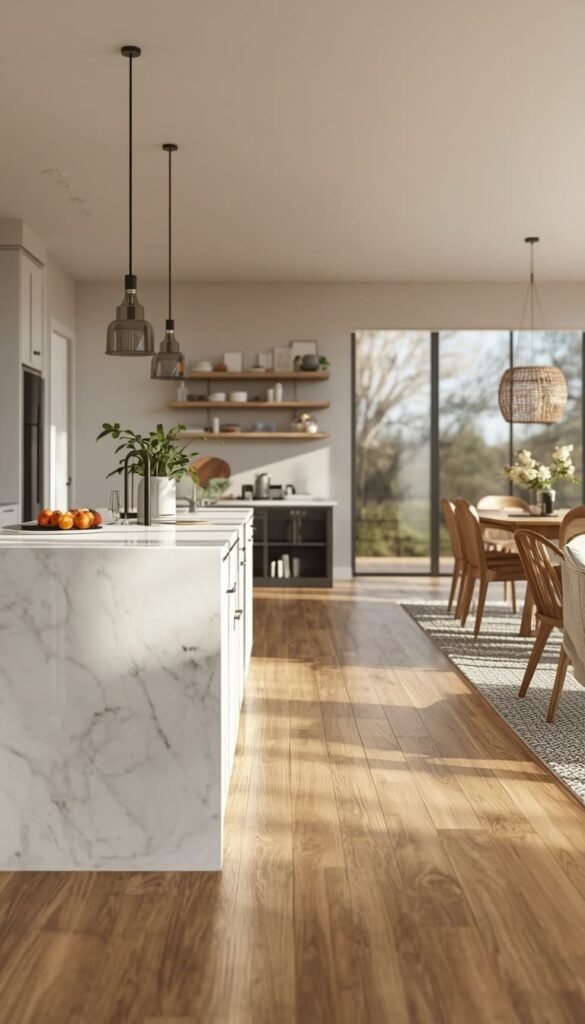
Let’s talk numbers real ones. One of the biggest reasons kitchen renovation projects go sideways is that homeowners build their budgets around inspiration photos instead of actual contractor quotes. Pinterest doesn’t show you the plumbing reroute that added $4,000 to the bill. Instagram doesn’t caption the structural beam discovery that pushed demo week into demo month.
Here’s a grounded breakdown of what different budget tiers actually deliver in the US market right now:
- $5,000 to $10,000: Cabinet repainting, new hardware, updated lighting, and a fresh backsplash. This is a facelift, not a renovation but done well, it’s shocking how good it looks.
- $15,000 to $25,000: New semi-custom cabinets or a full reface, quartz countertops, new flooring, and appliance upgrades. This is where most middle-range kitchen makeover plans land.
- $40,000 to $60,000: Layout changes, custom cabinetry, high-end appliances, and full material upgrades. This is where your kitchen starts feeling genuinely custom.
- $80,000 and above: Full gut renovation, structural changes, luxury materials, and a designer-led process from start to finish.
One thing to always build in and I cannot stress this enough is a 15 to 20 percent contingency fund. Not because something will definitely go wrong, but because something almost always does. Old homes hide surprises behind drywall. Budget for the unknown and you’ll never be blindsided.
3. The First Decision Every Kitchen Renovation Project Needs: Layout or Looks?
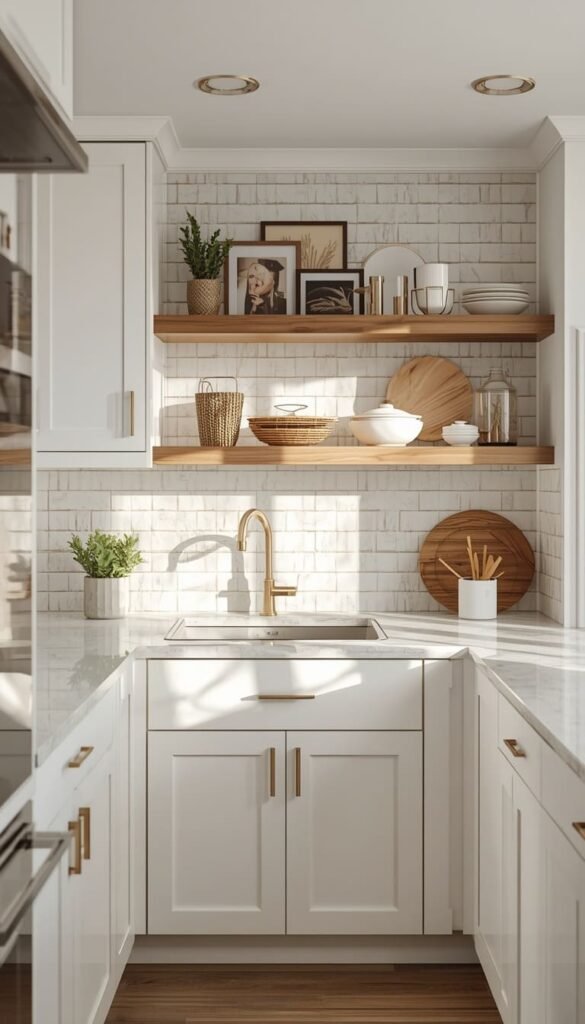
I’ll be direct: layout always wins. Always. A kitchen with stunning cabinetry and a workflow that makes you walk in circles will frustrate you every single morning for the next ten years. A kitchen with modest finishes and a smart layout will feel like a dream to cook in.
The classic “work triangle” the relationship between your sink, stove, and refrigerator has been the foundation of kitchen design for decades, and it still holds up. The total distance between those three points should ideally fall between 12 and 26 feet. Too tight and you’re constantly pivoting. Too spread out and you’re logging miles just making dinner.
Modern kitchen design has evolved this concept into zone-based planning. Instead of just three points, we think about dedicated zones: a prep zone, a cooking zone, a cleaning zone, and increasingly in American homes a coffee and beverage zone. When each zone has its own defined space with the right tools within arm’s reach, cooking stops feeling like a chore. That shift in how the kitchen functions is what separates a kitchen remodel that looks good in photos from one that genuinely improves your daily life.
4. Kitchen Layout Ideas That Actually Fit How Americans Cook and Live
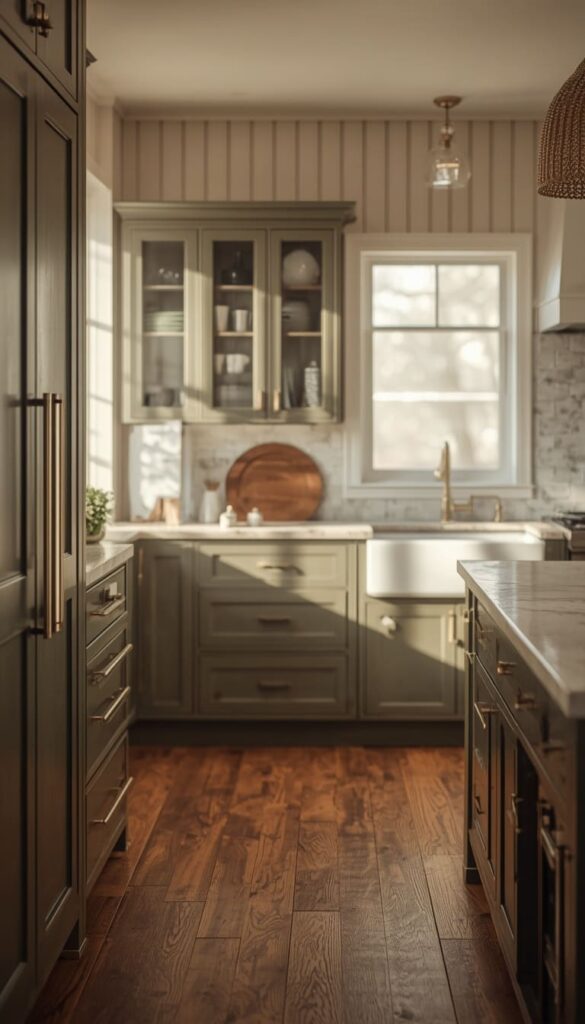
Choosing a kitchen layout isn’t about picking the one that looks best in a magazine. It’s about matching the footprint of your space to the reality of how your household operates. Here’s my honest take on the four layouts I work with most:
The U-shape is a workhorse. Three walls of cabinetry and counter space mean serious storage and an efficient workflow. It’s ideal for dedicated home cooks who want everything within reach. The downside? It can feel enclosed, and in smaller rooms, the corners become dead storage zones unless you invest in good pull-out systems.
The L-shape is the most versatile layout I recommend. It naturally opens up the room, leaves space for an island or a dining area, and integrates beautifully into open-concept floor plans. For families who want the kitchen to flow into a living or dining space, this is almost always my first suggestion.
Galley kitchens get a bad reputation that they don’t entirely deserve. Two parallel walls of cabinets create an incredibly efficient cooking corridor professional chefs have worked in galley kitchens forever for a reason. The challenge is clearance. You need at least 42 inches between facing counters for one cook, and 48 inches if two people are ever in that kitchen at the same time. Get that measurement right and a galley kitchen can be genuinely spectacular.
The open-concept layout is the most requested and I’ll say it the most misunderstood. Removing walls creates an airy, social kitchen that feels modern and inviting. But it also means cooking smells travel freely, noise carries through the whole main floor, and your kitchen is always “on display.” It’s a beautiful choice for the right household. Just make sure you’re choosing it because it fits your life, not just because it photographs well.
If you could change just one thing about your kitchen tomorrow, what would it be the cabinets, the countertops, or the layout?
5. How to Make a Small Kitchen Remodeling Plan Work Harder Than a Big Space
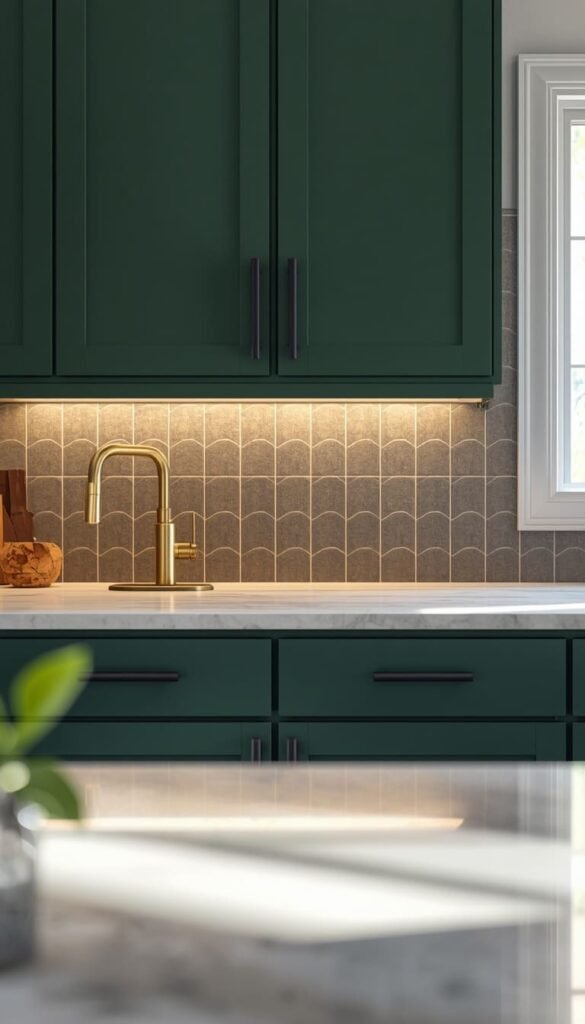
Small kitchens are not a design problem. They’re a design challenge and honestly, some of the most stunning kitchens I’ve ever worked on have been under 150 square feet. The mistake most homeowners make with small kitchen remodeling is trying to make the space look bigger. My approach is different: make it work better, and the feeling of spaciousness follows naturally.
The single most impactful move in a small kitchen is vertical storage. Floor-to-ceiling cabinetry draws the eye upward, adds significant storage without consuming any additional floor space, and gives the room a custom, built-in look that feels anything but cramped. Pair that with handle-less cabinet fronts and you eliminate visual clutter entirely.
A few other moves that consistently deliver in small kitchens:
- Light countertops, always. Dark counters in a small kitchen absorb light and make the space feel like a cave. Opt for a light quartz or a white slab and watch the room breathe.
- One statement element. A bold backsplash, a striking pendant light, or a richly colored island pick one and let everything else support it. Trying to do too much in a small space creates visual chaos.
- Open shelving in the right spots. One or two open shelves near the window can replace upper cabinets and keep the space feeling airy. Just be honest with yourself about whether you’ll keep them styled or whether they’ll become a cluttered catch-all.
6. Open Concept Kitchen Remodel: Is It Right for Your Home or Just the Trend Talking?
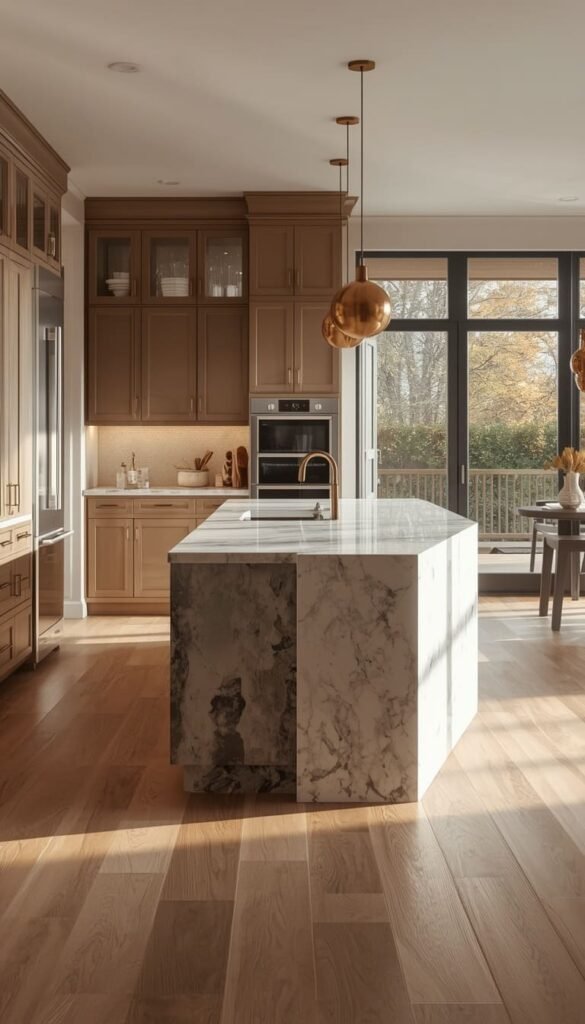
Open concept kitchens have dominated American home design for the better part of two decades, and I genuinely love what they do for a home’s social energy. But after years of working with clients who’ve removed walls and later regretted it, I feel a professional responsibility to have the real conversation before demo day.
Here’s what nobody tells you upfront: open concept kitchens require a certain lifestyle to truly thrive in. If you cook elaborate meals regularly, those smells garlic, fish, spices will live in your living room too. If you have young kids, the noise of the kitchen bleeds into every conversation happening in the adjacent space. And if you’re someone who finds comfort in a kitchen that feels contained and cozy, opening it up might actually make it feel less like yours.
That said, when the lifestyle fits, an open concept kitchen remodel is one of the highest-ROI projects a homeowner can undertake. Resale value increases are real and documented. The sense of connection between kitchen and living spaces changes how a family interacts on a daily basis for the better. Before committing, just make sure you’re working with a contractor who can identify load-bearing walls early. That discovery mid-demo is the number one budget-buster I see in open-concept projects, and it’s entirely avoidable with a proper structural assessment upfront.
Top 6 Kitchen Upgrade Ideas:
| Idea | Estimated Price | Maintenance |
|---|---|---|
| Cabinet Repainting | $1,500 to $4,000 | Low |
| Quartz Countertops | $50 to $120 per sq. ft. installed | Low |
| Zellige Tile Backsplash | $25 to $50 per sq. ft. | Medium |
| Unlacquered Brass Hardware | $160 to $480 total | Medium |
| Under Cabinet LED Lighting | $150 to $400 | Low |
| Apron Front Farmhouse Sink | $400 to $1,200 | Low |
7. Kitchen Cabinet Renovation Ideas That Deliver Maximum Visual Impact
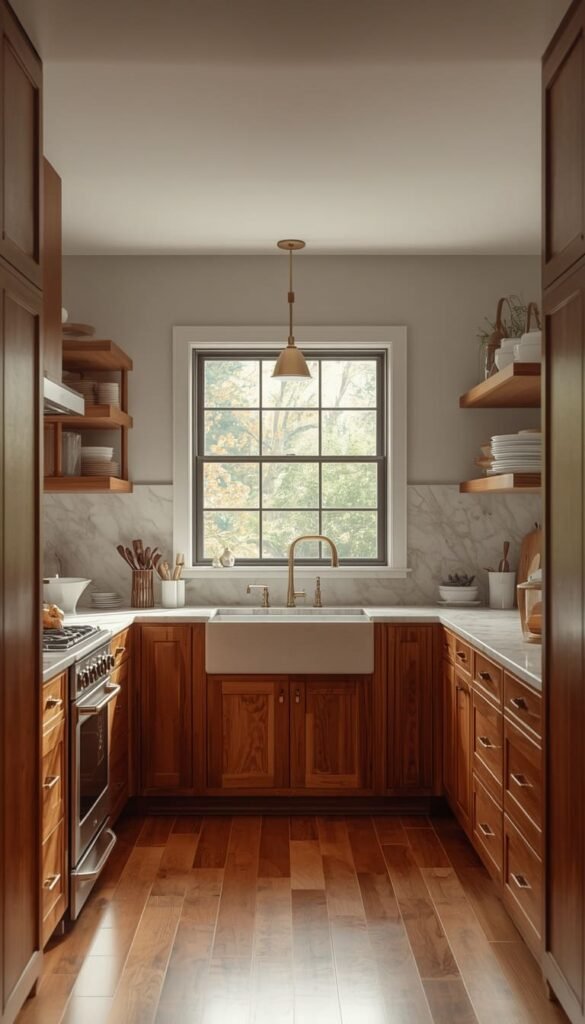
Cabinets cover more surface area than anything else in your kitchen. Which means they have more visual power than anything else in your kitchen. Getting the cabinet decision right is, in my experience, the single most important call in any kitchen remodel design and the good news is that you have more options than most people realize.
Repainting is the highest-ROI move in kitchen renovation. A professional cabinet paint job done properly with the right primer, finish coat, and hardware removal can transform a dated kitchen for $1,500 to $4,000 depending on size. The key word there is professionally. DIY cabinet painting that isn’t prepped and primed correctly will chip, peel, and look worse than what you started with within two years.
Refacing makes sense when your cabinet boxes are structurally solid but the doors and drawer fronts are dated. New doors, new veneer on the boxes, and new hardware gives you the look of brand new cabinets at roughly 50 to 60 percent of the replacement cost. It’s a smart middle ground that not enough homeowners consider.
Full replacement is the right call when the boxes themselves are damaged, when you’re changing the layout, or when you simply want a completely different configuration. Semi-custom cabinets hit the sweet spot for most budgets more flexibility than stock options, far less cost than going fully custom.
One thing to watch out for with cabinet trends: very dark cabinet colors like black and deep navy are having a major moment right now, and they look genuinely stunning. But in a kitchen that doesn’t get strong natural light, they can make the space feel significantly smaller. Always test a large paint sample in your actual lighting before committing to a dramatic cabinet color.
8. The Hardware Upgrade: The $300 Secret That Makes Any Kitchen Look Custom
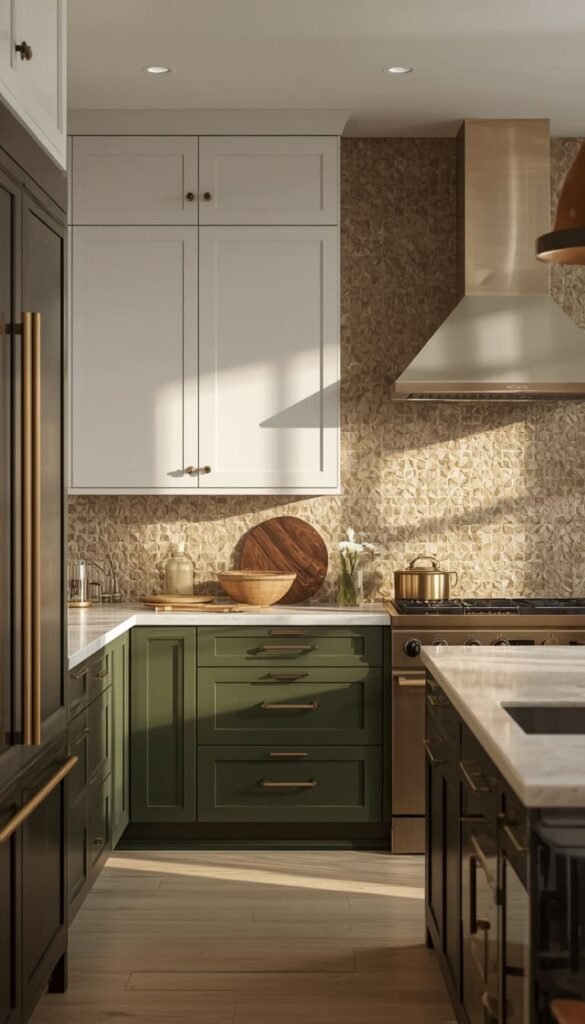
If there is one move I recommend to every single client regardless of budget, it’s this: change the hardware. New cabinet pulls and knobs are the jewelry of a kitchen, and the difference between builder-grade hardware and thoughtfully chosen pulls is staggering. I’ve done hardware swaps on kitchens that hadn’t changed a single cabinet door, and clients have told me it felt like a completely different room.
The current hardware landscape is rich with options. Unlacquered brass is my personal favorite right now it develops a natural patina over time that feels warm and lived-in rather than precious. Matte black remains a strong choice for modern and contemporary kitchens. Satin nickel bridges the gap beautifully in transitional spaces. And brushed gold works in almost any kitchen that has warm undertones in the wood or countertops.
Sizing matters more than most people realize. A quick trick I’ve learned over years of doing this: go one size larger than you think you need. A 5-inch pull that feels bold in the hardware store looks perfectly proportional on a full-height cabinet door. Undersized hardware on large cabinet faces is one of those things that’s hard to articulate but immediately visible the kitchen just looks unfinished.
Budget roughly $4 to $12 per pull for quality options from brands like Rejuvenation, Schoolhouse, or even well-curated Amazon finds. On a 40-cabinet kitchen, that’s $160 to $480 total and the visual return is genuinely disproportionate to the spend.
Are you team open concept or do you actually prefer a kitchen with walls and a door that closes?
9. Countertop Options Ranked: From Budget Kitchen Remodel to Luxury Kitchen Remodel
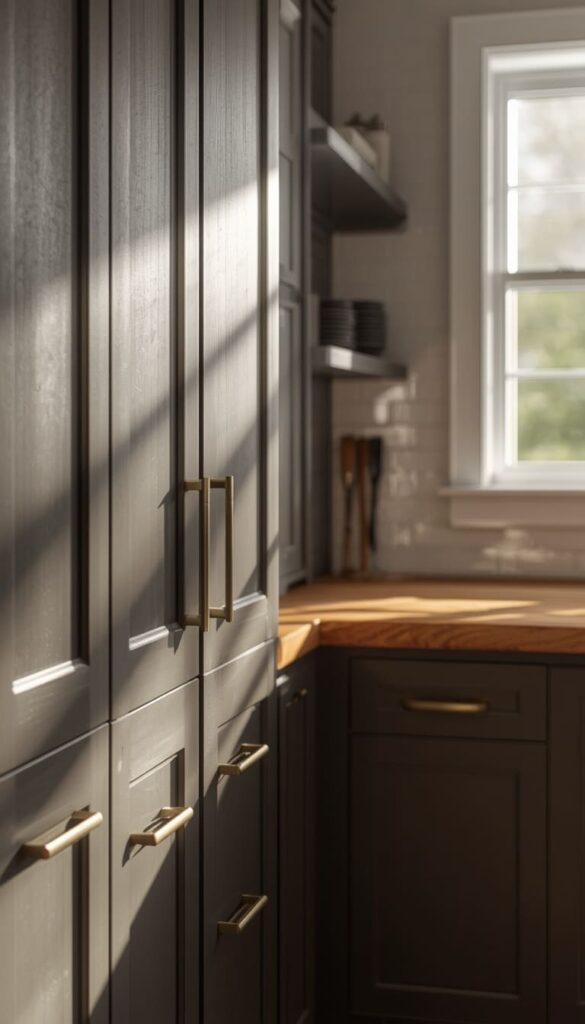
Countertops are where most homeowners either overspend out of aspiration or underspend out of fear and both extremes tend to lead to regret. Let me walk you through the real landscape, because the countertop conversation has changed significantly in the last few years.
Laminate has had a quiet revolution. Modern laminate surfaces bear almost no resemblance to the peeling, dated versions from your grandmother’s kitchen. Brands like Wilsonart and Formica now offer finishes that genuinely mimic marble and quartz at a fraction of the cost. For a budget kitchen remodel where the money needs to go toward cabinets or layout changes, quality laminate is a completely legitimate choice.
Quartz is what I specify most often for clients in the $20,000 to $50,000 remodel range, and for good reason. It’s non-porous, consistent in pattern, highly durable, and requires almost no maintenance. The one honest caveat: it can look slightly artificial up close, especially in the veining. If natural variation matters to you aesthetically, quartz might feel a little too uniform.
Marble is breathtaking. It is also high-maintenance in a way that shocks most homeowners after installation. It etches from acidic liquids like lemon juice and wine, stains from oils, and requires sealing regularly. I never specify marble for a household with young children or anyone who cooks heavily. For a low-traffic kitchen or a baking-focused prep surface, it’s magnificent. Just go in with eyes open.
Quartzite not to be confused with quartz is a natural stone that delivers the veined beauty of marble with significantly better durability. It’s my current recommendation for luxury kitchen remodels where the client wants genuine stone and genuine longevity. Budget accordingly: quality quartzite slabs typically run $70 to $200 per square foot installed.
10. Kitchen Backsplash Ideas That Designers Actually Recommend and Which Ones Age Fast
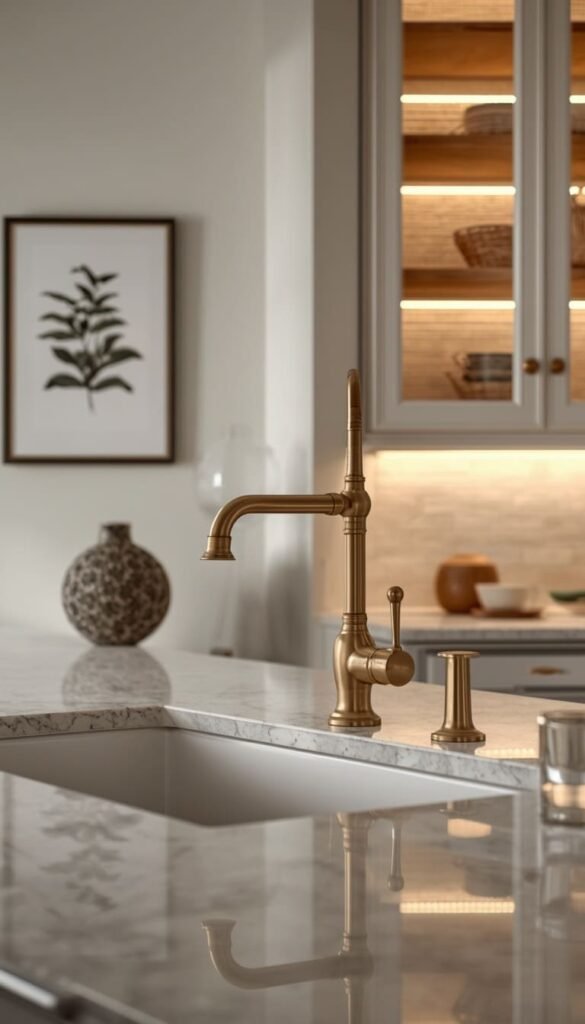
The backsplash is where kitchens show their personality most clearly and also where the most design regrets tend to live five years down the road. I’ve had clients call me after the fact about backsplash choices, and almost every conversation goes the same way: they followed a trend instead of a principle.
Classic white subway tile is the perpetual safe choice, but after years of seeing it everywhere, “safe” has started to feel a little invisible. The proportions matter enormously here. A 3×6 subway tile in a standard brick pattern reads as builder-grade in 2025. The same tile in a vertical stack bond, or a 2×8 elongated format with a colored grout, reads as intentional and polished.
Zellige tile is having a major moment and deserves every bit of attention it’s getting. The hand-made Moroccan clay tiles have natural variation in color and surface that catches light differently throughout the day. They’re not cheap expect $25 to $50 per square foot but they photograph like a dream and genuinely improve with age.
Slab backsplashes where a single continuous piece of stone or porcelain runs from counter to upper cabinets are the luxury kitchen remodel move I recommend most consistently right now:
- They eliminate grout lines entirely, which means near-zero maintenance
- They create a seamless, high-end look that reads as genuinely expensive
- Matching the slab to the countertop material creates a cohesive, designer-curated feel
One trend I’d steer most homeowners away from: heavily patterned encaustic cement tiles as a full backsplash. As a small accent section or a cooktop surround, they’re gorgeous. As an entire backsplash wall, they tend to compete with everything else in the kitchen and date the space faster than almost any other single decision.
11. Modern Kitchen Remodel Lighting: The Four Layer Formula Most Homeowners Skip
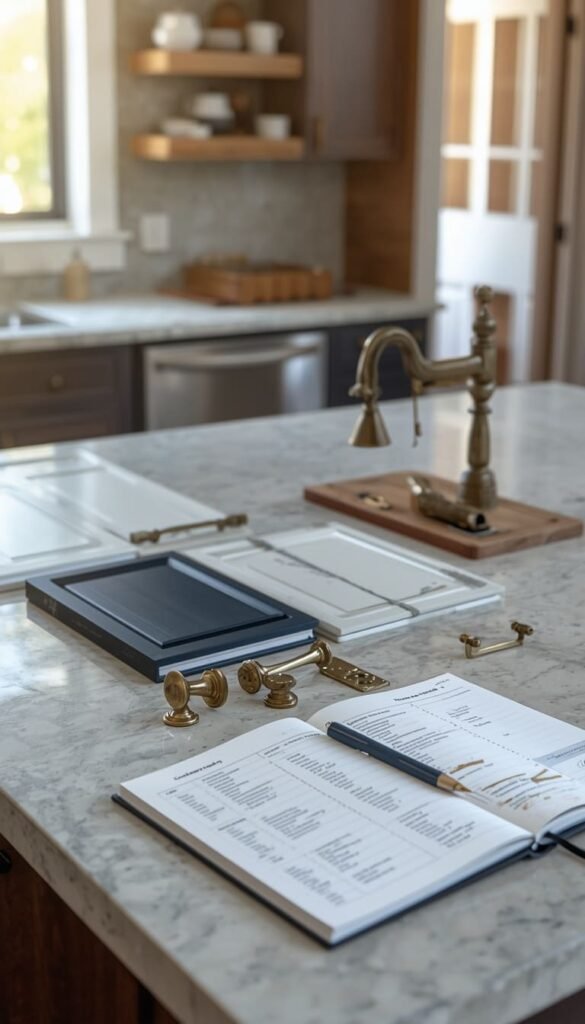
Lighting is the most underestimated element in any kitchen renovation project. I’ve walked into kitchens with $60,000 worth of cabinets and countertops that looked flat and uninviting simply because the lighting plan was an afterthought. Conversely, I’ve seen modest kitchens that felt warm, layered, and genuinely luxurious because someone thought carefully about how the space was lit.
The four-layer approach is the framework I use on every single project:
Ambient lighting is your baseline the general illumination that lights the whole room. Recessed lighting on a dimmer is the workhorse here. The dimmer is non-negotiable. The ability to shift from bright task lighting during cooking to warm, low ambient lighting during a dinner party is one of the most valuable things you can add to a kitchen for under $200.
Task lighting goes directly where work happens. Under-cabinet LED strips that illuminate the countertop are the single most practical lighting upgrade in any kitchen makeover plan. They eliminate shadows while you’re chopping and prepping, and they add a warm glow that makes the backsplash look incredible at night.
Accent lighting adds dimension and drama. Inside glass cabinet doors, above open shelving, or directed at a beautiful range hood these are the lights that make a kitchen feel styled rather than simply functional.
Natural light is the fourth layer and the one you can’t buy at a lighting showroom. If your kitchen has the opportunity for a larger window, a sun tunnel, or even a single well-placed skylight, prioritize it. Natural morning light does more for a kitchen’s mood than any pendant fixture ever will.
A quick note on pendant lights over an island: scale them generously. Pendants that are too small over a large island are one of the most common proportion mistakes I correct in kitchen remodel consultations. For a standard 4-foot island, you want pendants that are at least 10 to 14 inches in diameter. Bigger reads as intentional. Smaller reads as an afterthought.
What’s your biggest hold-back when it comes to starting a kitchen remodel the budget, finding the right contractor, or simply not knowing where to begin?
12. Farmhouse Kitchen Remodel Ideas That Still Feel Fresh in 2026
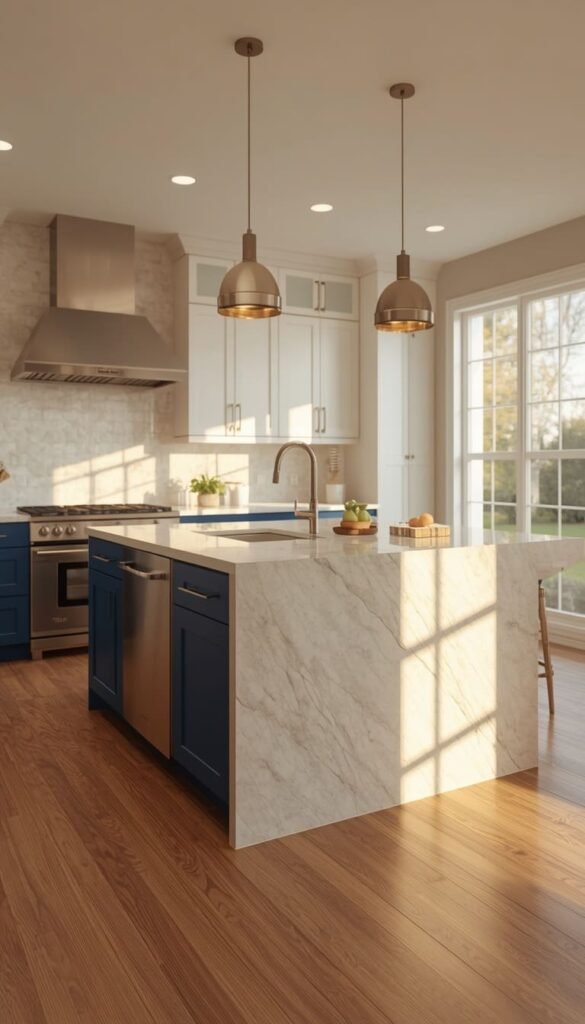
The farmhouse kitchen trend has been so thoroughly embraced and so thoroughly overdone in certain corners of the internet that the word itself can make a seasoned designer wince. But here’s the thing: true farmhouse design principles are timeless. What dates quickly is the specific cultural moment version of farmhouse that peaked around 2017 and gave us shiplap on every surface, mason jar everything, and signs reminding us to “gather.”
The farmhouse kitchens I’m proudest of right now look nothing like that. They feel warm, unpretentious, and deeply functional because that’s what farmhouse design actually is at its core. Here’s how I approach a farmhouse kitchen remodel today:
The apron-front sink remains one of my favorite design elements in any style kitchen. It’s practical, it’s beautiful, and it grounds the space with a sense of authenticity that undermount sinks simply can’t replicate. Pair it with an unlacquered brass or aged bronze faucet and you have an instant focal point.
Open shelving is farmhouse’s most debated element and I have a firm position on it. A small run of open shelves, styled intentionally with a mix of everyday items and a few beautiful pieces, adds warmth and personality. An entire kitchen of open shelving requires a level of organization and commitment that most busy American households cannot realistically sustain. Be honest with yourself before you pull those upper cabinet doors off.
The color palette matters enormously in a modern farmhouse kitchen remodel. Warm whites, soft sage greens, dusty blues, and muted terracottas all work beautifully. What to avoid: stark, cool white paired with gray undertones that combination has become the visual shorthand for the dated version of farmhouse that feels very 2016. Reach for warmer, more complex paint tones and you’ll land somewhere that feels fresh without trying too hard.
Your 60-Second Kitchen Remodel Decision Map
By Budget
Smart Spender ($1,000 – $8,000)
- Paint cabinets in a rich, intentional color — skip full replacement
- Swap hardware, faucet, and lighting first — biggest visual return per dollar
- Add under-cabinet LEDs and a new backsplash for an instant refresh
- Stick to cosmetic changes only — avoid moving plumbing or walls
Investment Remodeler ($15,000 – $50,000+)
- Go full custom or semi-custom cabinetry with a two-tone finish
- Remove walls for open concept flow — budget for structural work upfront
- Upgrade to quartz or quartzite countertops with a waterfall or straight edge
- Layer lighting properly — recessed, pendant, and under-cabinet as a trio
By Lifestyle
Busy Families
- Prioritize durable surfaces — quartz over marble, porcelain tile over hardwood
- Choose darker lower cabinets that hide daily wear and scuffs
- Build in a dedicated landing zone near the entry for bags, groceries, and backpacks
- Soft-close hinges and drawers are worth every penny with kids in the house
The Minimalist Cook
- Single-wall or galley layout keeps everything efficient and clutter-free
- Flat-front cabinetry in a muted tone — no ornate hardware or busy backsplash
- Integrated appliances keep the visual line clean and uninterrupted
- Less open shelving, more closed storage — curated over collected
Small Space Dwellers
- Extend cabinets to ceiling height — storage and visual height in one move
- Light countertops and reflective backsplash tiles to bounce light around
- Skip the island if clearance is under 42 inches — a peninsula works better
- Recessed lighting only — no hanging pendants that eat up headroom
The Entertainer
- Double island or oversized single island with seating on two sides
- Open concept layout is non-negotiable — guests need to flow freely
- Statement range hood and luxury appliances as focal design points
- Generous task and ambient lighting — your kitchen is a stage, light it like one
Frequently Asked Questions About Kitchen Remodeling Plans
What is the most cost-effective kitchen remodel that adds the most value?
Cabinet painting plus new hardware delivers the highest return for the lowest investment. Most homeowners recoup 70 to 80 percent of a mid-range kitchen remodel at resale.
How long does a kitchen remodel take from start to finish?
A cosmetic refresh takes one to two weeks. A full gut renovation runs three to five months minimum cabinetry lead times alone can stretch six to eight weeks.
Should I remodel my kitchen before selling my house?
Yes, but keep it neutral. Stick to fresh cabinet paint, updated hardware, and modern lighting rather than a full renovation buyers want move-in ready, not your personal taste.
What is the biggest mistake homeowners make during a kitchen remodel?
Skipping the contingency budget. Always reserve 15 percent of your total budget for surprises behind the walls old wiring, water damage, and uneven subfloors are extremely common in homes over 20 years old.
Can I remodel my kitchen without replacing cabinets?
Absolutely. Paint the cabinet boxes, replace the doors and hardware, upgrade your countertops and backsplash most guests will never know the original boxes are still there.
Conclusion
Your kitchen doesn’t need a complete overhaul to feel like a brand new space it just needs a plan. Start with one thing today. Order a cabinet paint sample. Swap out that dated faucet. Measure your island clearance. Small moves made with intention add up faster than you’d expect, and before you know it, you’re cooking in a kitchen that actually reflects who you are. Your home is your sanctuary, and you deserve to love every single room in it.
So tell me which one of these 12 kitchen remodeling plans are you starting with first? Drop it in the comments, I’d love to hear where your kitchen journey is headed.
