
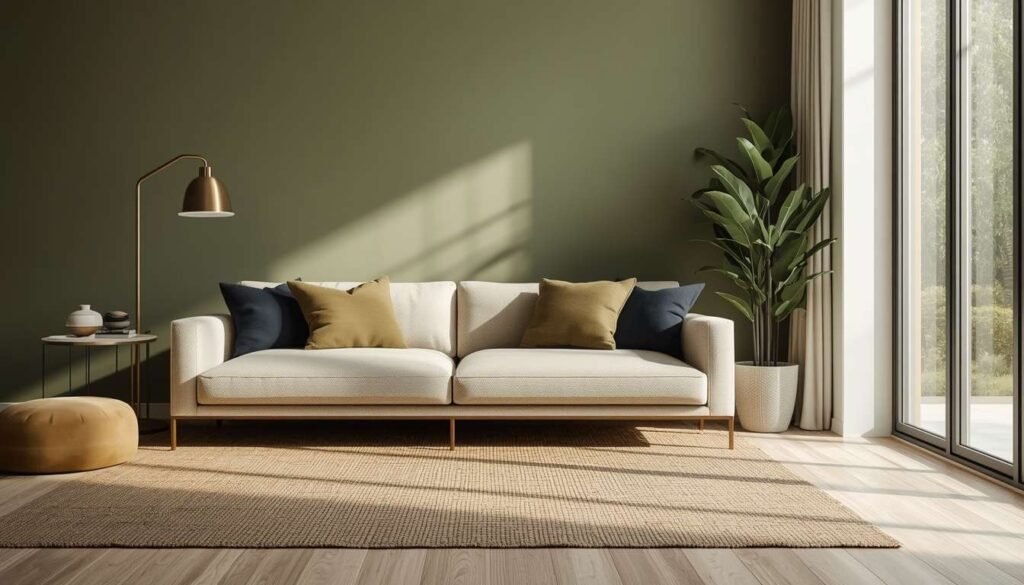
Blue and green might just be the most underrated color pairing in American living rooms right now, and I think it’s because most people picture it all wrong. They imagine bold teal walls or matchy throw pillows, when the real magic happens when these two tones get softened with beige, sage, and warm wood. I’ve pulled together fifteen living rooms that prove this combination can feel calm, grounded, and genuinely livable, not just pretty in photos. Whether you’re working with a tiny apartment or a sprawling family room, there’s a version of this look that fits your space and your life.
My Design Notes
When I was working on a project just outside Austin, my client was completely set on a deep teal accent wall behind the sofa. On paper it looked stunning, moody and rich, exactly like the photos she had saved. But her living room faced north, and once we got a sample up, that teal turned almost gray and lifeless in the afternoon light.
We pulled back and went with a soft sage instead, kept her sofa in a warm beige boucle, and let navy show up only in two lamps and a stack of pillows. The whole room suddenly felt warm and lived in rather than like a showroom.
I think about that project every time someone tells me they want a bold blue or green wall. My first question is always about which direction their windows face, because that one detail can completely change how these colors behave in real life.
Stunning Blue and Green Living Room Combinations for an Elevated Designer Look
1. Sage Green Walls with a Warm Beige Sofa
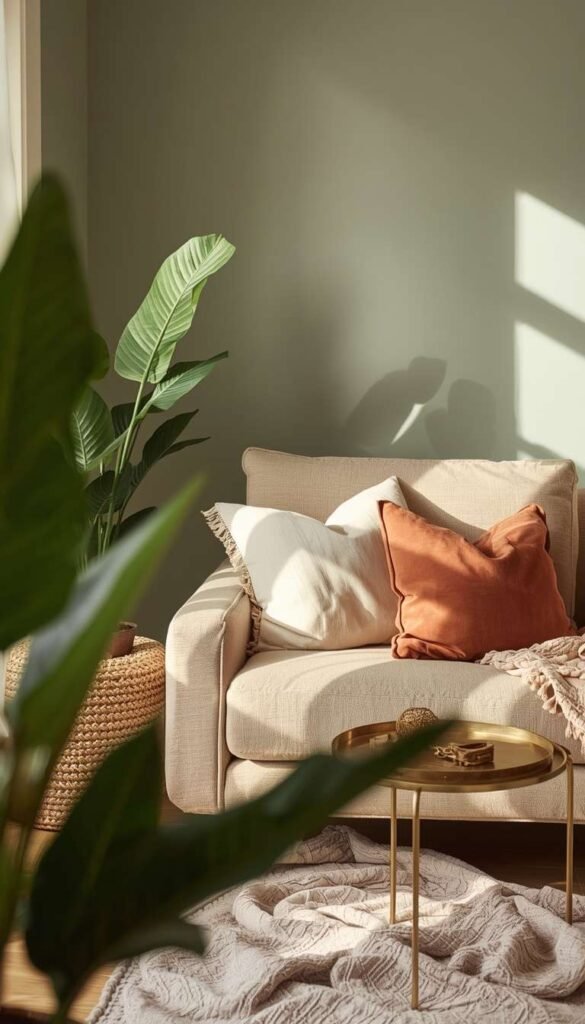
This is the pairing I come back to again and again with clients who say they want color but feel nervous about commitment. Sage green on the walls reads more like a warm gray than a true green, especially in rooms with decent natural light, so it ends up feeling neutral enough to live with for years. Pair it with a beige sofa in a textured boucle or linen blend, and you’ve got a backdrop that makes everything else, from artwork to throw pillows, look intentional rather than busy. I’d lean toward a soft, slightly grayed sage like Sherwin Williams Evergreen Fog or Behr’s Cracked Pepper for the walls, since the more saturated sages can shift green or yellow depending on your bulbs. One thing to watch out for is testing your paint sample at night under your actual lamps, because sage green is notorious for looking completely different once the sun goes down. Add brass or warm wood accents to keep the whole thing from feeling too cool, and you’ve got a living room that feels collected, not decorated.
2. Olive Green Sofa Against Cream Walls
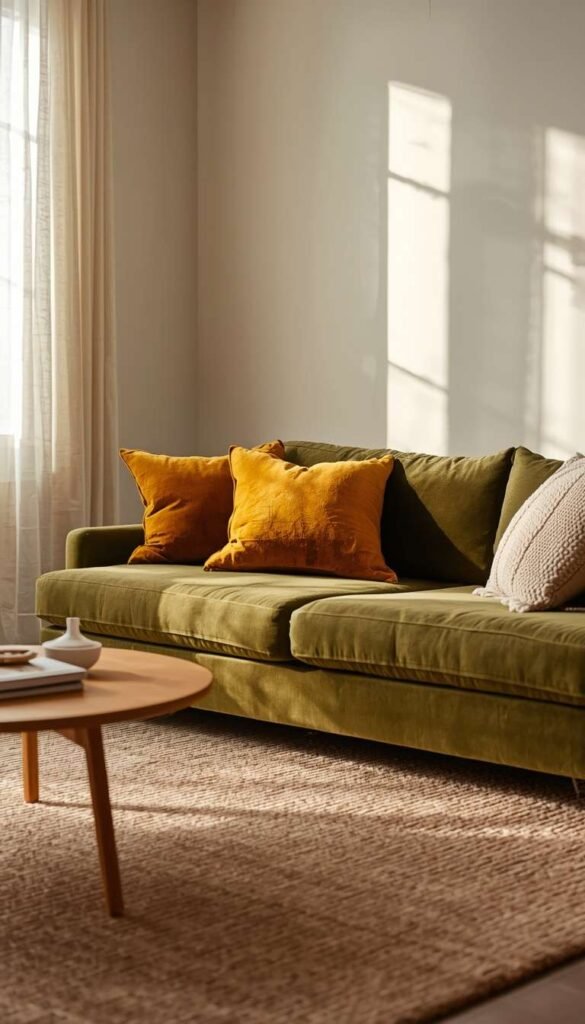
If you already love the idea of a green sofa but worry it’ll dominate the room, olive is your friend. It’s deep enough to feel grounded but earthy enough that it doesn’t compete with anything. Cream walls give it room to breathe, and the contrast feels rich without being heavy. A trick I’ve learned is to pick olive in a performance fabric if you’ve got kids or pets, since the deeper tone hides everyday wear far better than a lighter beige sofa would.
3. Beige Walls with a Single Blue Accent Wall
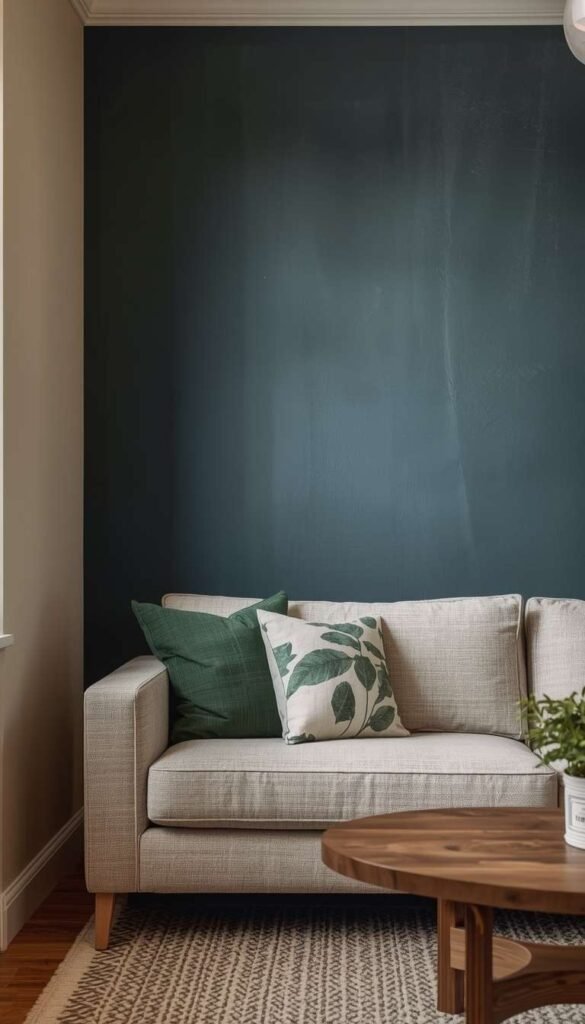
This is probably the easiest entry point into blue and green living room ideas, and I genuinely think it’s underused. Keep three walls in a warm beige and paint just one wall, ideally the one behind your sofa or the one your eye lands on first when you walk in, in a deeper blue. Navy, slate, or a dusty denim all work beautifully here. A few things make this layout sing:
- Choose the wall with the least windows or doors, since accent walls look best uninterrupted
- Keep your sofa and rug in warm neutrals so the blue wall stays the star
- Add one or two green elements, like a plant or a botanical print, so the room doesn’t feel one note
It’s low commitment, budget friendly, and honestly one of the fastest weekend projects that makes a real difference.
4. Green and Cream Color Blocking for a Soft Modern Look
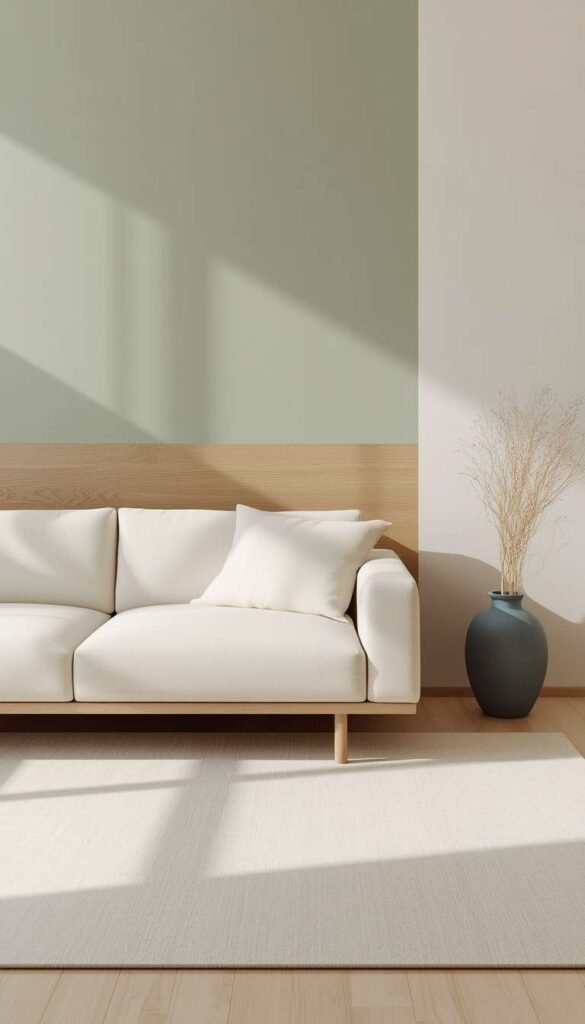
Color blocking sounds intimidating, but in practice it’s just about being deliberate with where colors start and stop. Picture a cream sofa against a soft sage or olive wall, with the rug, curtains, and trim all staying in that same cream family. The green becomes almost architectural, like it’s framing the room rather than decorating it. This works especially well in contemporary or organic modern spaces where clean lines matter. I find this look photographs beautifully because there’s so much negative space for the eye to rest, but it also feels calm in person, which is honestly rarer than it sounds. If you want a little blue in the mix, a single ceramic vase or a stack of books on the coffee table is plenty. Anything more and you risk pulling focus from that lovely, quiet green and cream foundation you just built.
Top 6 ideas:
| Idea | Estimated Price | Maintenance |
|---|---|---|
| Sage Green Walls with Beige Sofa | $300 to $1,200 | Medium |
| Beige Walls with Single Blue Accent Wall | $50 to $150 | Low |
| Beige Walls with Botanical Prints and Greenery | $80 to $300 | Low |
| Olive Green Sofa Against Cream Walls | $800 to $2,500 | Medium |
| Navy Accents in Beige Transitional Living Room | $100 to $400 | Low |
| Luxury Neutral Deep Green and Camel | $1,500 to $4,000+ | Medium |
5. Earth Tone Layering, Sage, Terracotta and Beige Together
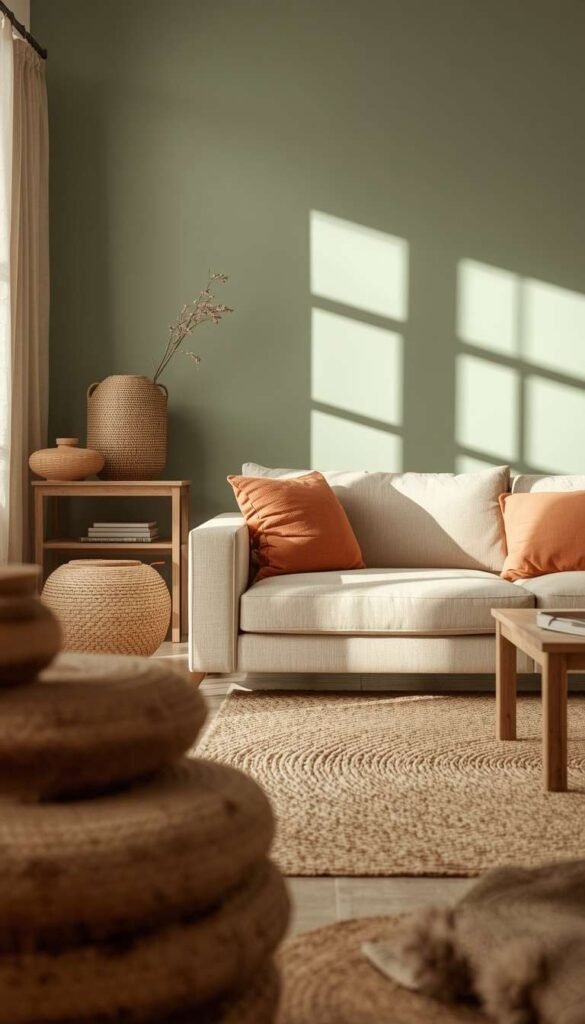
Once you start playing with sage and beige, terracotta is the next natural step, even though it doesn’t sound like it belongs in a blue and green living room at first. The trick is using it sparingly, maybe a throw pillow, a piece of pottery, or a single accent chair, so it acts like the warm note that pulls everything else into focus. Sage walls, a beige sectional, terracotta accents, and a jute rug create a palette that feels like it walked straight out of the desert and into your living room. A quick trick I’ve learned is to add the terracotta last, after the rest of the room is styled, because it’s so easy to overdo and you’ll know exactly how much you actually need once everything else is in place. This combination tends to read as modern farmhouse or organic modern depending on how minimal or layered you keep the rest of the decor, which makes it flexible for a lot of different homes.
6. Navy Accents in an Otherwise Beige Transitional Living Room
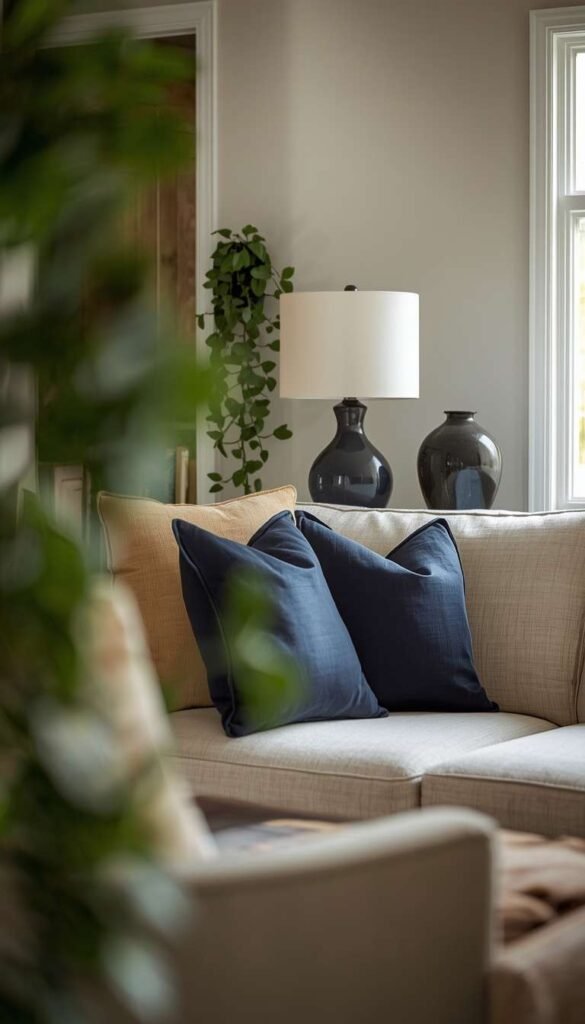
I touched on this in my design notes, but it deserves its own spot because it’s one of the most reliable formulas in transitional design. Start with a beige living room as your base, sofa, walls, rug, all in warm neutrals, and then bring in navy through lamps, pillows, art, or even a pair of dining chairs if your living room flows into a dining area. Navy reads as sophisticated without feeling cold, especially against beige, and it photographs well in almost any lighting. The green here can be subtle too. A few trailing plants or a single botanical print is honestly enough. What I love about this approach is how easy it is to refresh later. Swap the navy accents for a different blue, or add more green over time, and the bones of the room never feel outdated.
7. Organic Modern Living Room, Green Velvet, Linen and Wood
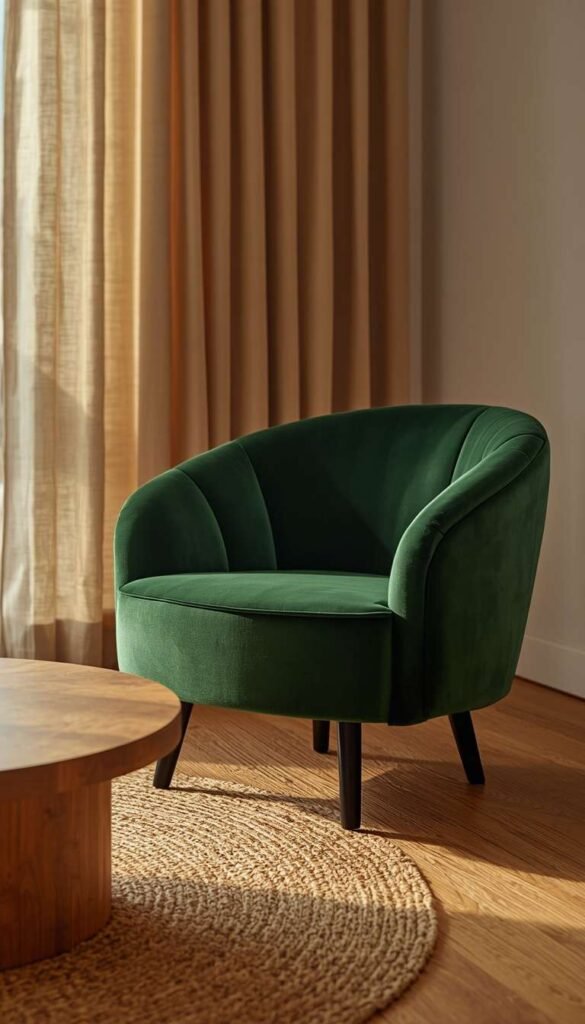
Organic modern is one of those styles that sounds vague until you see it, and then it clicks immediately. Think green velvet on a curved sofa or accent chair, linen drapery in a soft oatmeal tone, and wood furniture with visible grain and rounded edges rather than sharp corners. The green here tends to be deep, almost forest toned, and it works because everything around it feels so tactile and warm. A few elements that make this style work:
- Curved or rounded furniture silhouettes over boxy shapes
- Natural materials like rattan, linen, and unfinished or lightly oiled wood
- Lighting with a warm, almost amber glow rather than cool white bulbs
This is a fantastic direction if you want your living room to feel like a retreat, somewhere that feels calm the moment you walk in, without leaning on a strict color formula to get there.
Which of these 15 looks feels closest to your living room right now, the sage and beige combos or the bolder navy and green ones?
8. Small Living Room, Light Sage and Beige to Open Up the Space
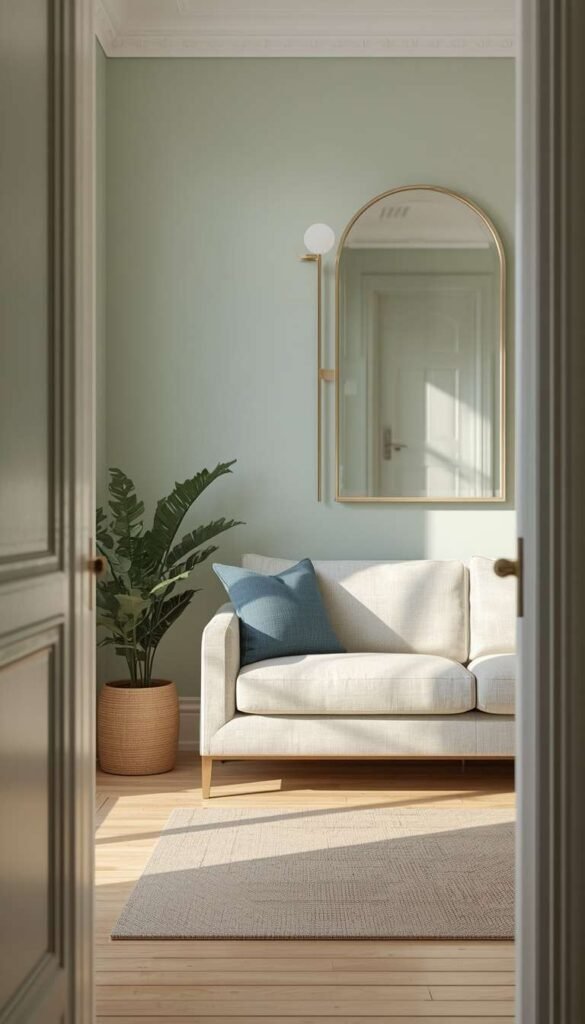
Small living rooms and bold color don’t always mix well, but that doesn’t mean you have to give up on blue and green entirely. The move here is to keep your walls in the lightest possible sage, almost a whisper of green, and pair it with a beige sofa and light wood floors. This combination bounces light around the room instead of absorbing it, which makes a real difference in how spacious the room feels. Save your blue and deeper green for small doses, a pillow, a vase, a piece of art, so they read as accents rather than additional color blocks competing for space. One thing I always tell clients with small living rooms is that mirrors do a lot of heavy lifting here too, since they reflect that soft green and beige palette back into the room and make it feel twice as open.
9. Beige Walls with Green Botanical Prints and Greenery
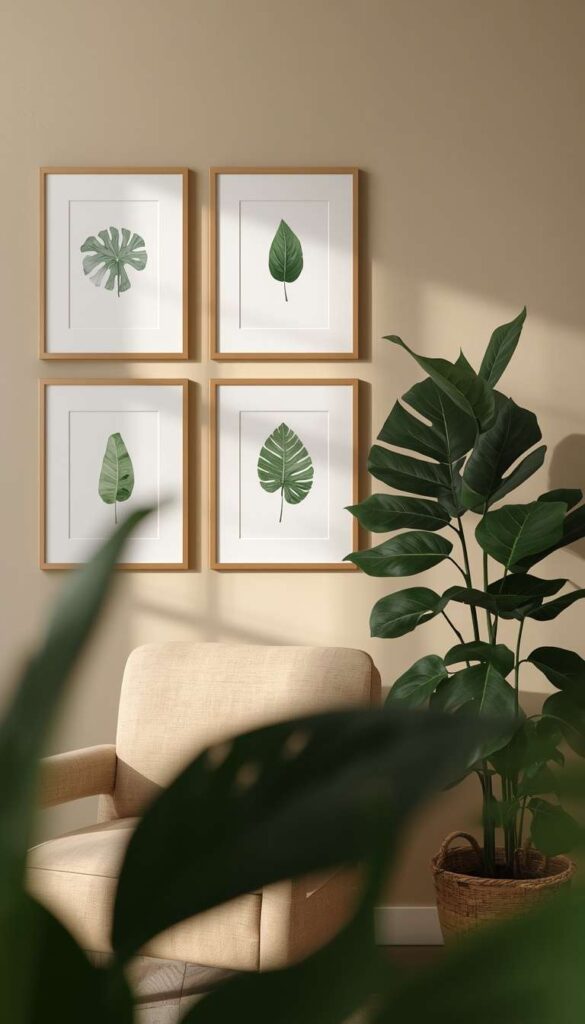
Sometimes the easiest way to bring green into a living room isn’t paint or upholstery at all, it’s plants and artwork. Beige walls give you a flexible, calm backdrop, and then botanical prints in simple black or wood frames do the work of introducing green without any real commitment. Add a few real plants, a fiddle leaf fig, a pothos trailing from a shelf, or even a cluster of smaller plants on the coffee table, and suddenly the room feels alive in a way that paint alone can’t replicate. This is honestly my go to suggestion for renters or anyone who isn’t ready to repaint. You get all the freshness of green without touching a single wall, and if your style evolves later, swapping out art and plants is far easier than repainting or reupholstering.
10. Minimalist Living Room in Sage, Beige and One Blue Note
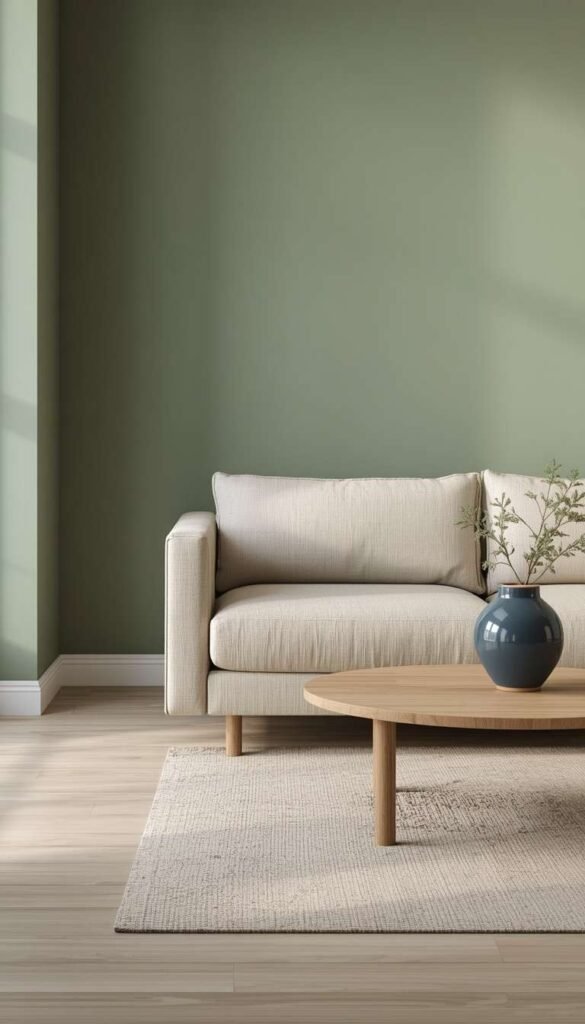
Minimalist doesn’t have to mean stark or cold, and this combination proves it. Picture a room in soft sage and beige, clean lined furniture, very little clutter, and then one single blue element that acts almost like a punctuation mark. It could be a ceramic vase, a single throw pillow, or even just the spine of a book left out on the coffee table. The restraint is what makes it feel intentional rather than empty. A few things to keep in mind:
- Stick to two or three textures total, like linen, wood, and a woven rug
- Let negative space do some of the visual work, don’t feel pressured to fill every surface
- Choose your one blue accent carefully, since it becomes the focal point by default
This look works beautifully in smaller homes or apartments where every piece needs to earn its place, and it tends to feel timeless rather than trendy.
11. Modern Farmhouse Blue and Green, Done the Restrained Way
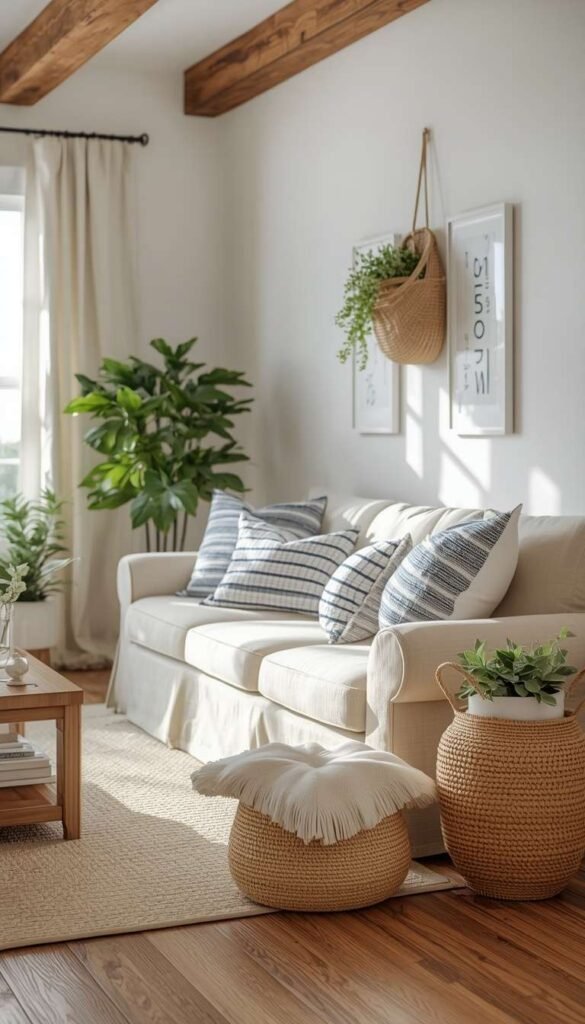
Modern farmhouse has a reputation for shiplap and signs with quotes on them, but the more refined version of this style actually leans on blue and green beautifully, just in a quieter way than you might expect. Think warm white or beige walls, a slipcovered sofa, and then soft blue gingham or ticking stripe on a couple of pillows, paired with greenery in simple ceramic pots. Wood beams, woven baskets, and a stone fireplace if you’re lucky enough to have one all tie the look together. I find this version of modern farmhouse ages really well because it’s not chasing a trend, it’s just leaning into materials and colors that have always felt comfortable in American homes. If you already have farmhouse leaning furniture, you likely don’t need to buy much new at all, just shift your textiles toward this softer blue and green palette and watch the whole room feel refreshed.
12. Luxury Neutral Living Room with Deep Green and Camel
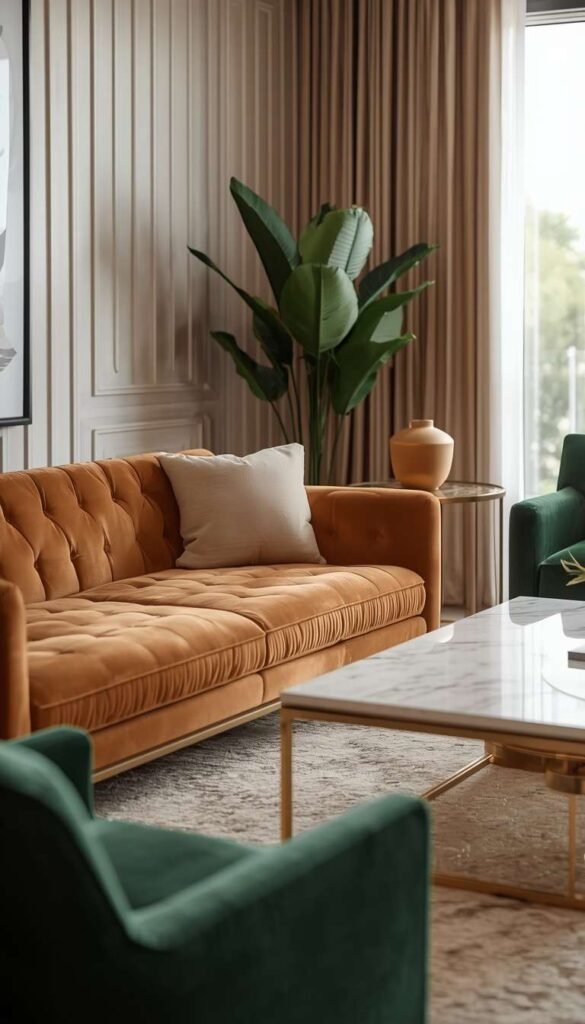
This pairing feels expensive without actually requiring an expensive renovation, which is exactly why I love recommending it. Deep green, think hunter or bottle green, paired with camel or warm tan creates a palette that reads as polished and a little bit dramatic, almost like a high end hotel lobby. A velvet sofa in camel or a deep green velvet accent chair instantly elevates the room, and brass or gold hardware on lamps and side tables ties the whole thing together. One thing worth knowing before you commit is that deep green walls can feel quite dramatic in smaller rooms, so if your space is on the cozier side, consider using the green on furniture or drapery instead of all four walls. That way you get the richness without the room feeling like it’s closing in on you.
13. Green Accent Wall Behind a Beige Sectional, Contemporary Style
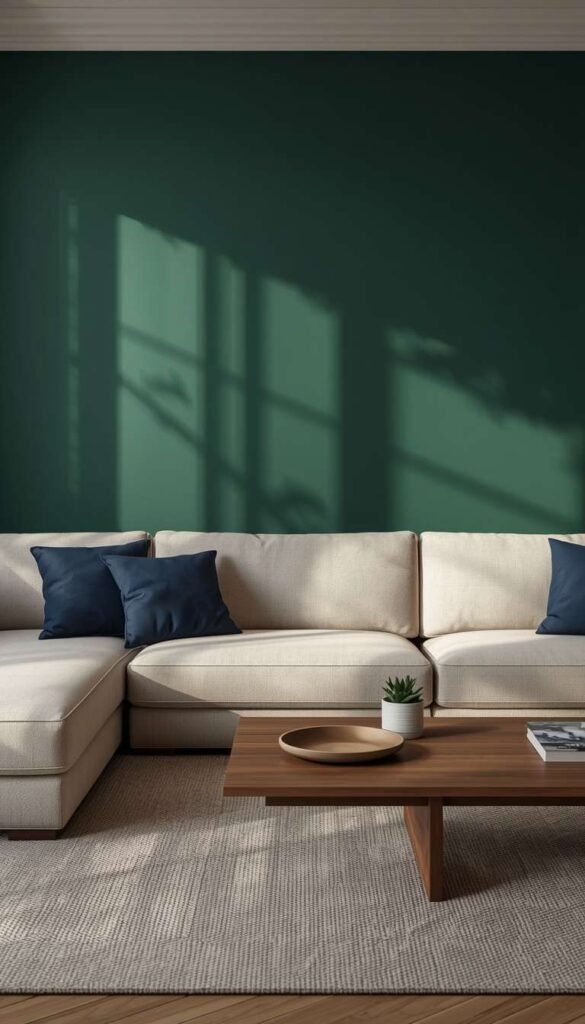
A green accent wall is one of those ideas that sounds bold on paper but actually settles into a room beautifully once it’s up. Choose a wall that anchors your main seating area, ideally behind a beige sectional, and go with a green that has some gray or blue undertone so it feels contemporary rather than retro. Forest green, eucalyptus, or a deep sage all work well here. The beige sectional stays soft and inviting against that backdrop, and you can layer in blue through pillows, throws, or even a piece of abstract art that pulls both colors together. What makes this contemporary rather than traditional is keeping everything else clean lined, simple drapery, minimal pattern, and lighting that feels architectural rather than ornate.
14. Cozy Living Room with Layered Blue and Green Textiles
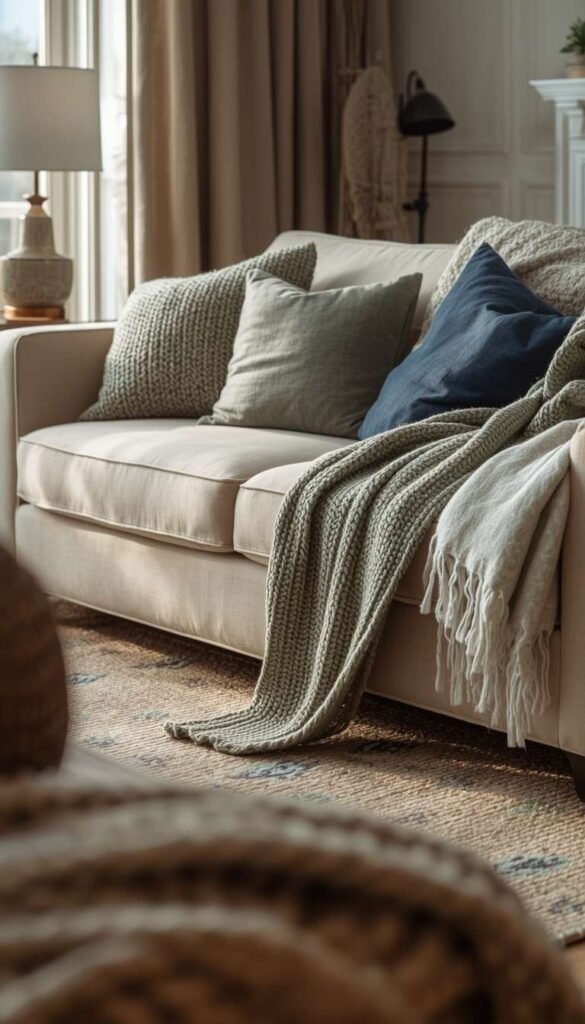
Not every room needs to be built around paint or big furniture choices. Sometimes the coziest spaces are the ones where the walls and sofa stay neutral, beige, cream, oatmeal, and all the personality comes through layered textiles. Throw blankets in sage and forest green, pillows in a few different blues, a patterned rug that ties both colors together, even curtains in a soft botanical print. The beauty of this approach is how easy it is to change with the seasons or just when you’re craving something new. A few textiles to rotate in:
- A chunky knit throw in sage for cooler months
- Pillow covers in navy or teal for an instant refresh
- A jute or wool rug with subtle green and blue threading
This is also the most budget friendly way to test whether you actually like a deeper blue or green before committing to paint or furniture in those tones.
If you could only change one thing in your living room this weekend, would it be the wall color, the sofa, or just the textiles?
15. Nature Inspired Living Room, Blue, Green and Natural Wood Tones
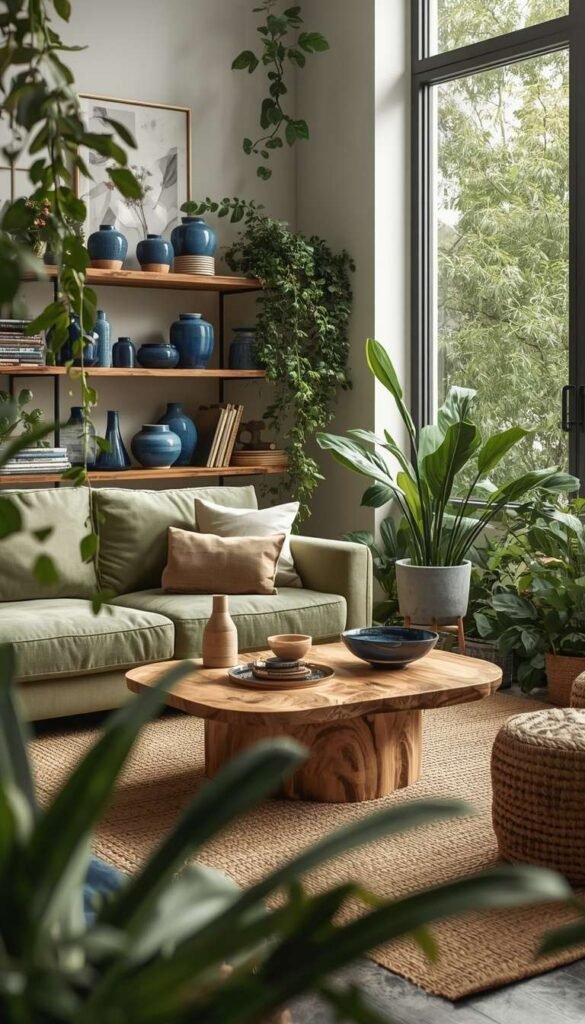
I wanted to end on this one because it ties together almost everything we’ve talked about. A nature inspired living room leans on the idea that blue and green already exist together constantly in the natural world, sky and water against trees and hills, so when you bring them indoors alongside warm wood tones, it just feels right. Picture a sofa in warm beige or a soft sage, a coffee table and shelving in natural wood with visible grain, and accents of blue through pottery, art, or pillows. Add plants generously here, since greenery is really the bridge that makes the whole palette feel cohesive rather than like separate color choices placed next to each other. Natural light matters enormously in this style too. If your living room gets good sun, lean into lighter woods and softer greens. If it’s a darker room, richer wood tones and deeper blues will actually feel more grounded than fighting against the lack of light with pale colors.
Which Path Is Yours?
By Budget
- Just Starting Out: Beige walls with a blue accent wall, or botanical prints and greenery on existing beige walls
- Mid Range Refresh: Layered blue and green textiles, or navy accents in a transitional beige room
- Investment Pieces: Olive green sofa, organic modern velvet seating, or a full luxury green and camel makeover
By Lifestyle
- Renters and Apartment Dwellers: Botanical prints, greenery, and layered textiles, since nothing here requires touching the walls
- Busy Families with Kids or Pets: Olive green sofa (hides wear well) or beige walls with a single accent wall, both forgiving on maintenance
- Small Spaces: Light sage and beige to open up the room, or the minimalist sage, beige, and one blue note approach
- Open Concept and Larger Homes: Nature inspired blue, green, and wood tones, or the modern farmhouse take, both have room to breathe across bigger layouts
By Style Direction
- Calm and Understated: Sage green walls with beige sofa, or minimalist sage and beige with one blue accent
- Warm and Earthy: Earth tone layering with sage, terracotta, and beige, or the nature inspired wood and green combination
- Polished and Elevated: Luxury neutral with deep green and camel, or the green accent wall behind a beige sectional
Frequently Asked Questions
Do blue and green go together in a living room?
Yes, and they’re actually one of the most natural color pairings you can use. Both colors exist together constantly in nature, so they read as calm rather than clashing.
What color goes best with sage green in a living room?
Beige and warm cream are the safest, most flexible options. Camel, terracotta, and soft navy also work well as accent tones.
Is olive green going out of style for living rooms?
No, olive green has shifted from trendy to a staple neutral in American homes. It pairs easily with warm woods and beige, which keeps it feeling current rather than dated.
How do I add color to a beige living room without repainting?
Start with textiles, pillows, throws, and a rug in your chosen blue and green tones. Botanical art and a few plants go a long way too, and none of it requires touching the walls.
What is the most popular green for living room walls right now?
Sage green is leading the pack for 2026, especially softer, grayed versions rather than bright greens. Olive and deep forest green are close behind for accent walls and furniture.
Conclusion
I hope this gave you a clearer picture of how blue and green can feel like home rather than a showroom display. Your living room is where you unwind, host friends, and spend most of your evenings, so even one small shift, a new pillow, a sample swatch on the wall, can change how the whole space feels day to day. You don’t need to overhaul everything this weekend. Pick one idea from this list, grab a paint sample or move a plant into the room, and just see how it feels for a few days.
Which of these looks is closest to your current living room, and what’s the one thing you’d change first?
