
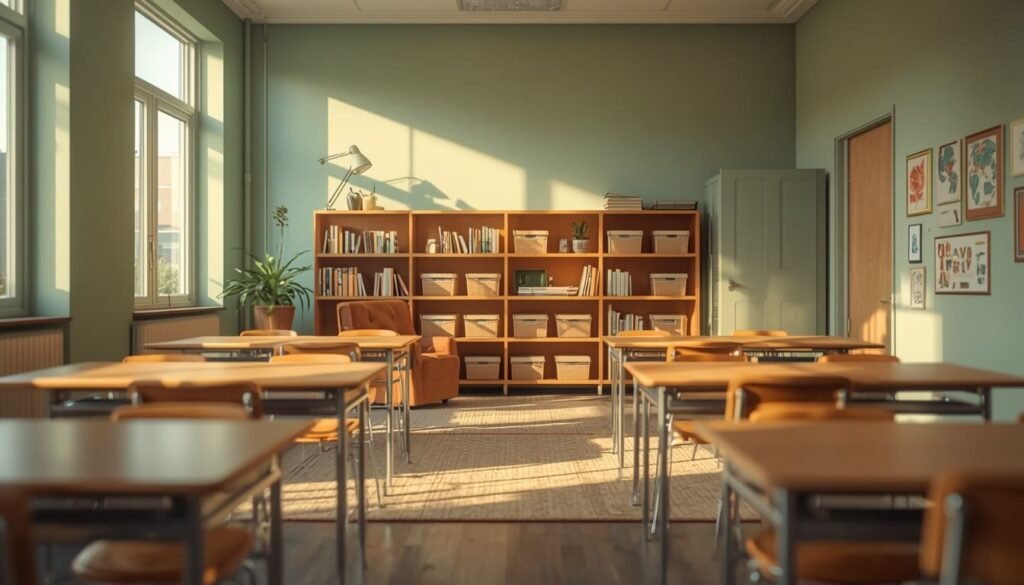
Walking into a classroom that feels flat is like walking into a hotel room nobody bothered to personalize, and your students notice it just as much as you do. The good news is that a high school classroom doesn’t need a big budget or a total renovation to feel intentional, current, and genuinely inviting. With the right mix of color, layout, and a few thoughtful touches, you can create a space that feels less like a holding cell and more like a room your students actually want to walk into. I’ve pulled together sixteen ideas that strike that balance between professional, age appropriate, and stylish enough that you’ll actually enjoy spending your day there.
My Design Notes
I still think about the classroom makeover I helped with for my friend Sarah, a tenth grade English teacher just outside Asheville, North Carolina. She inherited a room that was straight out of 1998, beige walls, mismatched plastic chairs, and one of those buzzing fluorescent light fixtures that made everyone look slightly seasick.
We had one weekend and less than three hundred dollars, so I knew we had to be smart about where the money went. I spent a Saturday morning at the local Habitat for Humanity ReStore and came home with a worn leather armchair, two wooden crates, and a stack of frames for ten dollars total.
My favorite part was the reading nook we built in the back corner using that armchair, a soft rug, and string lights tucked behind a bookshelf. Within the first week, Sarah told me it had become the most requested seat in the room, kids were literally negotiating over whose turn it was.
That project taught me that you don’t need a big budget to change how a room feels. You just need to be intentional about a few key spots.
Mastering an Elevated High School Classroom Aesthetic
1. Pick a Cohesive Calming Color Palette
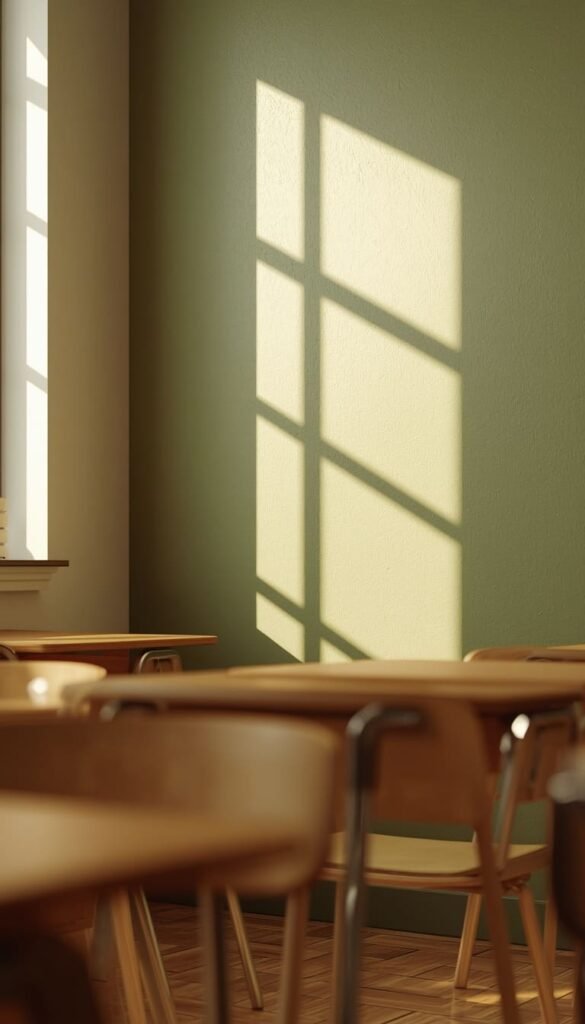
Color sets the entire mood of a classroom before a single piece of furniture goes in. I always tell teachers to think of their walls as the foundation, not an afterthought, because everything else you bring into the room will either work with that color or fight against it. Sage green, warm terracotta, and soft greige tones have become my go to recommendations for high school spaces because they feel calm without being clinical.
A few combinations that work beautifully together:
- Sage green walls with warm wood tones and cream accents
- Soft blue grey paired with mustard or ochre pops
- Greige base with black accents for a more modern, grounded feel
One thing to watch out for is committing to a color before checking your lighting. A paint chip looks completely different under fluorescent bulbs than it does in natural daylight, so always test a swatch on the actual wall and look at it morning, afternoon, and evening before you commit.
2. Boho Inspired Reading Nook
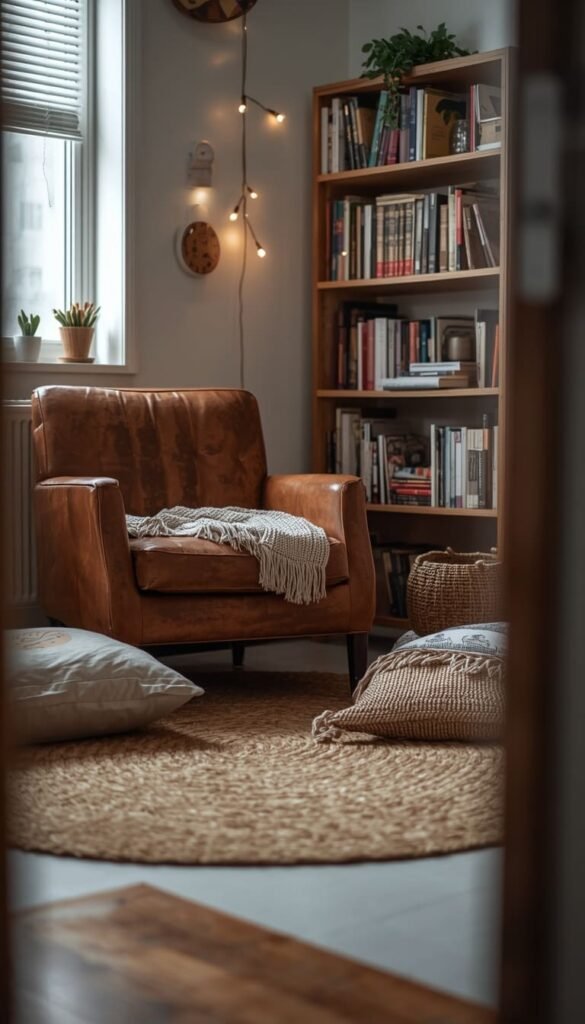
This one is close to my heart because of the Asheville project I mentioned earlier. A reading nook doesn’t need much space, just a forgotten corner, a comfortable chair, and a soft rug to anchor it. Layer in a few floor pillows, a small bookshelf, and maybe a string of warm white lights for that cozy, lived in feel.
The boho aesthetic works particularly well in high school settings because it feels relaxed and grown up at the same time, without veering into anything that reads as childish.
3. Flexible Seating Zones for Student Choice
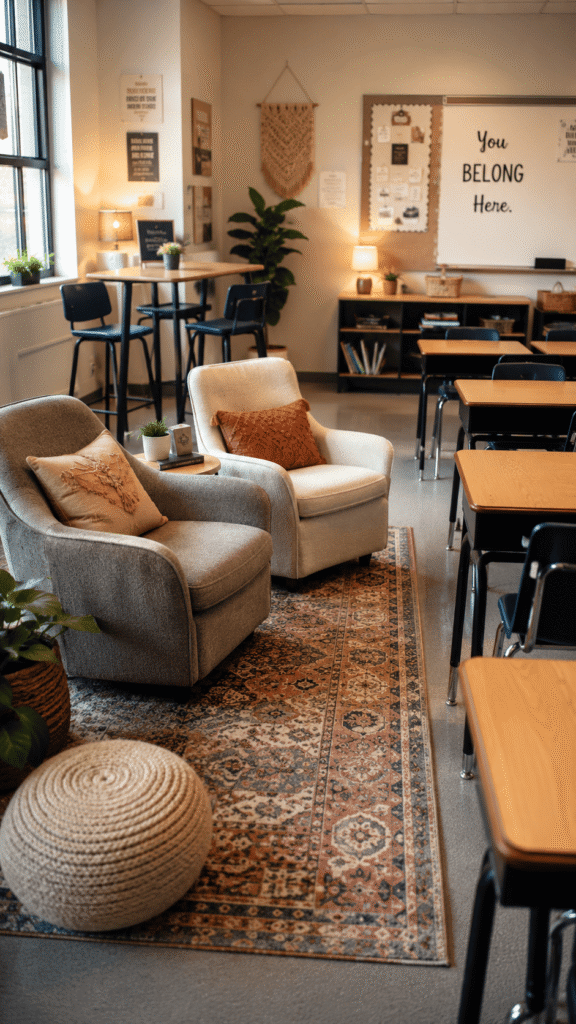
Flexible seating has been a buzzword for years now, but in practice, most teachers either go all in or avoid it completely out of fear it’ll turn into chaos. My honest take is that a middle ground works best for teens. You don’t need to ditch desks entirely. Instead, carve out two or three distinct zones, a standard desk area for focused work, a soft seating cluster for discussions, and maybe a standing height table for students who fidget or need to move.
A quick trick I’ve learned is to color code or label these zones subtly through your decor, like using a different rug or wall art in each area, so students intuitively know what kind of work happens where. It cuts down on the “where do I sit” chaos within the first week.
4. Minimalist Bulletin Boards with Modern Typography
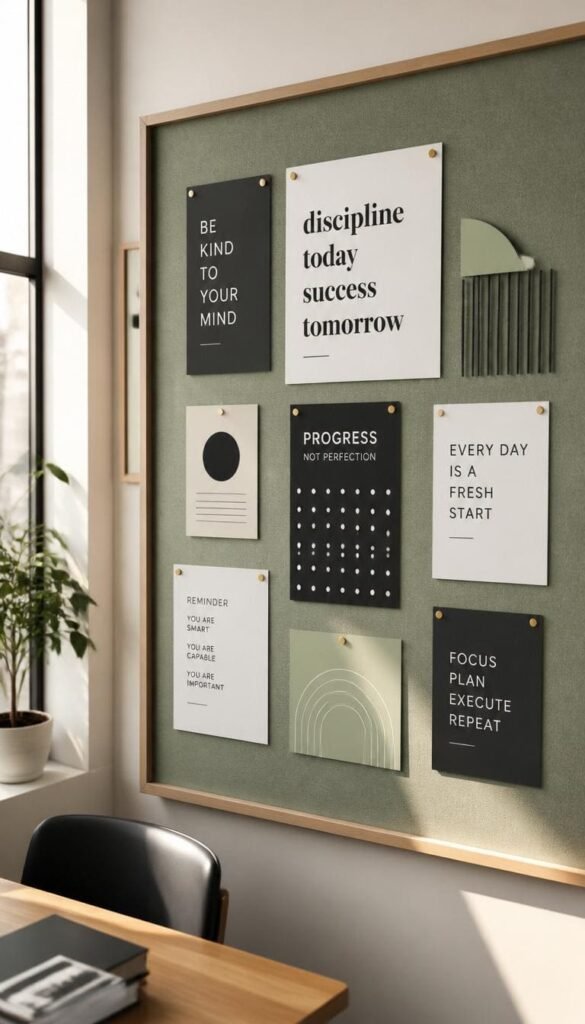
Gone are the days of bulletin boards stuffed with clip art and a dozen competing fonts. For a high school space, I’m a big believer in restraint. Pick one or two fonts, stick to your color palette, and give the design room to breathe with some genuine white space.
Modern typography printables, available cheap on Etsy or even free through some teacher blogs, instantly elevate a board from “elementary school” to “this teacher has taste.” Think bold single word statements like Create, Question, Grow, paired with clean geometric shapes rather than busy borders. It reads as intentional, and honestly, it’s also a lot less work to maintain throughout the year.
Top 6 ideas:
| Idea | Estimated Price | Maintenance |
|---|---|---|
| Boho Reading Nook | $100 to $300 | Medium |
| Open Shelving and Storage Bins | $50 to $200 | Low |
| Warm Layered Lighting | $40 to $150 | Low |
| Cozy Rugs and Throw Pillows | $60 to $250 | Medium |
| Gallery Wall for Student Work | $30 to $100 | Medium |
| Modern Door Decor | $15 to $75 | Low |
5. Curated Gallery Wall for Student Work and Quotes
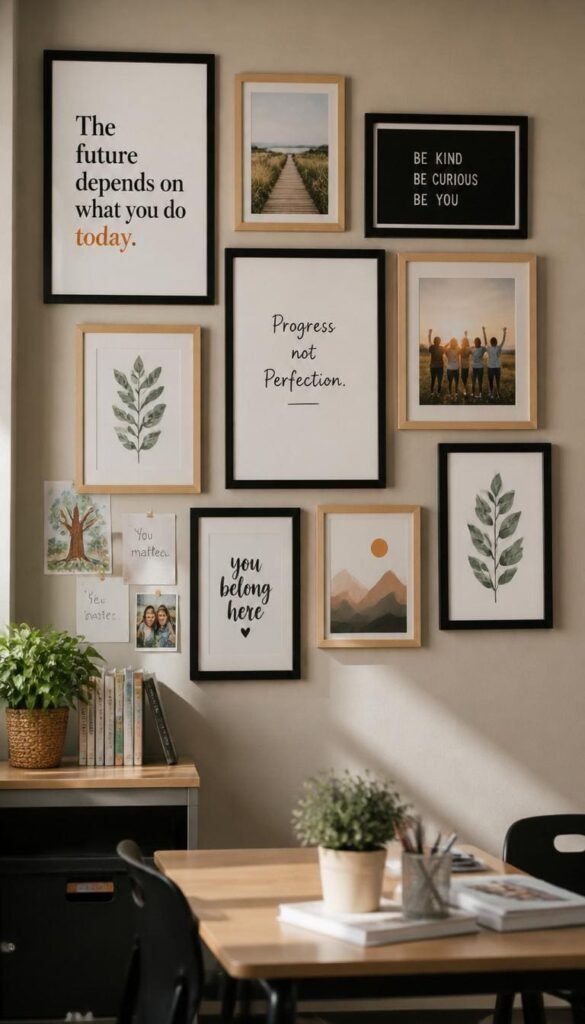
A gallery wall is one of those features that instantly makes a room feel personal, and it’s also one of the easiest to update throughout the year. Mix framed prints of motivational quotes with rotating student work, photos from class projects, and maybe a few inspirational figures relevant to your subject.
The trick to making this look curated rather than cluttered is consistency in your frames. Grab a bundle of matching frames in black, white, or natural wood, even if they’re different sizes, and the whole wall instantly reads as cohesive. I’ve also found that leaving a designated empty frame or two on purpose, ready to be filled with whatever comes up that month, keeps the wall feeling alive instead of static.
Out of these sixteen ideas, which one do you think your classroom needs the most right now?
6. Open Shelving and Stylish Storage Bins
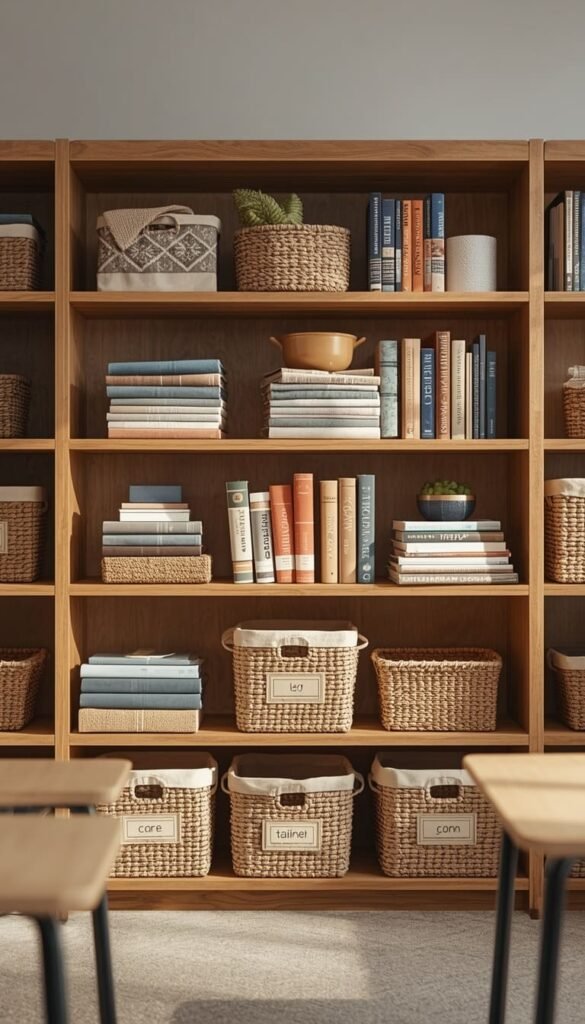
Storage is where most classrooms fall apart visually, and it’s also where I see teachers spend the least time thinking about aesthetics, which is a shame because it’s such low hanging fruit. Open shelving with matching bins or baskets can transform a chaotic supply corner into something that actually looks intentional.
A few options that hold up well with teen use:
- Woven baskets for soft items like extra sweaters or blankets
- Labeled fabric bins for paper supplies and handouts
- Stackable wire baskets for textbooks or binders
One thing worth knowing upfront is that woven baskets, while gorgeous, can fray and shed over a school year with heavy use. If durability matters more to you than looks, a sturdy canvas bin with a leather style handle gives you a similar feel without the wear and tear.
7. Warm Layered Lighting Over Fluorescents
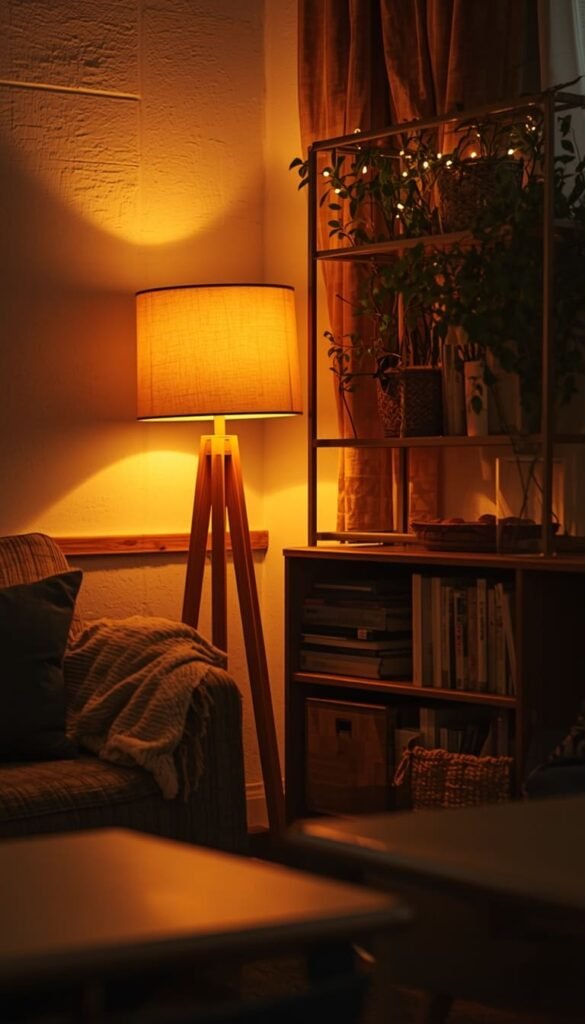
If there’s one change that makes the biggest difference for the least effort, it’s lighting. Standard overhead fluorescents are harsh, unflattering, and honestly kind of exhausting to be under for six hours a day. I always recommend layering in warmer light sources wherever your school’s policy allows.
Floor lamps, desk lamps, and string lights with warm white bulbs can soften a room dramatically. Even just turning off half your overheads and supplementing with a couple of lamps changes the entire energy of the space. Students notice it too, even if they can’t quite articulate why the room suddenly feels calmer.
8. Low Maintenance Greenery Corners
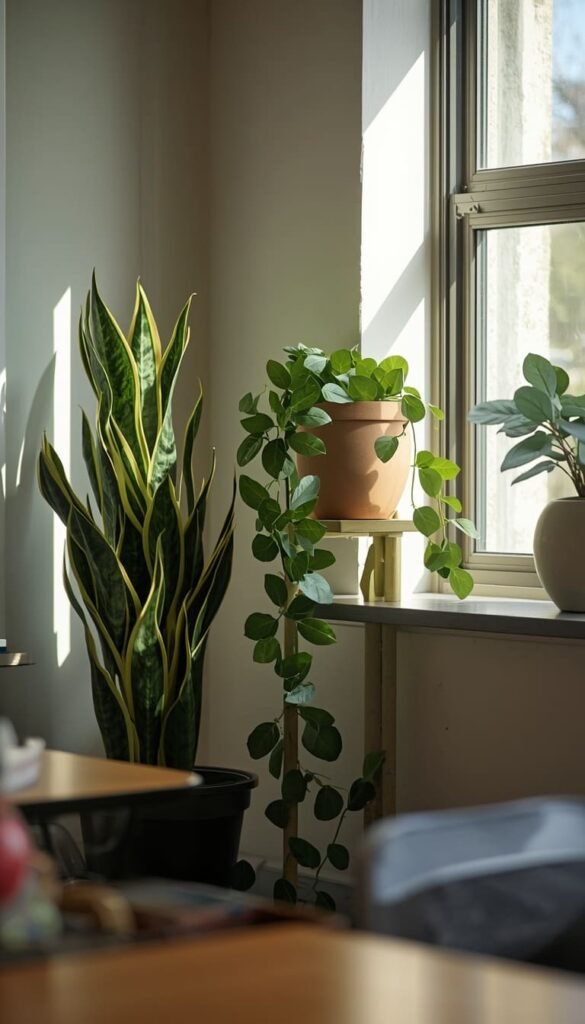
Plants bring life into a room in a way that almost nothing else can, but I’ll be honest, real plants in a high school classroom are a gamble. Between forgotten watering schedules, limited natural light, and the occasional accidental knock off a shelf, a lot of greenery doesn’t survive the year.
My go to solution is a mix. Use one or two hardy real plants, like a snake plant or pothos, that can survive neglect and low light, then fill in with high quality faux greenery for the spots that need a guaranteed pop of green all year. Grouping plants of varying heights on a shelf or windowsill creates a much more polished look than scattering single pots around the room.
9. Teacher Desk and Workspace Refresh
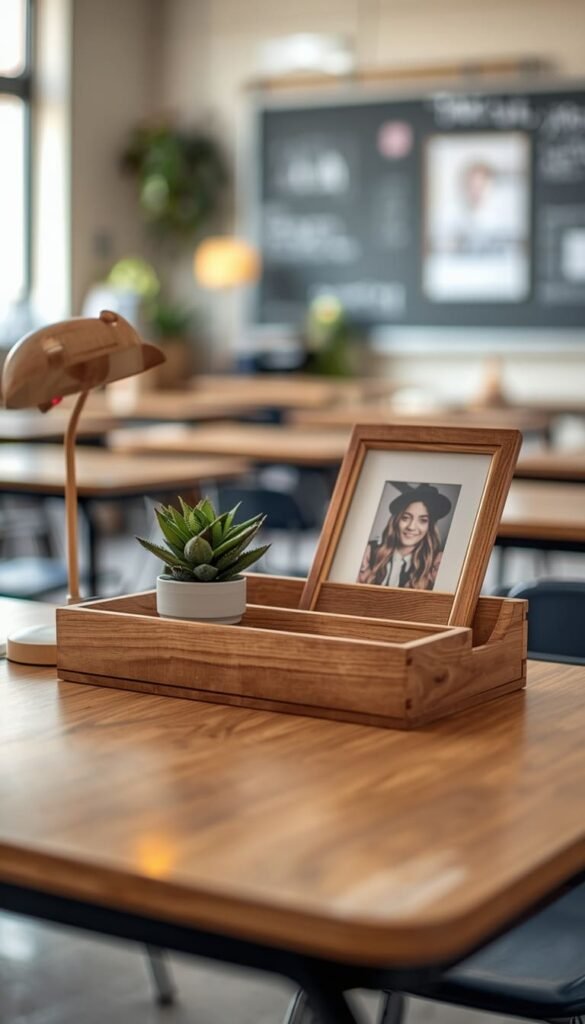
Your desk sets a tone too, and it’s worth treating it as part of the overall design rather than a separate, neglected zone. A cluttered desk piled with papers sends a different message than one that feels organized and considered, even on a busy day.
Start by clearing everything off the surface and only bringing back what you actually use daily. A desk organizer, a small plant, a lamp, and maybe a framed photo or print that reflects your personality can go a long way. I’ve found that giving yourself a designated tray for “to be filed” papers, rather than letting them spread across the whole desk, keeps things looking tidy even during the chaotic weeks.
If you could only change one thing about your current setup this week, what would it be?
10. Welcoming Modern Door Decor
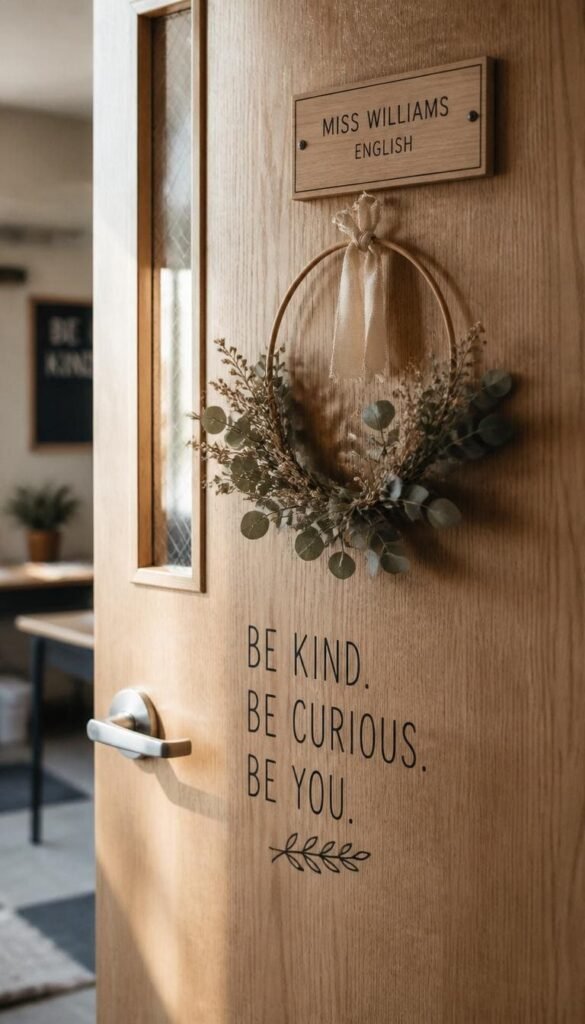
The door is the very first thing students see, and first impressions matter just as much in a classroom as they do anywhere else. A lot of high school teachers skip door decor entirely because it feels too elementary, but there’s a middle ground between a giant cartoon welcome sign and a completely blank door.
Consider one of these approaches:
- A simple painted or vinyl quote in your subject area
- A minimalist welcome sign with clean lettering
- A rotating “this week we’re exploring” poster that changes with your curriculum
A subtle nameplate or even a small wreath that changes with the seasons can add warmth without feeling juvenile. It signals that this is a space someone cares about, which sets a tone before students even step inside.
11. Vision Board Wall for Goals
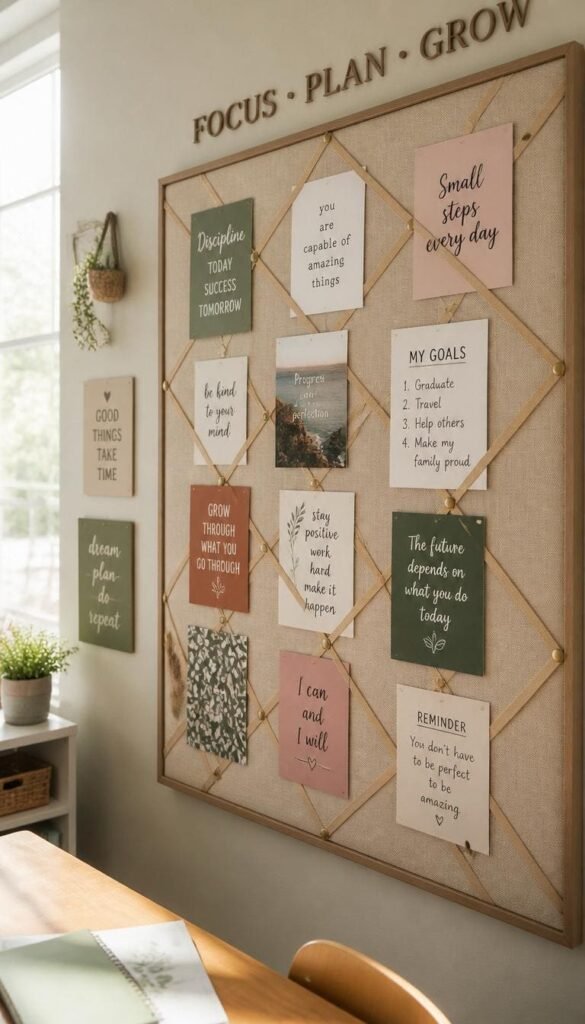
This idea works especially well for high schoolers who are starting to think seriously about colleges, careers, or just personal growth. A dedicated wall or bulletin board where students can pin images, quotes, or goals related to their future gives the room a sense of purpose beyond the day to day curriculum.
You can keep it simple with a cork board and pushpins, or get a bit more polished with a fabric covered board and ribbon grid system. Either way, rotating it periodically, maybe at the start of each semester, keeps it feeling fresh and gives students a reason to revisit and update their own goals.
12. Tech Friendly Charging Station Setup
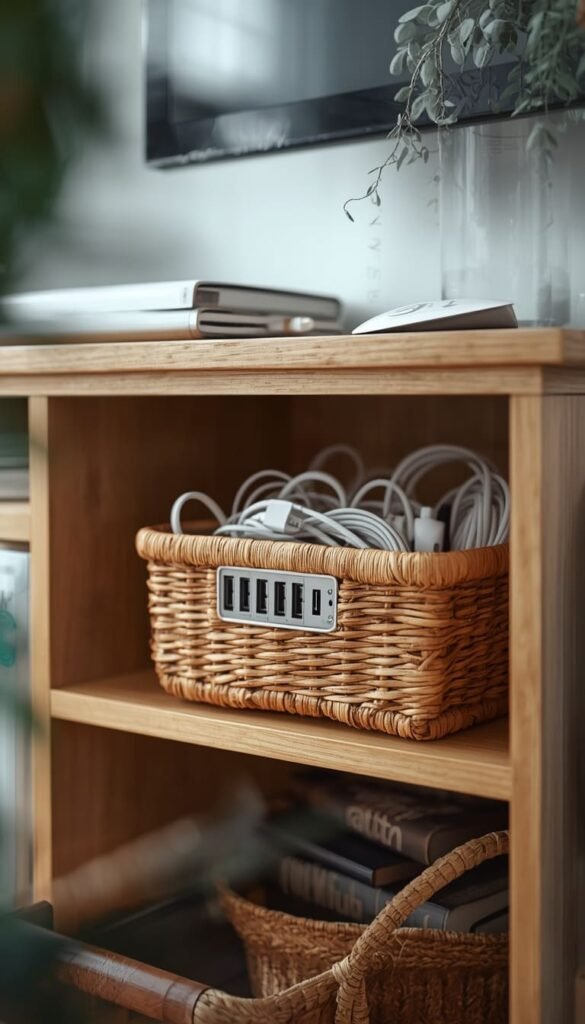
Almost every student walks in with a phone, tablet, or laptop these days, and a dedicated charging station solves a problem that otherwise leads to cords draped across the floor and outlets fought over all period. A small table or repurposed shelf near an outlet, fitted with a multi port charging hub, keeps everything contained.
A nice touch is housing the whole thing in a decorative basket or box so the cords and adapters aren’t just sitting out in a tangle. It’s a small detail, but it quietly tells students that this room has been thought through, right down to the practical stuff.
13. Cozy Textiles: Rugs and Throw Pillows
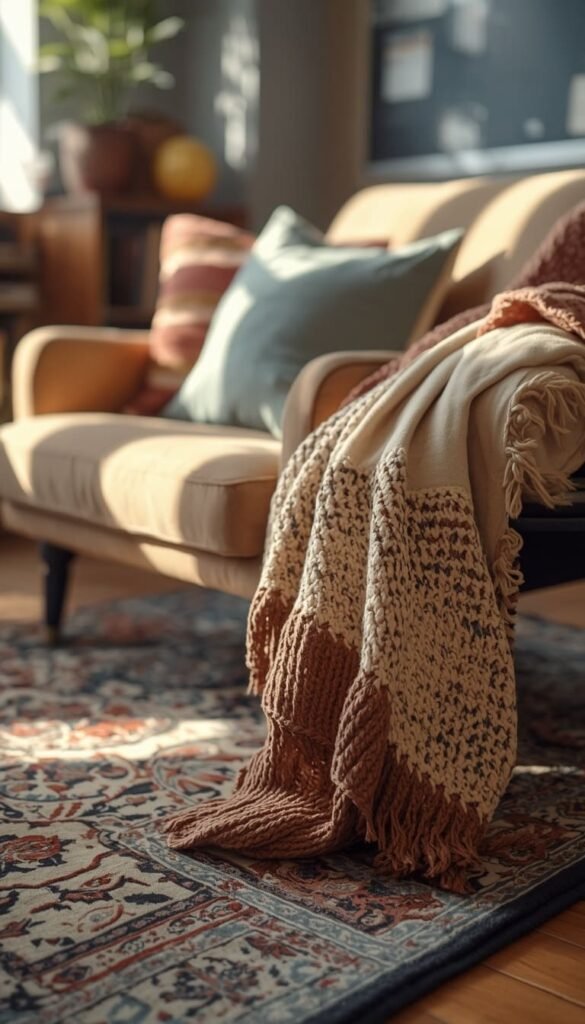
Soft textiles do a lot of heavy lifting when it comes to making a classroom feel warm rather than institutional. A large area rug under your reading nook or seating cluster instantly grounds the space and helps define different zones without needing actual walls.
A few easy additions that make a noticeable difference:
- A durable, low pile rug that can handle foot traffic and the occasional spill
- Throw pillows in two or three coordinating patterns rather than one solid color everywhere
- A folded blanket or two on the reading chair for that lived in touch
Just keep in mind that anything light colored will show wear fast in a high traffic classroom, so darker or patterned textiles tend to age much more gracefully over a school year.
14. Interactive Word Wall Reimagined
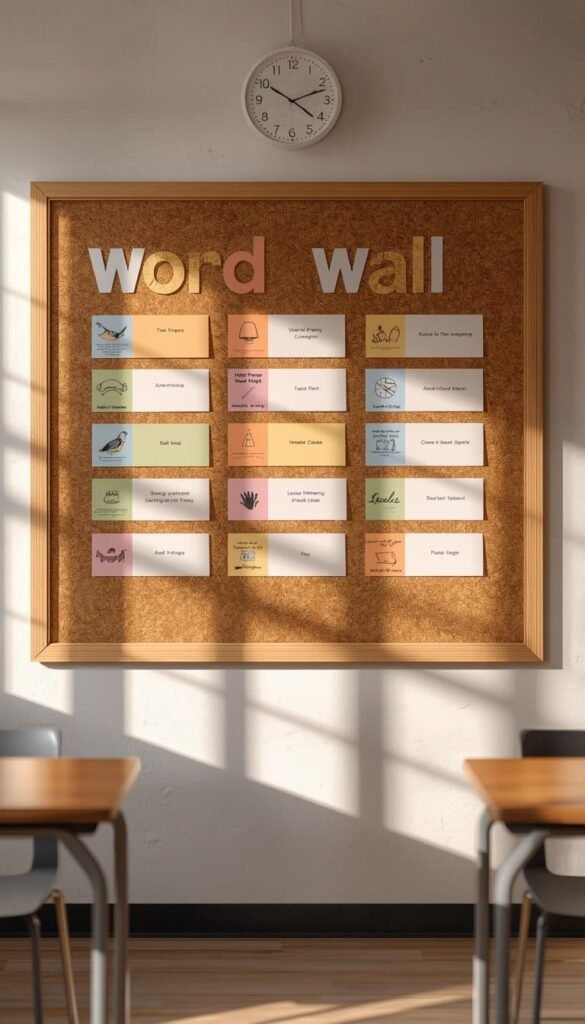
The classic word wall doesn’t have to disappear, it just needs an update. Instead of the typical alphabetized list of vocabulary words taped haphazardly to a wall, think of it as a living, evolving display that students actually contribute to and reference throughout the year. I’ve seen teachers use a designated chalkboard paint section or a large framed corkboard where students physically add new words they encounter in their reading, complete with the definition and the context they found it in.
What makes this feel more modern and less elementary is the presentation. Use consistent card sizes, a unified color scheme, and maybe even color code by part of speech or subject area. Over time, the wall becomes a visual record of the class’s collective learning, and students genuinely take pride in seeing their contributions up there. It also doubles as a built in resource during writing assignments, so it’s functional as well as decorative.
15. Smart Classroom Layout for Better Flow
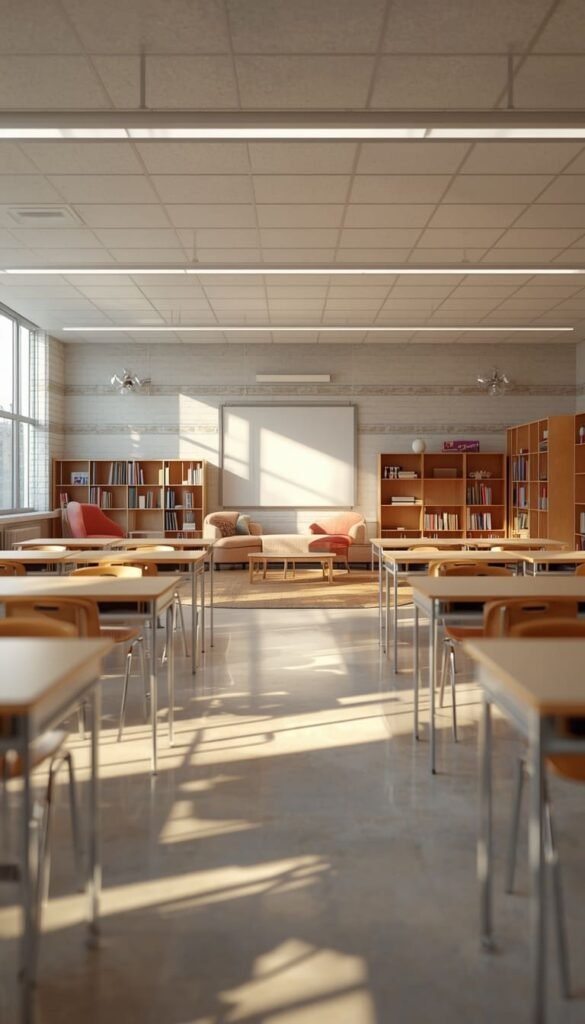
Sometimes the biggest transformation has nothing to do with decor at all and everything to do with how the furniture is arranged. Before you buy a single new item, walk through your room as if you’re a student entering for the first time. Where do people naturally bottleneck? Is there a clear path to the door, the supply station, and your desk without weaving around chairs?
I always suggest leaving more open floor space than feels intuitive at first. A slightly emptier room with intentional pathways will always feel more put together than a packed room, no matter how nice the individual pieces are.
Does your classroom lean more toward cluttered and busy, or empty and impersonal, and which feels harder to fix?
16. Personal Signature Touches That Reflect Your Style
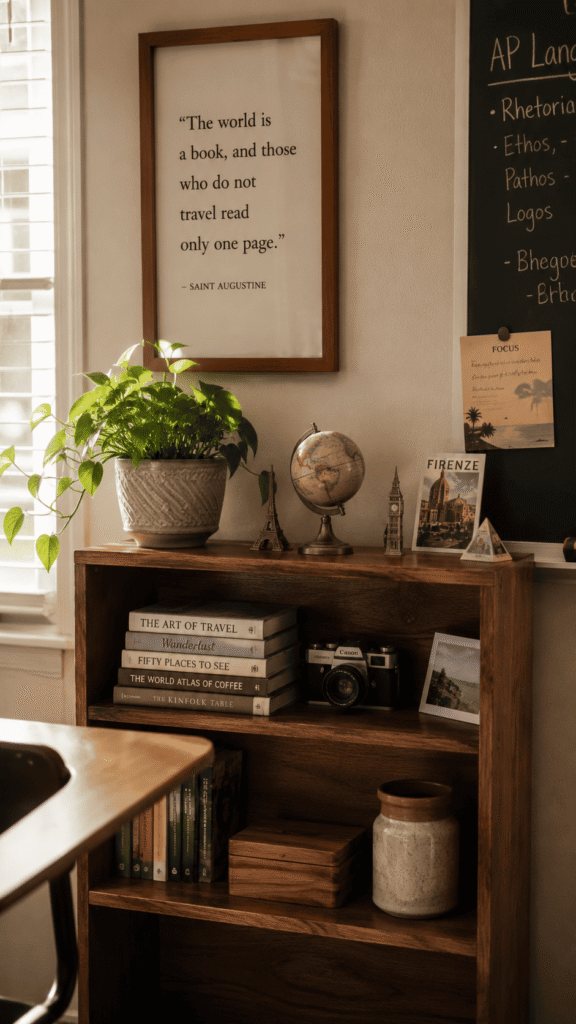
After all the bigger decisions around color, layout, and storage, the last layer is the one that’s truly yours. This is where a framed print of your favorite book quote, a small collection of items from your own travels, or even a corner dedicated to your hobby outside of teaching comes in. These details might feel small, but they’re often what students remember most, and they go a long way in making the room feel like a real place rather than a generic classroom template.
Choose a handful of pieces that genuinely mean something to you rather than filling every inch of available space. A room with a few thoughtful, personal touches will always feel warmer and more intentional than one that’s stuffed with decor for the sake of it.
Which Path Fits Your Classroom
By Budget
Starter Setup
- Door decor refresh with vinyl quote or minimalist sign
- One or two faux plants grouped on a shelf
- Matching frames for a small gallery wall
- A single warm toned lamp to swap out one overhead light
Investment Refresh
- Full reading nook with armchair, rug, and shelving
- Open shelving system with matching storage bins throughout
- New seating cluster for a flexible zone
- Layered lighting across multiple areas of the room
By Teaching Style
Minimalist Teachers
- Stick to one or two colors and modern typography boards
- Open shelving with hidden storage bins
- Vision board wall kept simple, just cork and pins
Hands On Collaborative Teachers
- Flexible seating zones with clear visual cues
- Interactive word wall students contribute to
- Gallery wall that rotates with current projects
Frequently Asked Questions
How much does it cost to decorate a high school classroom?
Most teachers spend between $150 and $500 for a full refresh using budget friendly sources like Target, Amazon, and thrift stores. You can go lower if you focus on a few key items like lighting and storage.
What colors work best for a high school classroom?
Sage green, soft blue grey, and warm greige tend to work best. These tones feel calm and grown up without reading as childish, and they pair easily with wood tones and black accents.
Is flexible seating a good idea for high school students?
Yes, but moderation matters. A mix of traditional desks and one or two flexible zones gives students choice without losing structure.
How do I make my classroom decor look less elementary?
Stick to one or two fonts, a limited color palette, and skip cartoon characters entirely. Clean typography and curated displays instantly read as more mature.
What classroom decor items are worth the investment?
Lighting and seating top the list. A few warm lamps and a comfortable reading chair get used daily and make the biggest difference in how the room feels.
Conclusion
- excitement or repetitive adjectives.”
2:21 AM
Your classroom is where you spend the majority of your waking hours, so it deserves to feel like somewhere you actually want to be, not just somewhere you have to be. You don’t need to tackle all sixteen of these at once. Pick the one that’s been nagging at you, maybe that cluttered supply shelf or that flickering overhead light, and start there this weekend. Small changes compound faster than you’d think, and by the time winter break rolls around, you might not even recognize the room.
So tell me, which of these sixteen are you trying first, and what’s the one thing about your current classroom that drives you a little crazy?
