
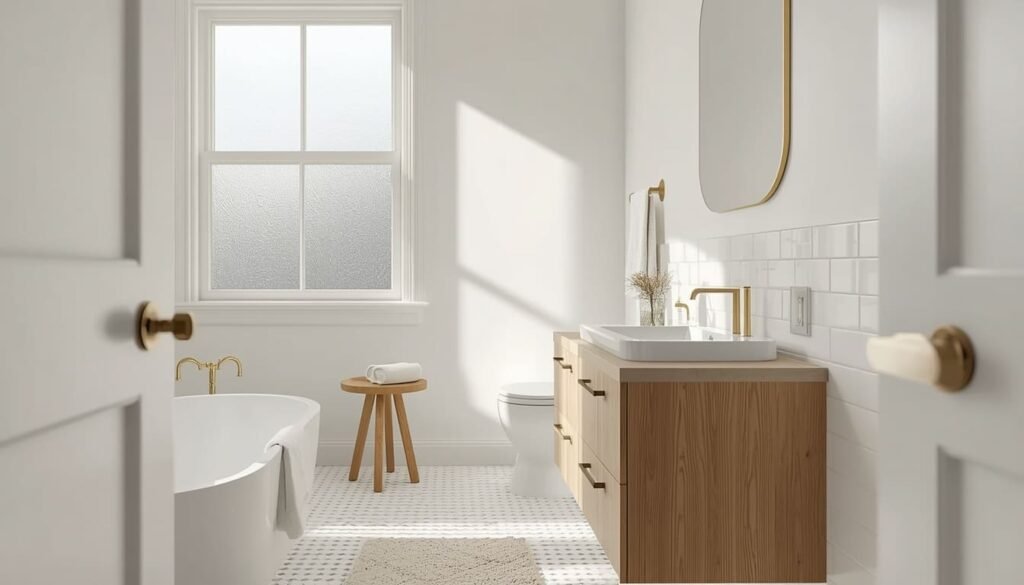
White is the one color that never has to prove itself in a bathroom and yet, so many white bathrooms end up feeling cold, flat, or just plain boring. I’ve walked through hundreds of homes across the US, and I can tell you honestly the difference between a stunning white bathroom and a forgettable one comes down to a handful of very specific decisions. It’s not about spending more money. It’s about knowing which ideas actually hold up in real life with real families, real budgets, and real morning routines. That’s exactly what this guide is built around.
My Design Notes
A few years back, I was working on a bathroom renovation for a young couple in East Nashville, Tennessee. Their 1960s ranch home had one full bathroom, a $4,200 budget, and a contractor who kept pushing gray tile as the “safe” choice. I pushed back. We went with a warm all white palette, a white oak floating vanity, vertical subway tile, and unlacquered brass hardware. The wife called me two days before installation and said she was nervous it would look like a hospital room. I told her to trust the process. Three weeks later, she sent me a photo with a single message: “I literally stand in here just to feel calm.” That project changed how I talk about white bathrooms to every client. It’s not a safe choice. When you do it right, it’s the boldest one you can make.
Stunning White Bathroom Design Secrets Every Homeowner Should Know
1. Warm White and Wood Vanity The White and Wood Bathroom Combo That Feels Like a Spa
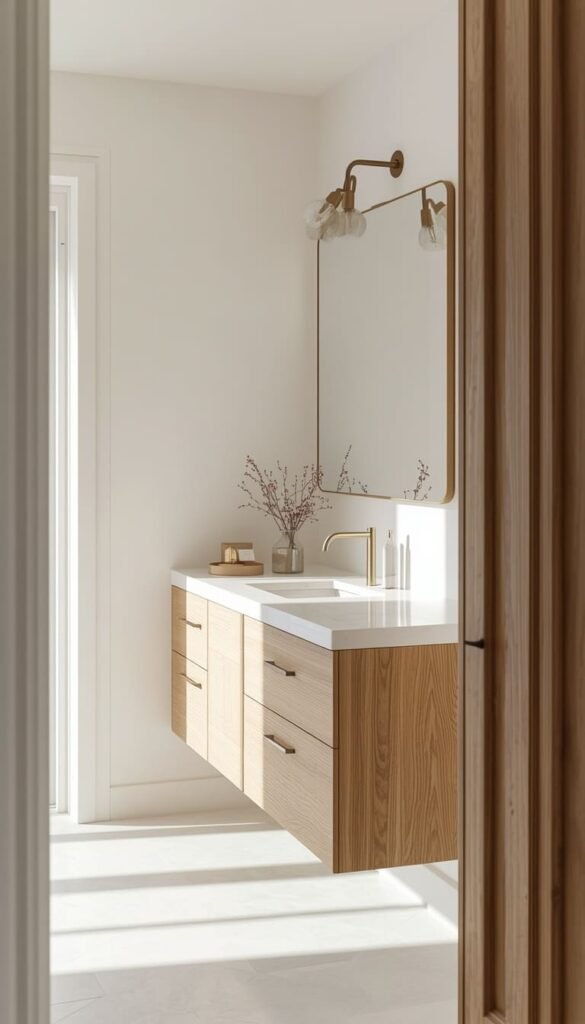
There’s something about warm white walls paired with a natural wood vanity that just feels intentional. It’s one of those combinations that photographs beautifully but also genuinely looks that good in person, every single morning. I’ve used this pairing in Modern Farmhouse and Transitional style homes across the South and Midwest, and the reaction from homeowners is almost always the same they stop rushing through their morning routine because the bathroom actually makes them want to stay.
The wood tone matters more than most people realize. White oak and walnut are my two go-to choices. White oak keeps things light and Scandinavian feeling, while walnut adds a richer, moodier warmth. Either way, the wood breaks up the white in a way that feels organic rather than designed.
A few things worth knowing before you commit:
- Budget realistically between $800 and $2,500 for a vanity swap depending on size and material
- Always seal wood vanities with a waterproof finish moisture is genuinely the enemy here
- Pair with unlacquered brass or matte black hardware to complete the look
The one honest con? Wood vanities in high humidity bathrooms without proper ventilation will warp over time. A good exhaust fan isn’t optional with this look it’s part of the investment.
2. White Subway Tile Bathroom The Classic That Refuses to Go Out of Style
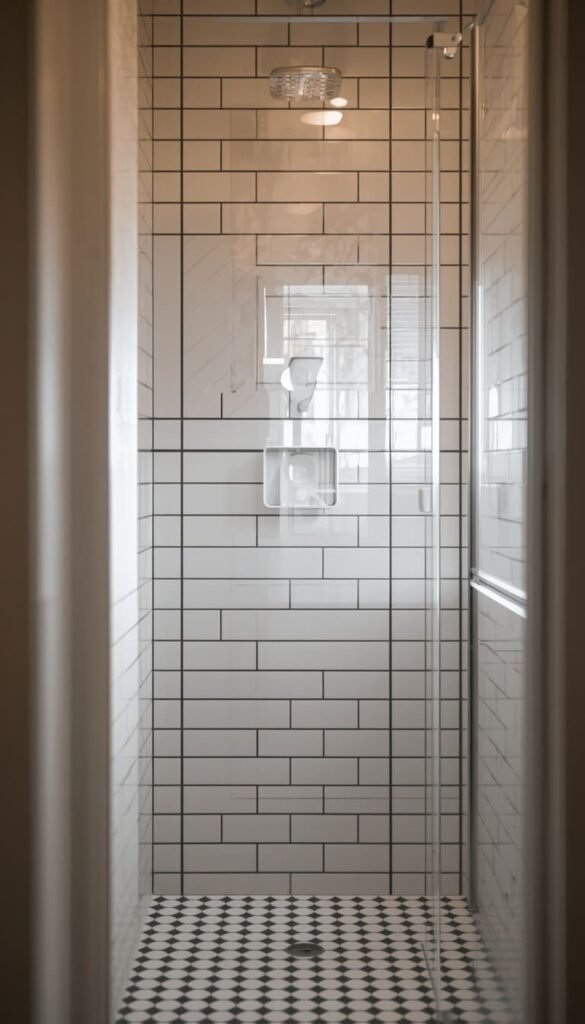
Subway tile has been around since 1904 and it’s still showing up in brand new builds across America. That’s not a coincidence. It’s versatile, affordable, and when you play with the layout, it can look completely different from one bathroom to the next. The traditional brick pattern reads timeless. Stacked vertical tile feels modern and architectural. Herringbone on a shower floor? That’s where it gets genuinely interesting.
The detail that most guides skip over entirely is grout color. It’s honestly more impactful than the tile itself. Matching white grout creates a seamless, almost wall like surface that makes small bathrooms feel bigger. A contrasting gray or charcoal grout highlights every single tile and gives the whole room a more graphic, intentional feel. Neither is wrong they just tell completely different stories.
Tile runs $3 to $8 per square foot, with installation adding another $400 to $900 depending on your market. One thing to watch out for is white grout maintenance. It will stain without a proper sealer, and once it discolors, no amount of scrubbing brings it fully back. Use an unsanded grout sealer from day one and reseal once a year.
3. Small White Bathroom Ideas That Actually Make the Room Feel Bigger
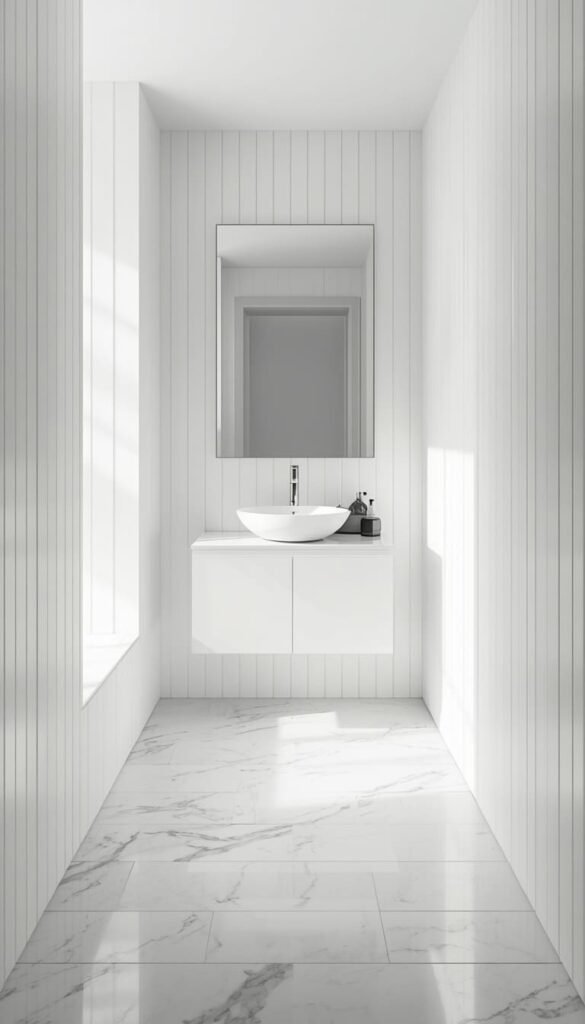
Small bathrooms are where white does its best work. White reflects light, reduces visual boundaries, and tricks the eye into reading a space as larger than it actually is. I’ve seen a 35 square foot bathroom feel genuinely open after a well executed white refresh no demolition, no layout changes, just smarter material choices.
The two moves that make the biggest difference:
- Use large format tiles (12×24 or bigger) on the floor fewer grout lines means a more continuous, expansive surface
- Run wall tile vertically from floor to ceiling to pull the eye upward and make ceilings feel taller
A full small bathroom refresh using these principles can come in under $500 if you’re doing a cosmetic update rather than a full renovation. The honest con here is that all-white in a tiny space shows every water spot, toothpaste splash, and soap smear more clearly than any other color. A squeegee on the shower walls and a quick daily wipe of the vanity area keeps it looking sharp without turning into a chore.
4. Black and White Bathroom Design High Contrast That Never Feels Cold
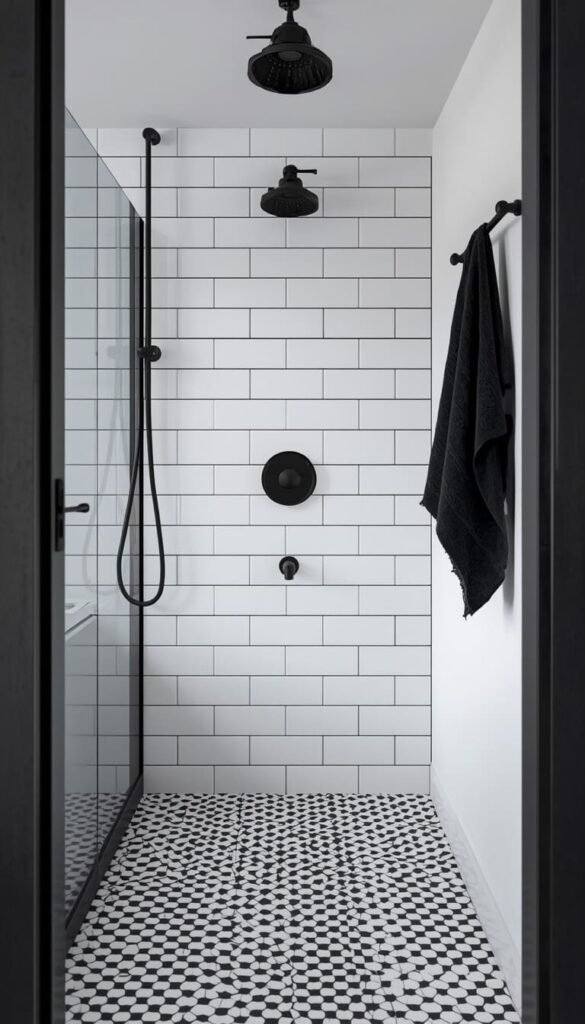
This is the combination I recommend most often to clients who love white but are nervous it will feel too safe or too plain. Black accents do something remarkable they give a white bathroom a backbone. Suddenly the space has edges, confidence, and a design point of view.
The most effective way to introduce black is through hardware and fixtures first. Swap out your existing faucet, towel bars, and cabinet pulls for matte black versions. That single change can run anywhere from $200 to $600 and the visual impact is immediate. From there, black and white patterned floor tile think hexagon or encaustic cement takes the whole room to another level entirely. This look works especially well in Contemporary and Mid Century Modern homes.
Matte black fixtures are gorgeous but they do show water spots, and in a busy household that’s a daily reality. A quick wipe down after use keeps them looking intentional rather than neglected. It’s a small habit that protects a look worth having.
Top 6 ideas:
| Idea | Estimated Price | Maintenance |
|---|---|---|
| Warm White and Wood Vanity | $800 – $2,500 | Medium |
| White Subway Tile Bathroom | $400 – $1,800 | Medium |
| Small White Bathroom Refresh | $200 – $500 | High |
| Black and White Bathroom | $200 – $600 | Medium |
| White Marble Bathroom | $650 – $4,500 | High |
| Minimalist White Bathroom | $1,200 – $3,000 | Low |
5. White Marble Bathroom Ideas How to Get the Luxury Look Without the Luxury Price
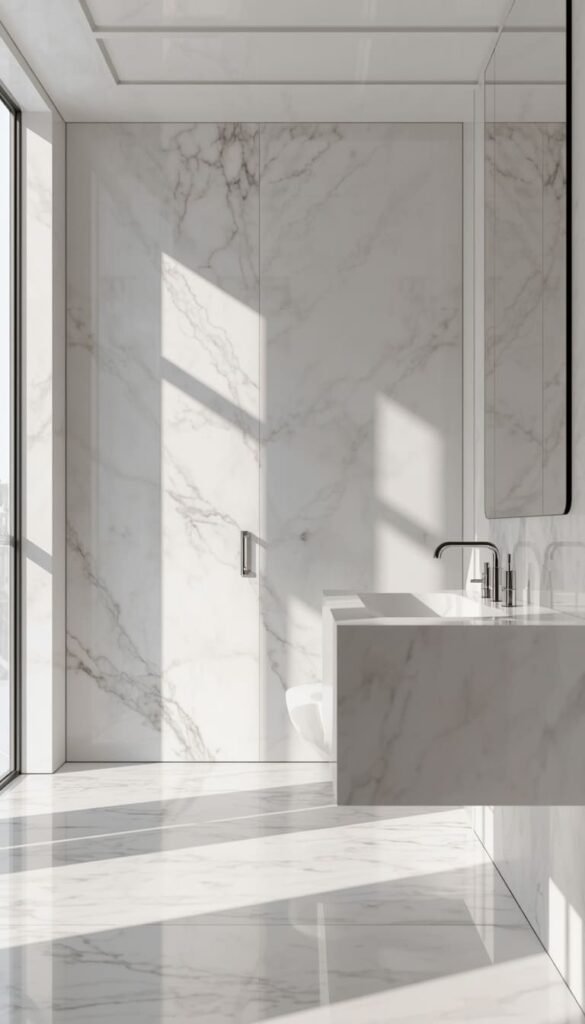
White marble is one of those materials that makes a room feel finished in a way that’s hard to explain until you’re standing in it. The veining, the subtle variation in tone, the way it catches light differently at 7am versus 7pm it’s genuinely beautiful. And for years, it was only accessible to homeowners with serious renovation budgets. That’s changed.
Porcelain marble look tile has gotten remarkably good. A few years ago you could spot the difference immediately. Today, with large format slabs and realistic digital printing, the gap has closed significantly. Here’s the honest cost breakdown:
- Real Carrara marble runs $15 to $30 per square foot before installation
- Porcelain marble look tile costs $2 to $8 per square foot with a nearly identical visual result
- For a standard 50 square foot bathroom, that difference can be $650 to $2,200 in material costs alone
If you have the budget for real marble, it’s a worthwhile investment especially in a primary bathroom that contributes to home resale value. If you don’t, the porcelain alternative is not a compromise. It’s a smart decision. The one genuine con with real marble is maintenance. Marble is porous and it will stain from everyday products like makeup, perfume, and acidic cleaners. Annual sealing is non-negotiable, and even then, etching can happen over time. Go in with eyes open.
6. Minimalist White Bathroom The Less Is More Approach That Actually Works
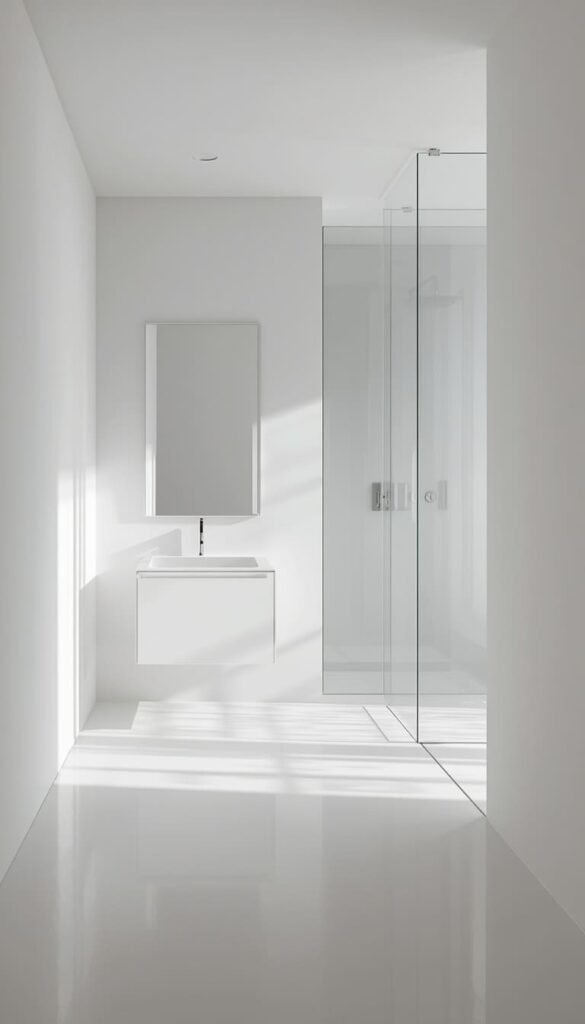
A truly minimalist white bathroom is one of the hardest looks to pull off well, and one of the most rewarding when you do. The entire concept rests on restraint every element earns its place or it doesn’t make the cut. What’s left is a space that feels genuinely calm rather than just empty.
The three elements that define this look in real US homes are a floating vanity, frameless glass shower enclosure, and completely concealed storage. That last one is the piece most people underestimate. A minimalist bathroom with visible clutter immediately loses everything that makes it special. Before committing to this aesthetic, honestly assess your storage needs and plan for them inside the walls, inside the vanity, or in a recessed niche.
Budget between $1,200 and $3,000 for a quality floating vanity installation. This look works beautifully in Modern and Scandinavian influenced homes and ages exceptionally well because there are no trendy details to date it. The con is real though this style has zero clutter tolerance. It rewards disciplined homeowners and quietly punishes everyone else.
7. White Farmhouse Bathroom Shiplap, Clawfoot Tubs and the Details That Make It Feel Authentic
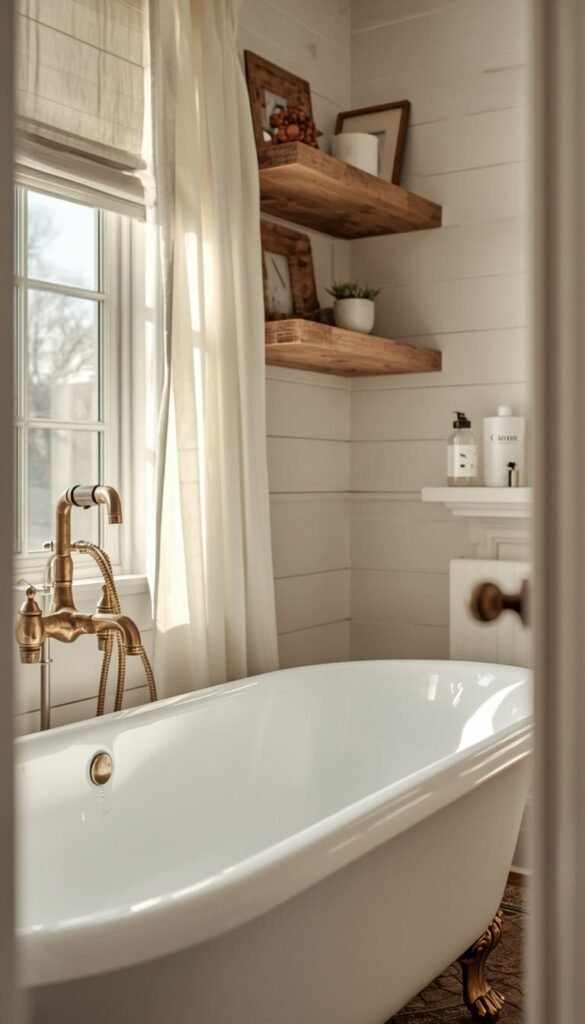
I want to be direct about something here. There is a version of the white farmhouse bathroom that feels genuinely warm and rooted, and there is a version that looks like a Pinterest mood board that never quite came to life. The difference almost always comes down to authenticity in the details.
Real farmhouse character comes from materials that have texture and age. Shiplap walls, an unlacquered brass faucet that patinas naturally over time, a clawfoot or apron front tub, open shelving in reclaimed wood these are the elements that make the style feel earned rather than assembled. A quick trick I’ve learned over the years is to mix one genuinely vintage or antique piece into the room. A flea market mirror, an old wooden stool, a set of hooks from a salvage yard. That one imperfect element makes everything else around it feel more real.
A DIY shiplap accent wall behind the vanity or tub can be done for $150 to $400 in materials depending on room size. It’s one of the highest impact, lowest cost moves in bathroom design. One thing to watch out for though shiplap in wet zones like directly inside a shower needs a proper moisture barrier behind it. Skip that step and you’re looking at mold damage within two years. Keep shiplap on dry walls and use tile where water actually hits.
8. Luxury White Bathroom Design Statement Pieces That Justify the Splurge
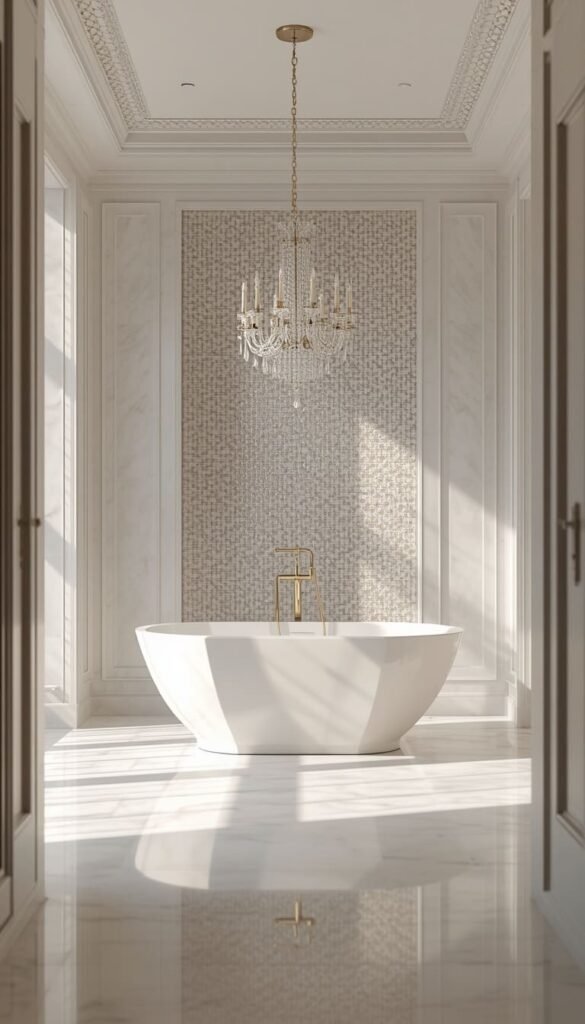
Every now and then a client comes to me with a real budget and a real vision, and those projects are where white bathrooms reach their full potential. A luxury white bathroom isn’t about spending money on everything it’s about identifying the two or three pieces that carry the room and investing there, while being strategic everywhere else.
In my experience, the three splurges that deliver the most visual return are:
- A freestanding soaking tub positioned as a focal point against a white marble or zellige tile wall
- A statement light fixture a sculptural pendant or a small chandelier above the tub changes the entire mood of the room
- Handcrafted zellige tile in the shower surround, where its undulating surface catches light throughout the day in a way no manufactured tile can replicate
Full luxury bathroom renovations in the US typically run $5,000 to $15,000 and beyond depending on scope and market. Where you can save without sacrificing the look is on accessories, mirrors, and towel hardware. Spend on the tub, the tile, and the light. Save on everything else. The honest con is that handcrafted materials like zellige require experienced installers. An inexperienced tile setter working with zellige will produce uneven results that undermine everything you spent. Vet your installer as carefully as you chose your tile.
9. White Bathroom Decor Ideas Accessories That Add Personality Without Overwhelming
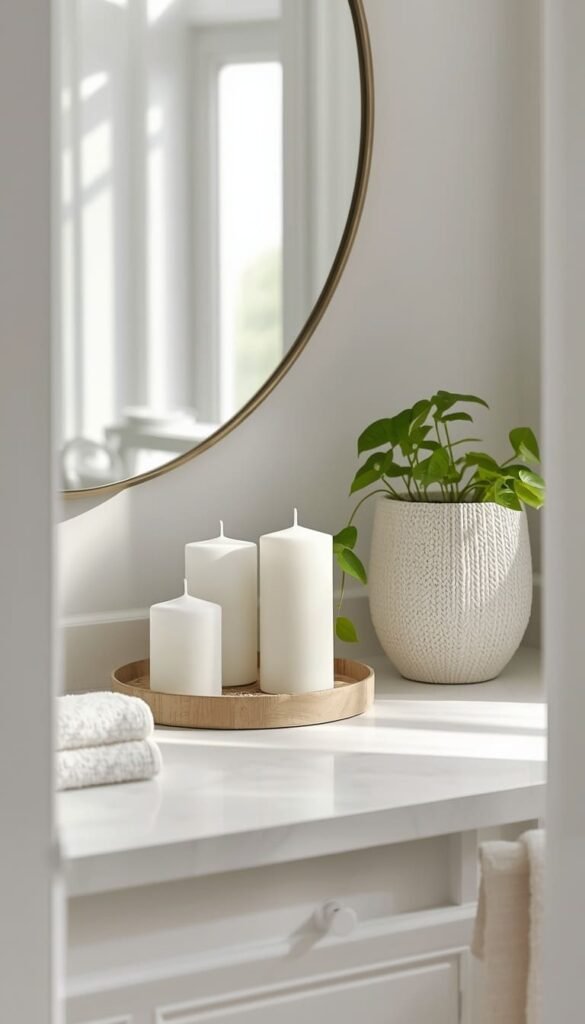
This is the section I wish more design guides would spend real time on, because accessories are where most homeowners either pull a white bathroom together or quietly unravel it. The instinct is usually to add more more plants, more art, more candles, more baskets. And then suddenly the space that was supposed to feel calm feels cluttered instead.
The rule I come back to consistently is the Rule of Three. Group accessories in odd numbers, vary the height within each grouping, and leave deliberate empty space around them. A single large plant in the corner, three varying height candles on the edge of the tub, a framed piece of black and white art above the toilet that’s a complete, confident bathroom. Nothing is fighting for attention.
A few of my favorite low cost, high impact decor moves for white bathrooms:
- Swap a builder grade mirror for an organic or arched vintage mirror flea markets and Facebook Marketplace are genuinely great sources
- Layer a textured natural fiber rug over white tile for warmth underfoot
- Use white or cream towels folded and stacked visibly they function as both storage and decor
A full accessory refresh can happen for $50 to $300 and it’s completely renter friendly and reversible. The one honest con I’ll give you white rugs look absolutely beautiful in photos and are a genuine nightmare with pets or kids. If your household has either, go for a rug with a dark border or a natural jute weave that hides what life actually looks like.
10. White Bathroom Vanity Ideas Choosing the Right Style for Your Layout
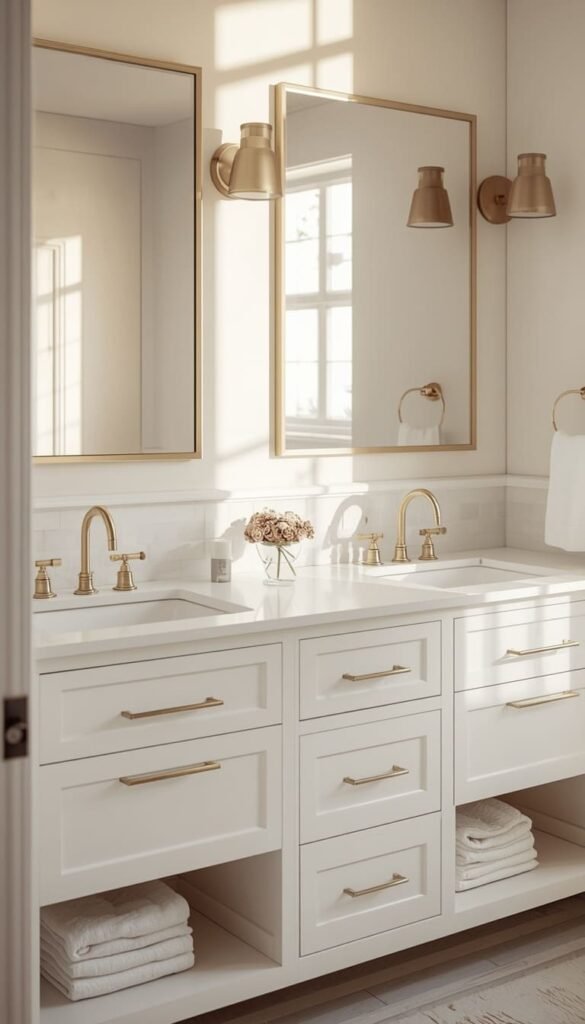
The vanity is the single piece of furniture that carries more visual weight in a bathroom than anything else. Get it right and the whole room follows. Get it wrong and no amount of beautiful tile or clever accessories fully rescues the space. I’ve seen $15,000 bathroom renovations fall flat because the vanity was an afterthought, and I’ve seen $3,000 budgets look like twice that because the vanity was chosen with intention.
The first decision is floating versus freestanding. Floating vanities make small bathrooms feel significantly larger by exposing floor space underneath. They read modern and clean. Freestanding vanities with legs feel more traditional and furniture like warmer and more character driven. Neither is universally better. It depends entirely on your ceiling height, square footage, and the overall style you’re building toward.
Hardware finish is where personality enters the picture. Here’s how I think about it:
- Brass and unlacquered gold work beautifully in warm white, farmhouse, and transitional bathrooms
- Matte black reads bold and contemporary pairs best with cool white walls and graphic tile
- Polished chrome and brushed nickel stay classic and work in virtually every style without ever feeling wrong
Budget anywhere from $300 for a solid entry level single vanity to $2,000 and above for a double vanity with quality hardware. Vessel sinks deserve a specific mention here they photograph stunningly and I’ve specified them in dozens of projects. But in a family bathroom used daily by kids, they are genuinely impractical. Water splashes everywhere and the height is uncomfortable for small children. Save the vessel sink for a guest bath or powder room where it gets admired more than it gets used.
11. All White Bathroom Design How to Layer Whites So It Doesn’t Look Flat or Sterile
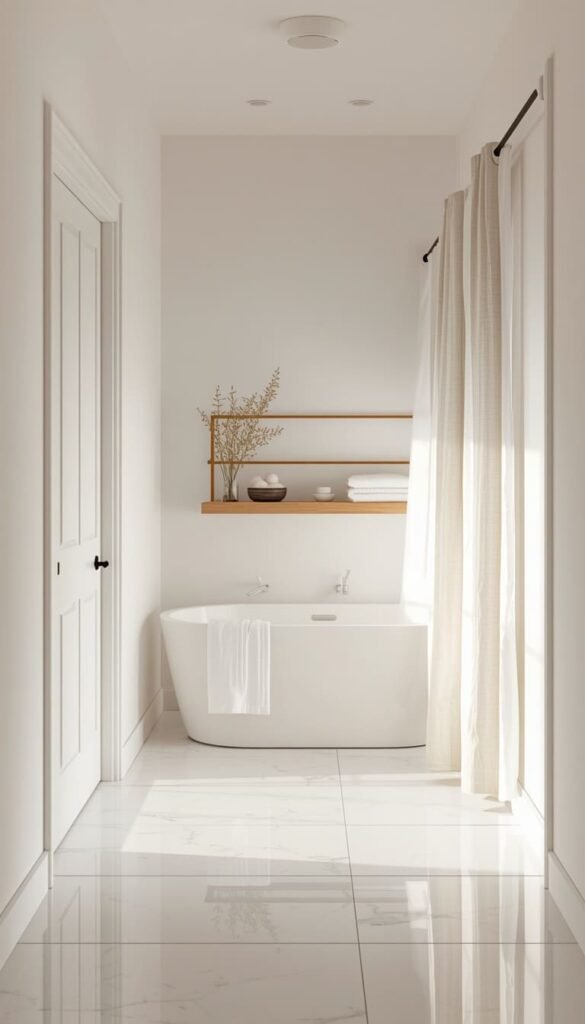
This is the idea that ties everything else together, and honestly it’s the most misunderstood concept in white bathroom design. An all white bathroom done poorly looks like a dentist’s office. Done well, it looks like the most serene, considered room in the entire house. The difference is almost entirely about understanding how whites relate to each other.
Not all whites are the same. Some lean warm with creamy, ivory, or beige undertones. Others lean cool with blue, gray, or green undertones hiding beneath the surface. When you put a warm white tile next to a cool white paint without realizing they’re different temperatures, they don’t look cohesive they look like a mistake. A quick trick I always share with clients is to pull physical samples of every white surface in the room and hold them next to each other in both natural morning light and artificial evening light before committing to anything.
The layering technique that works most reliably in all white bathrooms is mixing finishes rather than mixing tones. Pairing a matte white wall with a glossy white tile creates depth and visual interest without any color contrast at all. Add a soft white linen shower curtain and a warm white wooden shelf and suddenly the room has texture, warmth, and dimension all within a single color family. This is what designers mean when they say a room feels layered. It has nothing to do with how many colors are present and everything to do with how thoughtfully the surfaces speak to each other.
The honest con of committing to a full all white bathroom is that it demands consistency everywhere. One off tone white a slightly yellow light bulb, a beige-tinged grout, a cool white towel against warm white walls reads as a mistake rather than a choice. Bulb temperature matters here more than most people expect. Stick to warm white LED bulbs in the 2700K to 3000K range and your whites will always look intentional, glowing, and exactly right.
Your 2-Minute White Bathroom Decision Map
By Budget
Starter and Budget Friendly ($200 – $800)
- Swap hardware to matte black or brass for instant impact
- Add a textured rug, layered towels, and an arched mirror
- DIY shiplap accent wall behind the vanity
- Regrout existing tile with a contrasting color for a fresh look
Investment and Luxury ($1,500 and above)
- Install a floating vanity with concealed storage
- Go full zellige or marble tile in the shower surround
- Add a freestanding soaking tub as the room’s focal point
- Invest in a statement pendant or chandelier above the tub
By Lifestyle
Busy Families and Pet Owners
- Choose porcelain marble look tile over real marble easier to maintain
- Skip white rugs, go for dark bordered or natural jute instead
- Matte finish tiles hide water spots and daily splashes better than gloss
- Avoid vessel sinks in primary bathrooms undermount is far more practical
Design Lovers and Minimalists
- Commit to one white undertone across every surface
- Mix finishes matte walls, gloss tile, satin hardware for quiet depth
- Keep countertops completely clear and plan hidden storage first
- Let one statement piece carry the room tub, tile, or light, not all three
Frequently Asked Questions
Is an all white bathroom hard to keep clean?
No, but it does demand consistency. White surfaces show buildup early, which actually helps you stay on top of cleaning before it becomes a real problem. A quick daily wipe and a good grout sealer do most of the work.
What hardware finish looks best in a white bathroom?
It depends on your vibe. Brass warms up creamy whites beautifully. Matte black sharpens cool whites and adds contrast. Chrome stays safe and works with everything.
Does white make a small bathroom look bigger?
Yes, especially with large format tiles and matching grout. Fewer grout lines mean fewer visual breaks, and that continuity is what makes a small space read as larger than it actually is.
How much does a white bathroom renovation cost in the US?
The average cost ranges from $500 for a cosmetic refresh to $15,000 plus for a full renovation. Your biggest cost drivers are the vanity, tile, and labor not the color.
Should I use warm white or cool white paint in my bathroom?
Warm white if your lighting is mostly artificial or your fixtures run gold and brass. Cool white if you have strong natural light and lean toward chrome or black hardware. Always test samples in both morning and evening light before deciding.
Conclusion
Your white bathroom doesn’t have to be a big renovation project to feel like a completely different space. Sometimes it’s one new vanity, a can of warm white paint, or even just swapping out your hardware that shifts everything. I’ve watched homeowners fall back in love with rooms they’d ignored for years not because they spent a fortune, but because they made one intentional decision and let it lead the way. Start small today. Pull a paint sample, clear a shelf, or order that brass faucet you’ve been saving on Pinterest for six months.
Which of these 11 ideas are you actually considering for your bathroom right now and what’s been holding you back from starting?
