
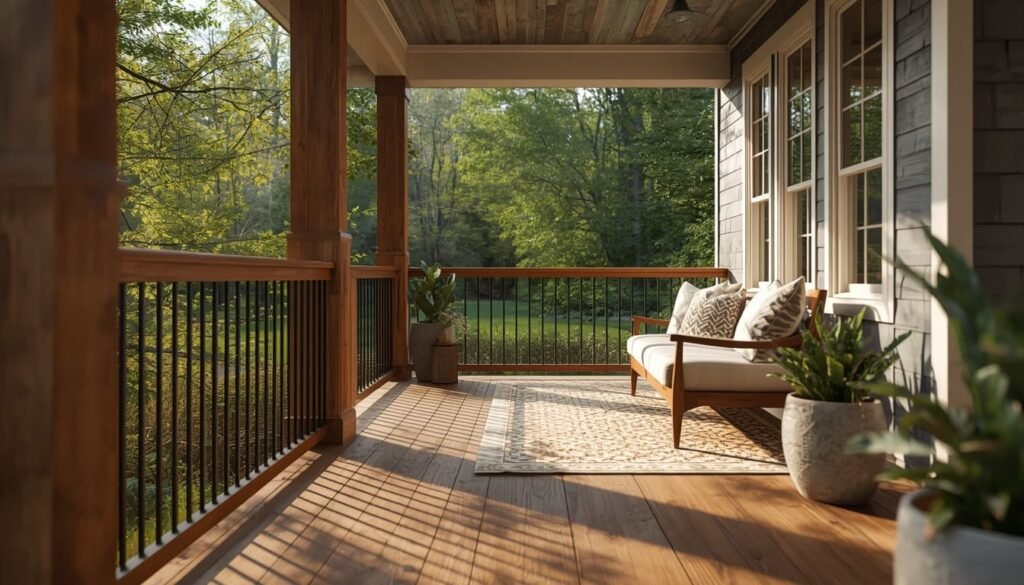
Your porch railing is the first thing people notice and the last thing most homeowners think about. I’ve walked through hundreds of homes across the US, and I can tell you with confidence: the right railing doesn’t just keep people safe, it tells a story about who you are before anyone even rings your doorbell. Whether you’re starting from scratch or replacing something that’s seen better days, choosing the right porch railing idea can genuinely change how your entire home looks and feels. In this guide, I’m sharing 10 unique porch railing ideas that go beyond the basics with real budget ranges, honest pros and cons, and the maintenance truths most design blogs won’t tell you.
My Design Notes
A few years back, I was working with a client in Charleston, South Carolina a stunning 1910 Craftsman bungalow with incredible bones. She had her heart set on cable railings. Showed me a whole Pinterest board full of them. Sleek, minimal, very California cool. I loved the look too, honestly. But I had to sit her down and have the real conversation: cable railing in Charleston’s salt heavy coastal humidity means constant tension adjustments, potential corrosion, and more maintenance calls than she’d ever want. We pivoted to powder coated aluminum balusters in a matte black finish same visual weight, same modern edge, but actually built for that climate. She called me six months later just to say it was her favorite decision in the entire renovation. That project stuck with me. Because the right railing isn’t always the one that looks best on Instagram. It’s the one that works for your home, your climate, and your actual life.
Stunning Porch Railing Ideas That Instantly Boost Your Home’s Curb Appeal
1. Classic White Wood Picket Railing
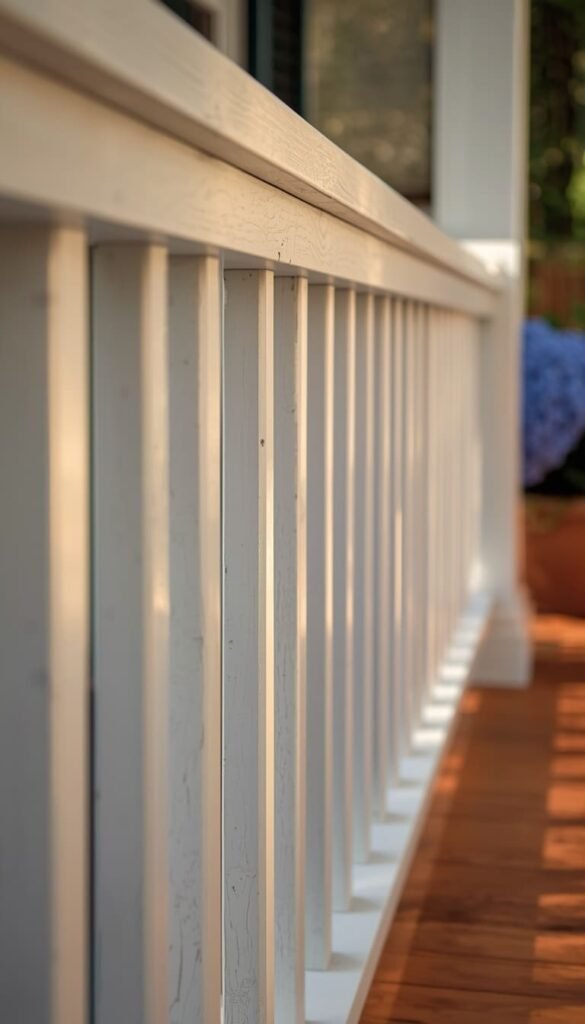
There’s a reason this style has been gracing American front porches for over a century it simply works. White wood picket railings feel clean, welcoming, and timeless in a way that almost no other railing style can match. I’ve specified this railing for Colonial, Cape Cod, and Cottage style homes more times than I can count, and it never disappoints.
Budget wise, you’re looking at roughly $30 to $60 per linear foot installed, which makes it one of the more accessible options out there. A quick trick I’ve learned over the years is to use pressure-treated pine for the structural elements and reserve the nicer cedar or redwood for the visible pickets. You get durability where it counts without blowing your budget.
One thing to watch out for, though white paint in humid Southern states like Georgia or Louisiana will start to peel and bubble faster than you’d expect. Plan on repainting every 3 to 4 years if you live in a high humidity region. It’s not a dealbreaker, but it’s the reality nobody in the glossy magazines talks about.
- Best for: Colonial, Cape Cod, Cottage, and Traditional style homes
- DIY Difficulty: Moderate manageable for a confident weekend warrior
- Honest Con: High humidity climates will demand regular repainting
2. Sleek Cable Railing
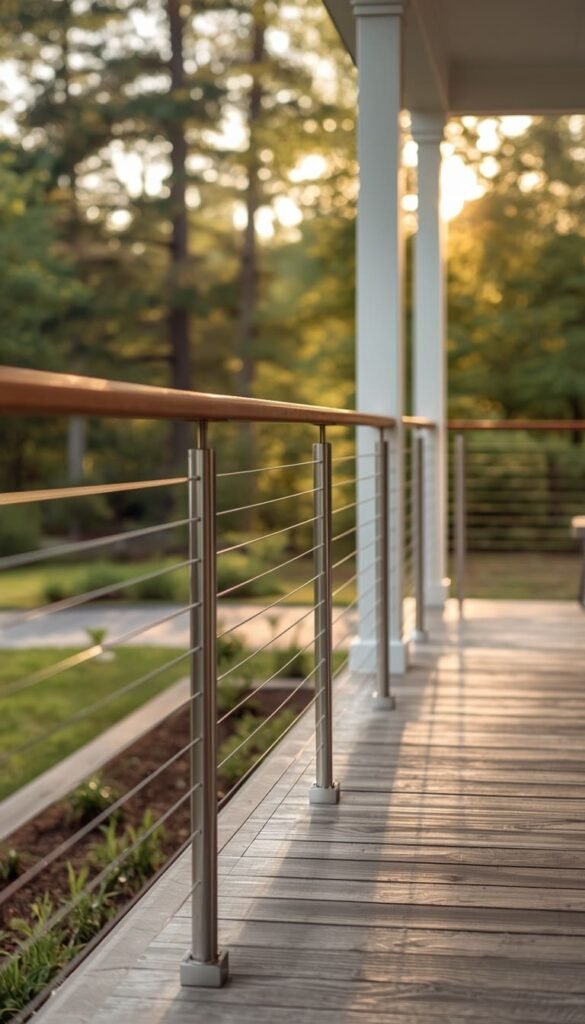
If you want your porch to feel open, airy, and genuinely modern, cable railing is hard to beat. The thin horizontal steel cables are nearly invisible from a distance, which means your view stays unobstructed and your porch feels larger than it actually is. I love specifying this for homes with beautiful yard landscapes or water views why cover that up with heavy balusters?
The budget here is higher. Expect to pay $150 to $300 per linear foot installed, depending on your region and the quality of the hardware. Stainless steel cables and aluminum posts will cost more upfront but hold up significantly better over time. As I told my Charleston client, if you live near the coast, always insist on marine-grade stainless steel standard steel cables will start showing rust within a couple of years in salty air.
This is not a DIY-friendly railing for most homeowners. The cable tensioning system requires specific tools and a real understanding of load requirements. I’d strongly recommend hiring a professional here.
- Best for: Modern, Contemporary, and Coastal homes
- Budget note: Higher upfront cost, but very low maintenance long term
- Honest Con: Coastal climates need marine grade hardware or you’ll regret it fast
3. Horizontal Plank Railing
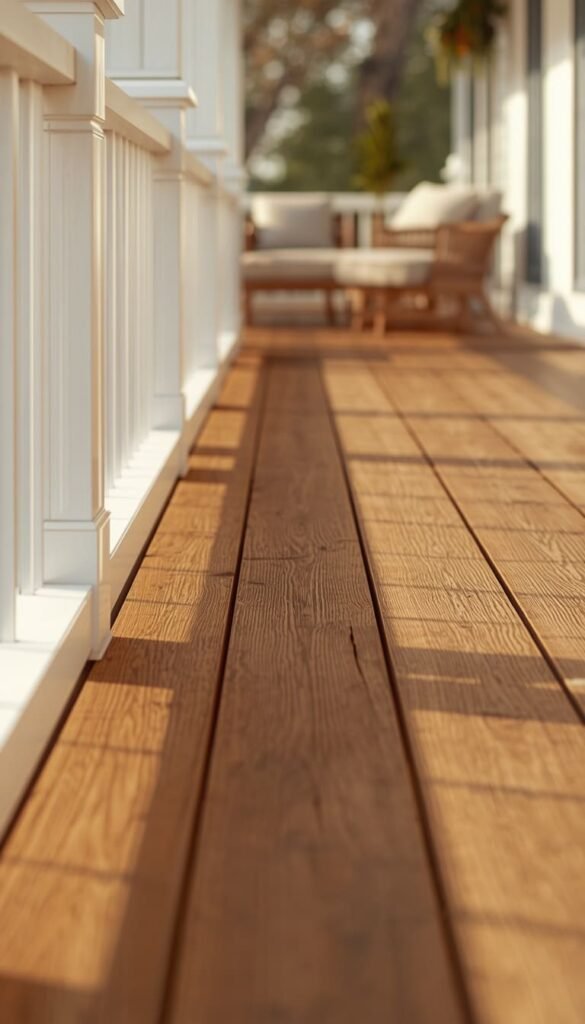
This one is having a major moment right now, and honestly, I’m here for it. Horizontal plank railings are the backbone of the Modern Farmhouse aesthetic clean, simple, and effortlessly cool without trying too hard. Three or four wide planks running horizontally between solid posts give your porch a grounded, architectural feel that vertical pickets just can’t replicate.
What I love most about this style is the privacy it offers. Unlike traditional picket railings, horizontal planks block sightlines from the street without making your porch feel closed in. It’s a smart solution for homes on busy roads or tight neighborhoods. Budget sits comfortably at $40 to $80 per linear foot installed, and a moderately skilled DIYer can absolutely tackle this one over a weekend.
One thing to plan for horizontal wood planks are more prone to water pooling on their flat surfaces, which can accelerate rot over time. Sealing the top edges of each plank with a good exterior wood sealant every couple of years is a small step that makes a big difference.
- Best for: Modern Farmhouse, Ranch, and Contemporary homes
- DIY Difficulty: Beginner to Moderate one of the more DIY friendly options
- Honest Con: Top edges of planks need regular sealing to prevent water damage
4. Wrought Iron Railing
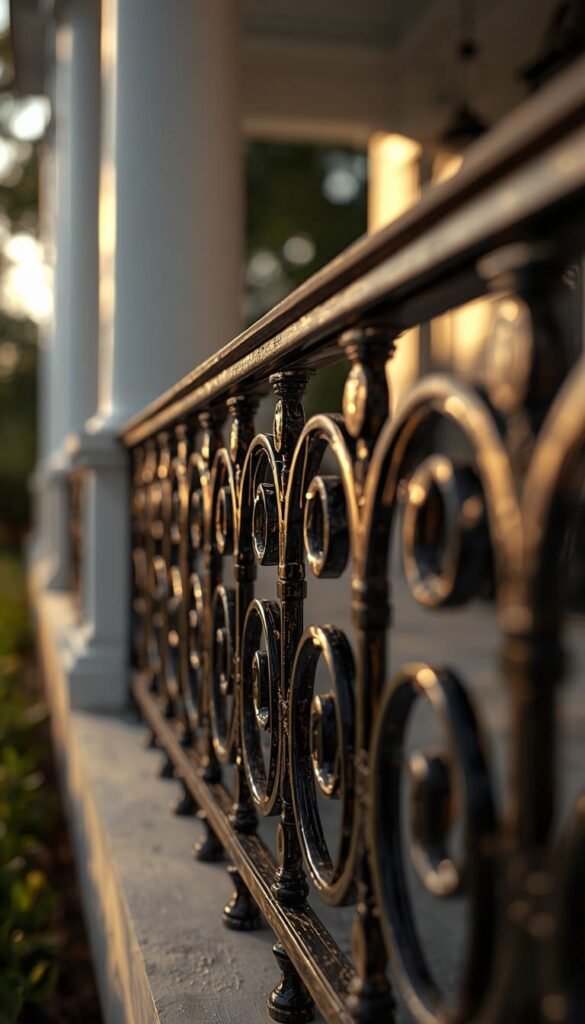
There is something undeniably elegant about wrought iron. When I see it on a grand Victorian or a traditional Southern colonial, it just feels right like the house and the railing were always meant to find each other. The intricate scrollwork and hand-forged details you can get with wrought iron are simply impossible to replicate with any other material.
From a durability standpoint, wrought iron is genuinely impressive. It handles heavy use, resists physical damage, and can last decades with proper care. The key phrase there is “proper care.” Wrought iron will rust if the protective coating is chipped or scratched and left untreated especially in rainy climates like the Pacific Northwest or humid areas like Florida. A quick annual inspection and a touch-up with rust-inhibiting primer in any damaged spots will keep it looking sharp for years.
Budget ranges from $50 to $120 per linear foot depending on the complexity of the design. Simple designs land at the lower end; custom scrollwork and ornate patterns push toward the higher end. This is not a DIY project wrought iron installation requires professional welding and anchoring.
Top 6 Porch Railing Ideas:
| Idea | Estimated Price | Maintenance |
|---|---|---|
| Classic White Wood Picket | $30 to $60 per linear ft | High |
| Sleek Cable Railing | $150 to $300 per linear ft | Low |
| Horizontal Plank Railing | $40 to $80 per linear ft | Medium |
| Wrought Iron Railing | $50 to $120 per linear ft | Medium |
| Composite or PVC Railing | $60 to $100 per linear ft | Low |
| Mixed Wood and Black Metal | $70 to $130 per linear ft | Medium |
5. Composite or PVC Railing
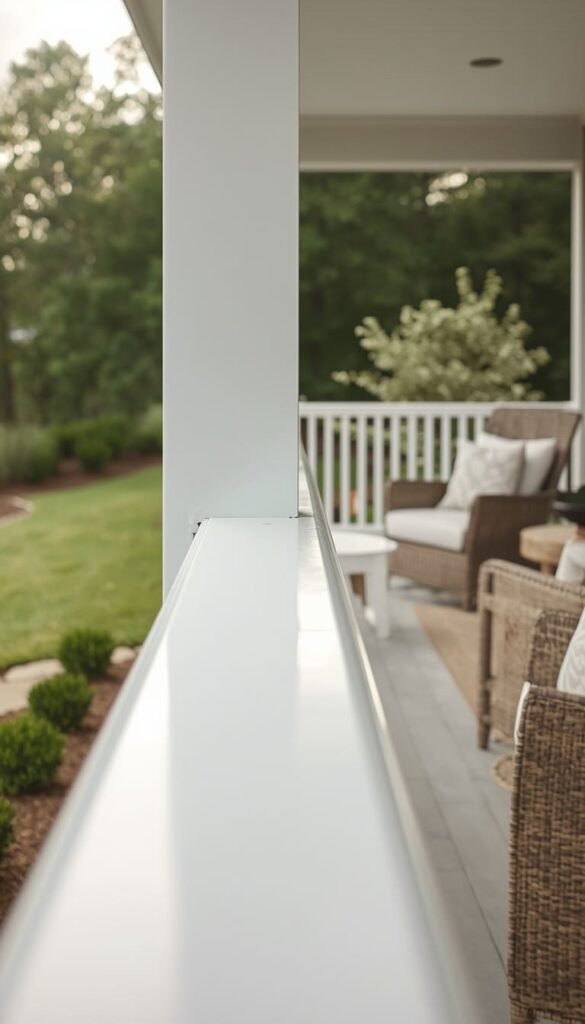
Let me be straightforward with you if low maintenance is your number one priority, composite or PVC railing is probably the smartest choice you can make. It looks like painted wood, it installs like wood, but it never needs painting, never rots, and never warps. For homeowners with large wraparound porches or vacation properties where regular upkeep just isn’t realistic, this is genuinely a game-changer.
Composite railings are made from a blend of wood fiber and PVC, and the better brands do a convincing job mimicking real wood grain. They come factory colored, which means no primer, no paint, and no weekend spent on a ladder with a brush. Budget lands around $60 to $100 per linear foot installed more than basic wood, but when you factor in zero repainting costs over 10 to 15 years, the math actually works in your favor.
A quick trick I always share with clients considering this option not all composite railings are created equal. Cheaper PVC only products can look visibly plastic in bright sunlight and may fade or yellow over time. Always ask for a sample piece and hold it next to your siding in natural light before committing.
- Best for: Large porches, vacation homes, and busy homeowners who hate maintenance
- DIY Difficulty: Moderate most composite systems are designed with DIY installation in mind
- Honest Con: Budget PVC options can look plasticky; invest in a quality brand
Which railing style feels most “you” classic white wood or something more modern like cable or glass?
6. Mixed Wood and Black Metal Railing
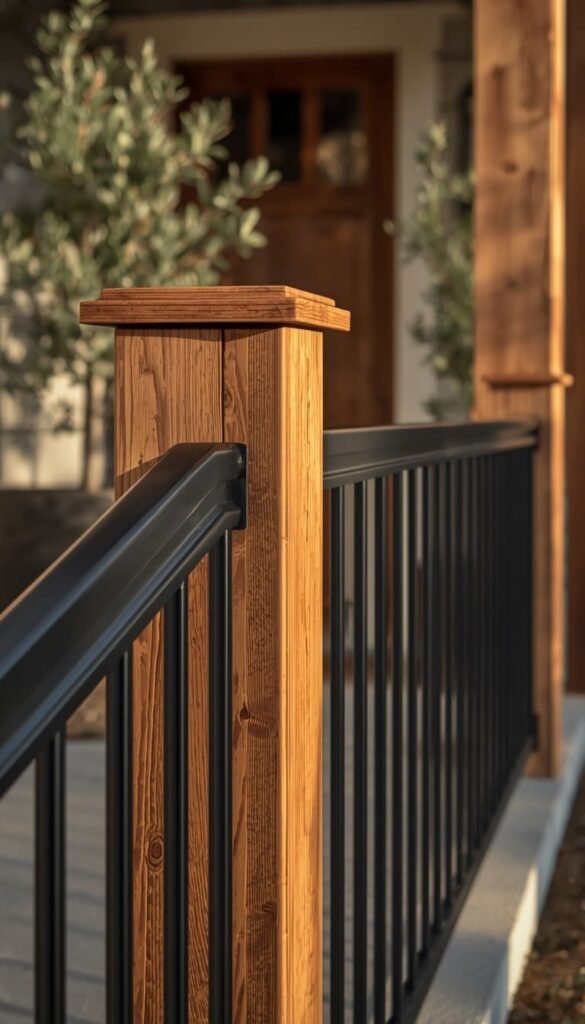
This combination is one of my personal favorites to specify for Transitional and Contemporary homes, and I think it’s because it manages to feel both warm and modern at the same time which is a genuinely difficult balance to strike. The concept is simple: wood posts and top rail for warmth and richness, paired with black powder coated metal balusters for a sleek, structured contrast.
What makes this work so well visually is the interplay between organic and industrial. The natural wood grain softens what could otherwise feel cold, while the black metal gives the whole railing a crisp, intentional edge. I worked on a project in Austin, Texas where we used cedar posts with matte black steel balusters, and the homeowner’s neighbors were asking about it within weeks of installation.
Budget typically runs $70 to $130 per linear foot installed, depending on the wood species and metal finish you choose. Cedar and black powder coated steel is a classic pairing that sits in the mid-range. One thing to watch out for where the wood and metal meet, moisture can collect and accelerate wood deterioration if not properly sealed. Use a good exterior caulk at every metal-to-wood junction and you’ll be fine.
- Best for: Transitional, Contemporary, and Modern Farmhouse homes
- DIY Difficulty: Moderate to Hard metal baluster installation requires precision spacing
- Honest Con: Metal-to-wood junctions need careful sealing to prevent moisture damage
7. Glass Panel Railing
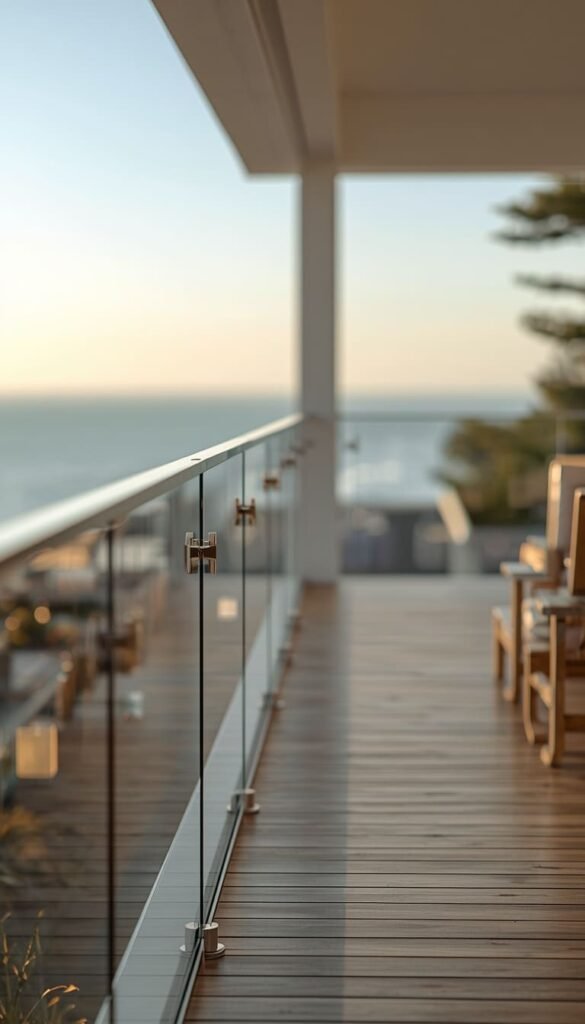
Glass panel railings are the definition of luxury porch design, and when they’re done right, they are absolutely stunning. Frameless or semi frameless tempered glass panels give your porch an almost floating quality the structure disappears and what’s left is pure, uninterrupted view. For coastal homes, lakefront properties, or any home with a beautiful natural setting, this is the railing that lets the landscape do the talking.
Tempered glass is genuinely strong and safe we’re not talking about window glass here. It’s engineered to withstand impact and, if it does break, it shatters into small blunt pieces rather than dangerous shards. That said, glass does require regular cleaning to stay looking its best. Salt spray, pollen, and hard water spots show up quickly on glass surfaces, so if you’re in a coastal area, plan on wiping down your panels every couple of weeks during heavy pollen or storm seasons.
This is the premium option on our list. Budget runs from $150 to $400 per linear foot installed, with frameless systems sitting at the higher end. Professional installation is non negotiable here glass panel systems require precise anchoring and specific load calculations to meet building codes.
8. Lattice Railing
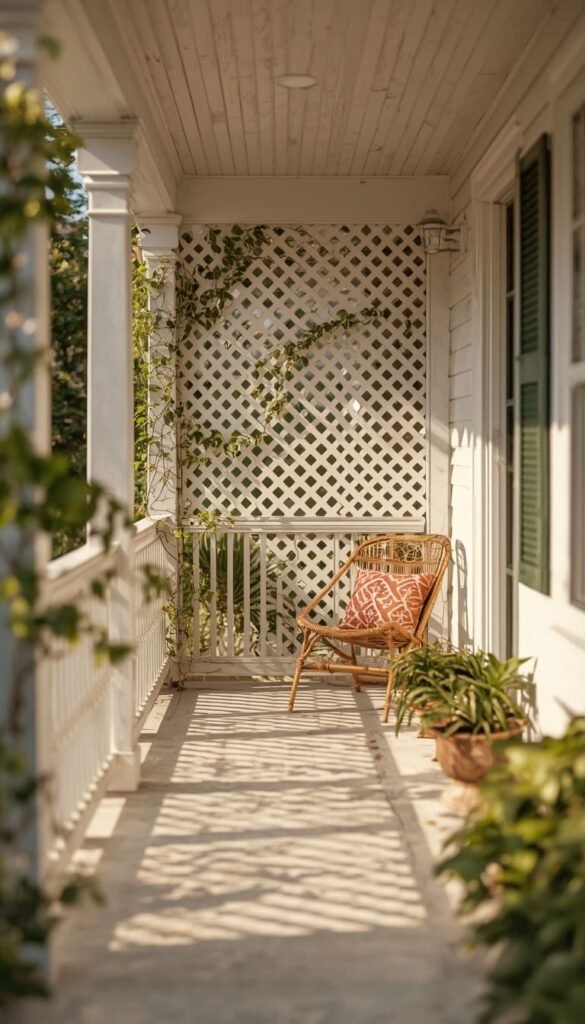
Honestly, lattice railings don’t get nearly enough credit in the design world. They’re often dismissed as a budget option, which yes, they are more affordable but when executed thoughtfully, a lattice railing can look genuinely charming and intentional, especially on Cottage, Victorian, and traditional Southern style homes.
The classic diamond or square lattice pattern between a solid top and bottom rail creates a sense of privacy without completely closing off the porch. It filters light beautifully and gives climbing plants like jasmine or clematis something to grab onto, which opens up some really lovely possibilities for natural porch décor. I’ve seen a well maintained lattice railing completely transform a tired cottage porch into something that looks like it belongs on the cover of a gardening magazine.
Budget is one of the most accessible on this list roughly $20 to $45 per linear foot installed, and it’s genuinely one of the easier DIY projects if you already have your posts in place.
- Best for: Cottage, Victorian, Traditional, and budget-conscious homeowners
- DIY Difficulty: Beginner friendly one of the most accessible DIY railing projects
- Honest Con: Lattice traps dirt and debris in its grid pattern; it needs periodic pressure washing to stay fresh looking
9. Rope and Nautical Railing
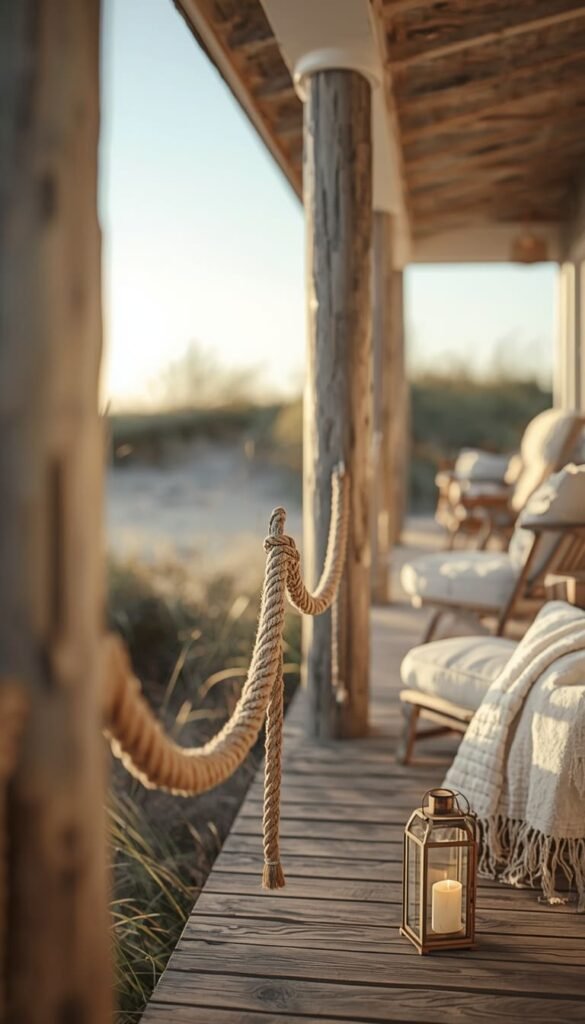
If you live near the water or you just wish you did a rope railing brings that relaxed, coastal energy to your porch in a way that feels completely authentic rather than themed or forced. Think beach houses in the Outer Banks, lakefront cabins in Michigan, or those dreamy Gulf Coast cottages where the whole point is to slow down and breathe in the salt air. Rope railings fit all of those settings like they were always meant to be there.
The most common approach pairs thick natural manila or synthetic rope threaded horizontally between solid wood or metal posts. Synthetic rope is the smarter long term choice here natural manila looks gorgeous initially but deteriorates quickly with sun and moisture exposure. A quick trick I always pass along to clients going this route is to use UV resistant synthetic rope in a natural fiber color. You get the look of authentic nautical rope without replacing it every two seasons.
Budget is refreshingly reasonable at $25 to $60 per linear foot depending on rope thickness and post material. A confident DIYer can absolutely handle this one the threading and knotting process is straightforward once you have your posts anchored. Just make sure your rope tension is checked seasonally, as temperature changes can cause loosening over time.
- Best for: Coastal, Nautical, Lakefront Cabin, and Rustic Farmhouse homes
- DIY Difficulty: Beginner to Moderate post installation is the trickiest part
- Honest Con: Natural rope deteriorates fast in sun and rain; always choose UV resistant synthetic rope for longevity
And what’s the biggest factor driving your decision right now budget, maintenance, or pure curb appeal?
10. DIY Horizontal Board Railing
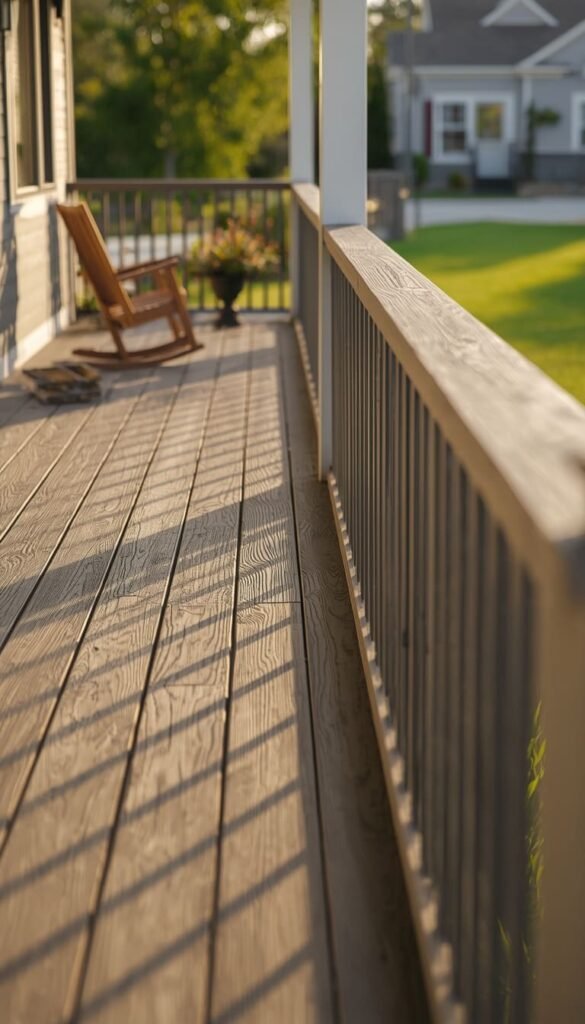
I saved this one for last because it is genuinely the best option for homeowners who want a stylish, modern looking railing without spending a fortune or waiting weeks for a contractor. A simple horizontal board railing three or four wide planks running between solid posts is clean, contemporary, and surprisingly easy to build yourself over a single weekend if you’re reasonably comfortable with basic tools.
What I love about this design is how naturally it fits into the current wave of Modern Farmhouse and Ranch style home renovations sweeping across the US right now. It’s unfussy, it’s architectural, and it photographs beautifully which matters if you’re thinking about resale value down the line. I’ve had clients in suburban Texas and rural Tennessee both pull this off with zero prior woodworking experience and walk away genuinely proud of what they built.
Material costs alone run roughly $15 to $35 per linear foot, making this the most budget friendly option on our entire list when you factor out labor. Use pressure-treated lumber for the structural bones and finish with a cedar or pine top layer for a cleaner look. Paint it white for a classic farmhouse feel, leave it stained for a rustic vibe, or go bold with a dark charcoal for something more contemporary.
A few things worth knowing before you start:
- Always check your local building codes for baluster spacing the gap between any two boards cannot exceed 4 inches if children are present in the home
- Pre-drill all your screw holes to prevent the wood from splitting, especially near the ends of boards
- Apply a quality exterior wood sealant to all horizontal surfaces before painting to dramatically extend the life of your railing
This is the railing idea that proves you don’t need a big budget or a professional crew to create something that looks genuinely well designed. A little planning, a free Saturday, and the right materials that’s really all it takes.
Your 2-Minute Railing Decision Map
By Budget
Starter and Budget Friendly
- Tight budget? Go straight to the DIY Horizontal Board Railing at $15 to $35 per linear ft
- Want charm without the cost? Lattice Railing at $20 to $45 per linear ft is your sweet spot
- Classic look on a modest budget? White Wood Picket at $30 to $60 per linear ft never fails
Luxury and Investment Worthy
- Want maximum drama and longevity? Glass Panel Railing at $150 to $400 per linear ft is your statement piece
- Modern and nearly maintenance free? Cable Railing at $150 to $300 per linear ft pays for itself over time
- Best of both worlds? Mixed Wood and Black Metal at $70 to $130 per linear ft hits the sweet spot between luxury and value
By Lifestyle
Busy Families and Low Maintenance Lovers
- Composite or PVC zero repainting, zero rotting, zero regrets
- Powder Coated Aluminum rust proof, child safe, and virtually indestructible
- Cable Railing wipe clean, open sightlines, easy to monitor kids in the yard
Weekend DIYers and Budget Renovators
- Horizontal Board Railing one weekend, basic tools, big visual payoff
- Lattice Railing beginner friendly and forgiving on first timers
- Rope Railing surprisingly simple to install and endlessly charming
Frequently Asked Questions
What is the cheapest porch railing option?
DIY horizontal board railing is your most budget friendly move, running just $15 to $35 per linear foot in materials. Lattice comes in close behind and is equally beginner friendly.
How tall does a porch railing need to be in the US?
Most states require a minimum of 36 inches. California mandates 42 inches for elevated decks always check your local building code before purchasing materials.
Can I install a porch railing myself?
Yes, but only certain styles. Horizontal board, lattice, and rope railings are genuinely DIY friendly. Cable and glass panel systems need a licensed professional for safe, code compliant installation.
What porch railing material lasts the longest?
Composite and powder coated aluminum outlast everything else with virtually zero maintenance. Wrought iron is a close second but only if you stay on top of rust prevention.
Do porch railings add home value?
Yes, noticeably. A well matched railing improves curb appeal, which directly impacts buyer perception and appraisal value especially in competitive suburban markets across the US.
Conclusion
- excitement or repetitive adjectives.”
12:12 AM
Your porch is the first thing you see when you come home after a long day and it deserves to feel like you. Whether you’re drawn to the clean simplicity of a horizontal board railing or the quiet luxury of glass panels, the right choice is simply the one that fits your home, your climate, and your life. You don’t need a massive renovation budget or a team of contractors to make a real difference out there. Start small grab a material sample, sketch out your posts, or just spend a Saturday morning measuring your porch with a coffee in hand. That first step is always the one that matters most.
So tell me which of these porch railing ideas felt like the one the moment you saw it? Drop it in the comments below, I’d love to hear what direction you’re leaning.
