
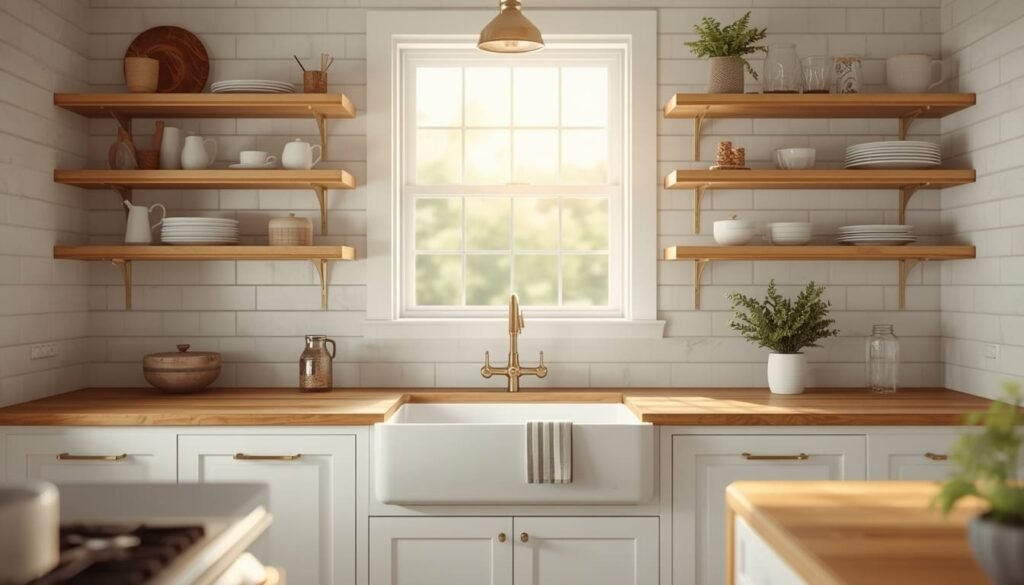
Walk into any farmhouse kitchen worth pinning, and your eyes go straight to one thing: the backsplash. It’s the detail that turns a plain wall into the heart of the room, whether you’re working with white shiplap, handmade tile, or reclaimed brick. After two decades designing kitchens across the country, I’ve watched this single choice make or break an entire renovation. Get it right, and the room feels warm, finished, and entirely yours.
My Design Notes
A few years back, I worked on a 1930s farmhouse renovation just outside Charlottesville, Virginia. My clients wanted that classic all white look, complete with a deep farmhouse apron sink and a clean subway tile backsplash.
It was gorgeous on install day, and we were all thrilled with how bright the kitchen felt.
Within a few months, though, we started noticing faint mineral spots creeping up the bottom row of tile near the sink.
Virginia’s hard water was leaving its mark every single time the faucet splashed.
The fix wasn’t complicated. A quick weekly wipe with a vinegar solution, and on the next project, I switched to a slightly darker grout from the start.
It taught me something I now share with every client. A farmhouse sink and a light backsplash are a beautiful pairing, just go in knowing the splash zone needs a little extra attention.
Mastering an Unforgettable Farmhouse Kitchen Backsplash Look
1. Classic White Subway Tile Backsplash
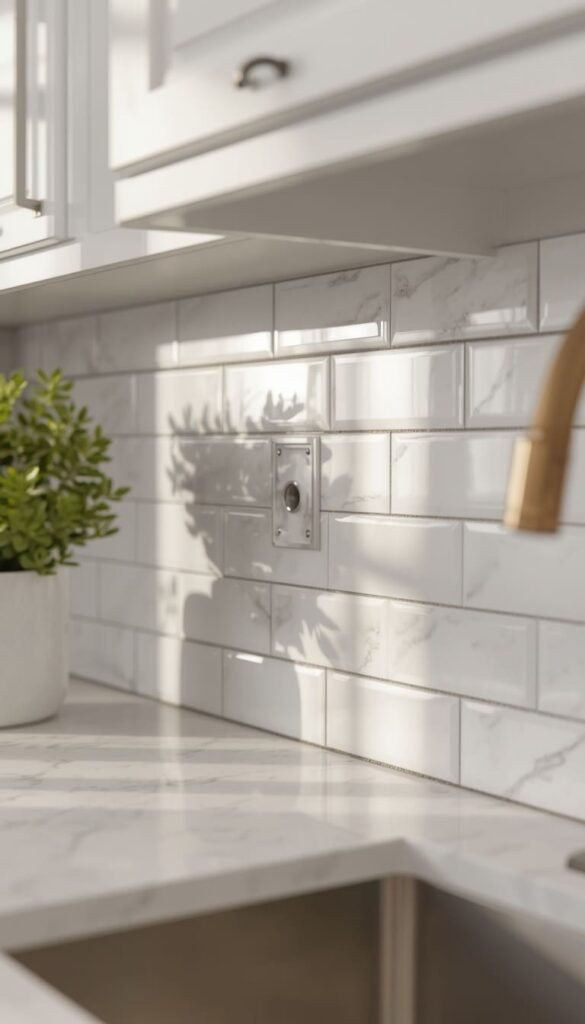
If there’s one backsplash that defines the farmhouse look, it’s white subway tile. It’s clean, it’s affordable, and it pairs with almost any cabinet color, from crisp white to deep navy. Most homeowners run it in a simple brick pattern, though a herringbone layout adds a little extra interest without straying too far from tradition.
Budget wise, this is one of the friendliest options on our list, sitting comfortably in the affordable range per square foot. The one thing I always flag to clients is the grout. White grout looks stunning on day one, but it shows grease and water spots faster than you’d think. Going a shade or two darker than the tile keeps that bright look while making cleanup so much easier down the road.
2. Shiplap Backsplash Walls
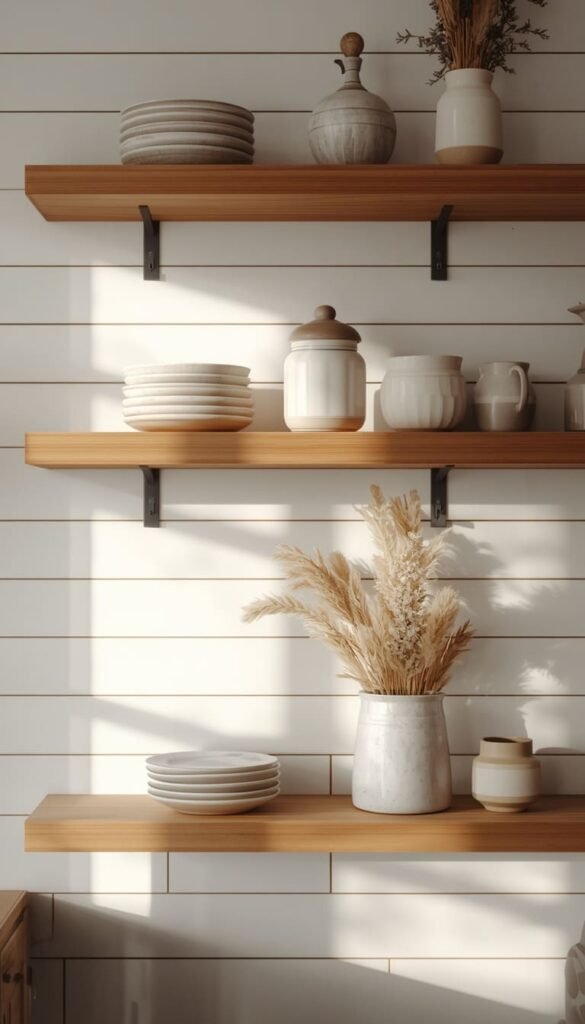
Shiplap has become almost synonymous with farmhouse style, and for good reason. Those horizontal wood planks bring texture and warmth in a way that flat tile simply can’t match. Painted white, it gives you that soft, layered look popularized by farmhouse renovation shows. Left natural or stained, it leans more rustic and cozy, almost like stepping into an old barn that’s been lovingly restored.
Here’s where I have to be honest with you. Shiplap isn’t the most practical choice directly behind a stove or sink, since wood and water splashes don’t mix well over time, even with a good seal. I usually recommend it for:
- Accent walls away from the cooking zone
- The space behind open shelving
- Butler’s pantries or coffee bar nooks
If you love the look near your range, pair it with a small strip of stone or tile for protection, then let the shiplap take over everywhere else.
3. Handmade Zellige Tile Backsplash
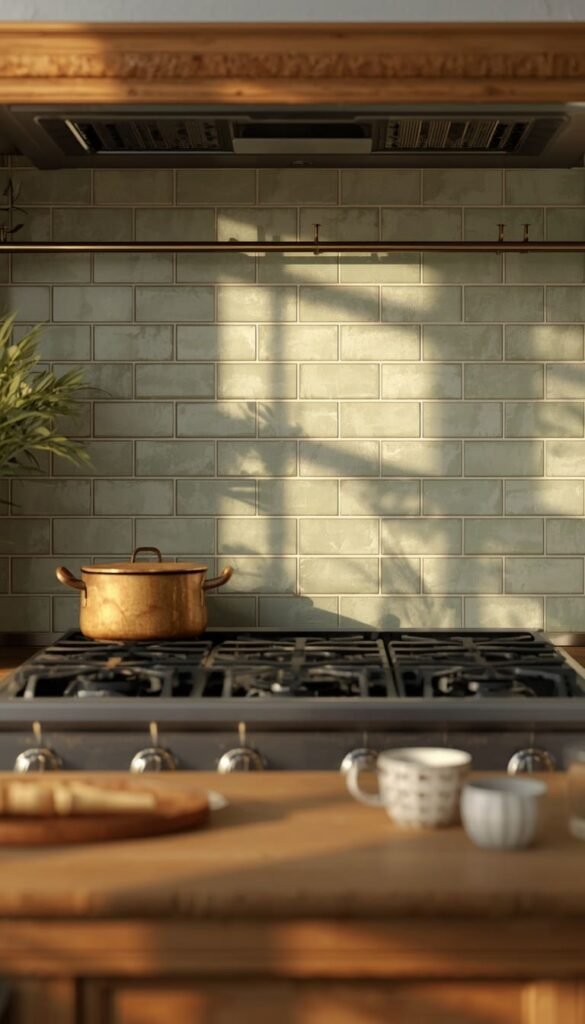
Zellige tile has had a real moment in farmhouse kitchens. These handmade Moroccan tiles have a slightly uneven, glossy surface that catches light in a way machine made tile never will, and every piece is just a little different.
A few things worth knowing before you commit:
- It sits on the pricier end of the spectrum
- Grout lines vary slightly tile to tile, which some love and others find fussy
- The glaze shows water spots more than a matte finish
Soft sage, warm white, or pale blue tones feel the most farmhouse appropriate to me, and using zellige just behind the range gives you that handcrafted texture without taking over your whole budget.
4. Reclaimed Brick Backsplash
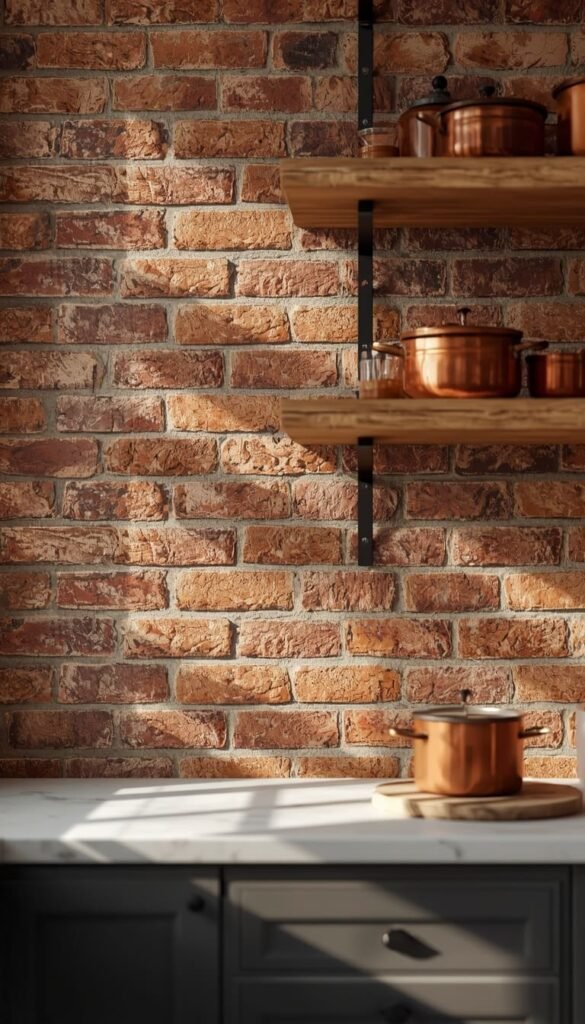
There’s nothing quite like the character of real brick in a kitchen. Whether it’s an exposed original wall or reclaimed brick installed as a feature, that warm, weathered texture instantly makes a space feel like it has history, even in a brand new build.
The honest truth about brick is that it’s porous, and left unsealed, it soaks up grease and oils right where you cook the most. A food safe sealer applied every couple of years takes care of that. If the cost of true reclaimed brick gives you pause, thin brick veneer gets you almost the same look for less, and it’s far easier to install too.
Top 6 ideas:
| Idea | Estimated Price | Maintenance |
|---|---|---|
| White Subway Tile | $7 to $25/sq. ft. | Medium |
| Shiplap Walls | $3 to $8/sq. ft. | Medium |
| Zellige Tile | $30 to $80/sq. ft. | High |
| Reclaimed Brick Veneer | $10 to $25/sq. ft. | High |
| Marble Slab | $50 to $100/sq. ft. | High |
| Beadboard | $2 to $6/sq. ft. | Low |
5. Dark Stained Wood Plank Backsplash
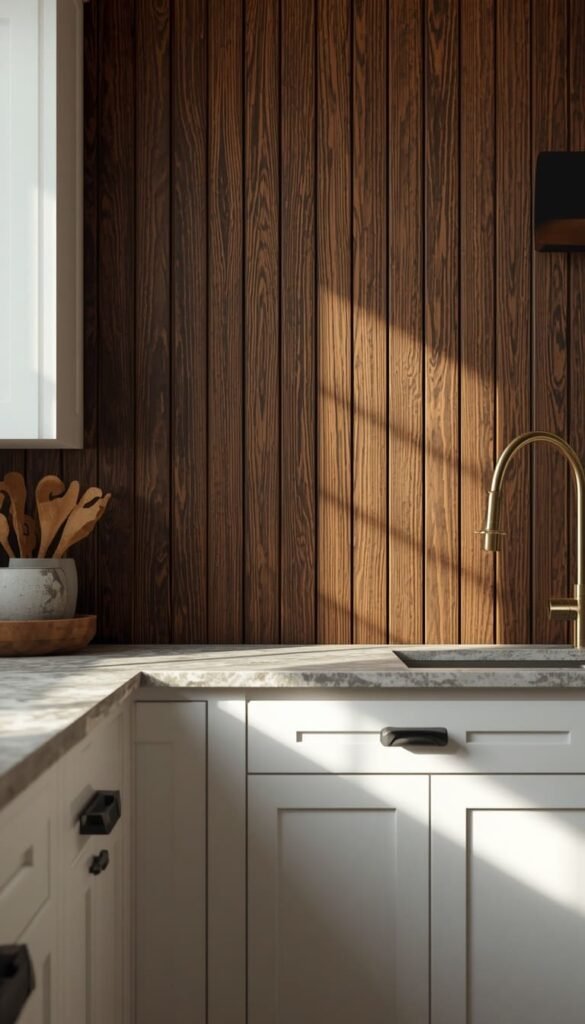
A dark stained wood backsplash brings a moody, lodge like warmth that I love in farmhouse kitchens with plenty of natural light to balance it out. It works beautifully against white cabinetry, black hardware, and stone countertops, creating that rich contrast people often chase in modern farmhouse spaces. Running the planks vertically adds a subtle sense of height too, which is a nice trick in kitchens with lower ceilings.
The one thing to watch is sealant. Without a proper finish, dark wood near the stove can pick up grease stains that are tough to lift, so a matte polyurethane topcoat is worth the extra step. I also tend to keep this style away from sinks where standing water is more likely.
6. Marble Slab Backsplash with Farmhouse Sink
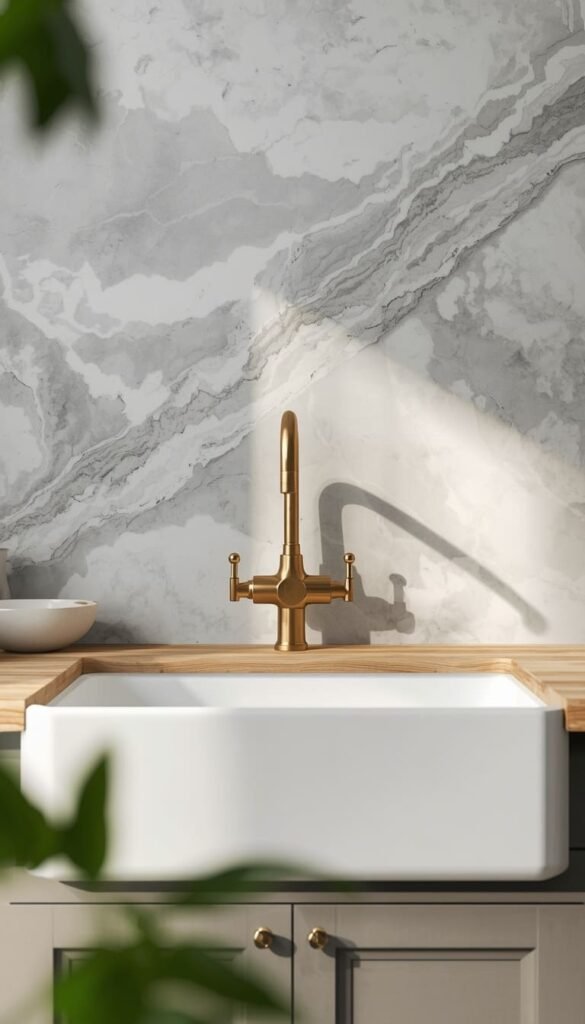
There’s a quiet elegance to a marble slab backsplash, especially when it’s cut from the same stone as your countertops. It creates that seamless, almost sculptural look that high end farmhouse kitchens are known for, and pairing it with a deep apron front farmhouse sink only adds to the timeless feel.
Marble is not low maintenance, though, and I think it’s important to say that plainly. It etches with acidic spills like lemon juice or vinegar, and it stains if liquids sit too long. Sealing it once a year helps a lot, and honestly, many of my clients come to love the soft patina marble develops over time. If that worry list feels like too much, a marble look quartz gives you nearly the same visual without the babying.
Out of these twelve ideas, which one feels most practical for your kitchen right now?
7. Patterned Cement Tile Backsplash
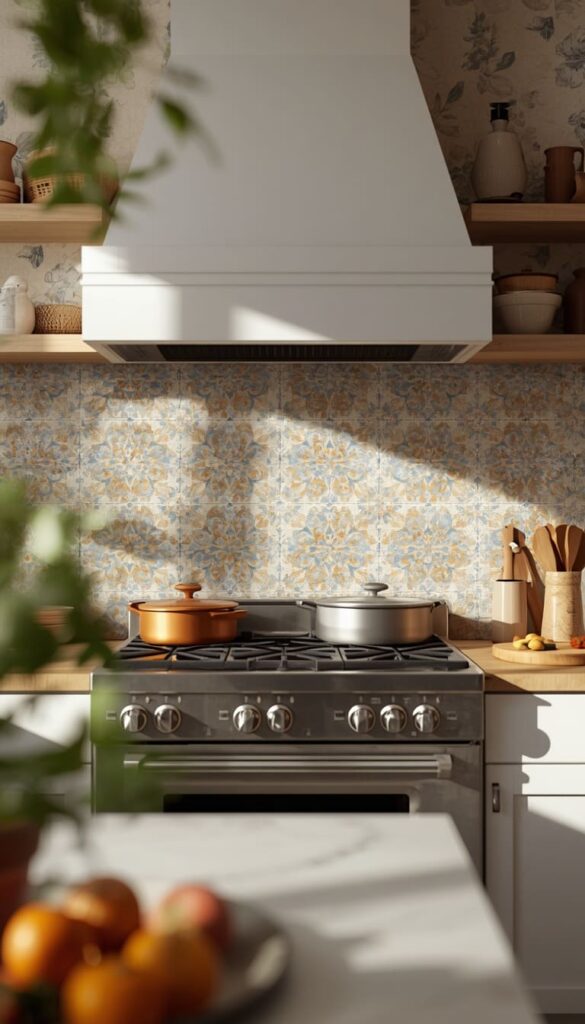
Patterned cement tile is one of my favorite ways to bring personality into a farmhouse kitchen without going overboard. Think soft blues, creams, and muted terracotta in classic Spanish or quilt inspired motifs. It adds character fast, even in a small galley kitchen.
A few things I always mention to clients considering this option:
- Cement tile is unglazed, so it needs sealing before and after grouting
- The pattern reads best when paired with simple, plain cabinetry
- It tends to work better as an accent wall than wall to wall coverage
Used behind a range or sink, it becomes a real focal point without overwhelming the rest of the room.
8. Black and White Hex Tile Backsplash
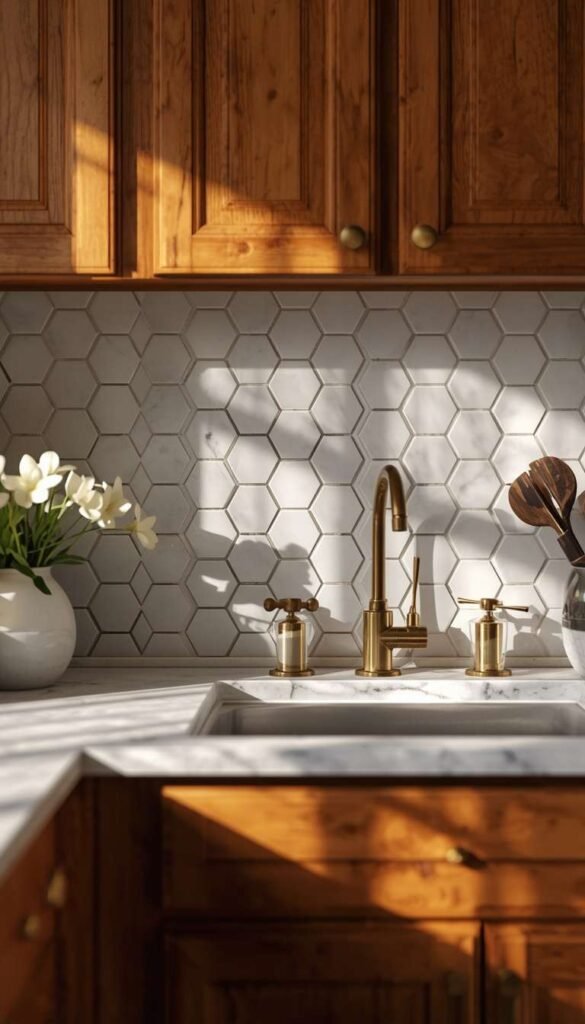
Black and white hex tile has that vintage farmhouse charm that feels straight out of an old general store, and it’s a fantastic option if your kitchen is on the smaller side. The graphic pattern adds visual interest without adding clutter, and it photographs beautifully against warm wood tones or brass fixtures.
One thing I’ll mention is that the high contrast grout lines do show dirt and grime a bit more noticeably than a solid color tile. A quick wipe down with a soft brush once a week keeps it looking sharp, and most homeowners find it becomes part of their normal kitchen routine pretty fast.
9. Natural Stone Veneer Backsplash
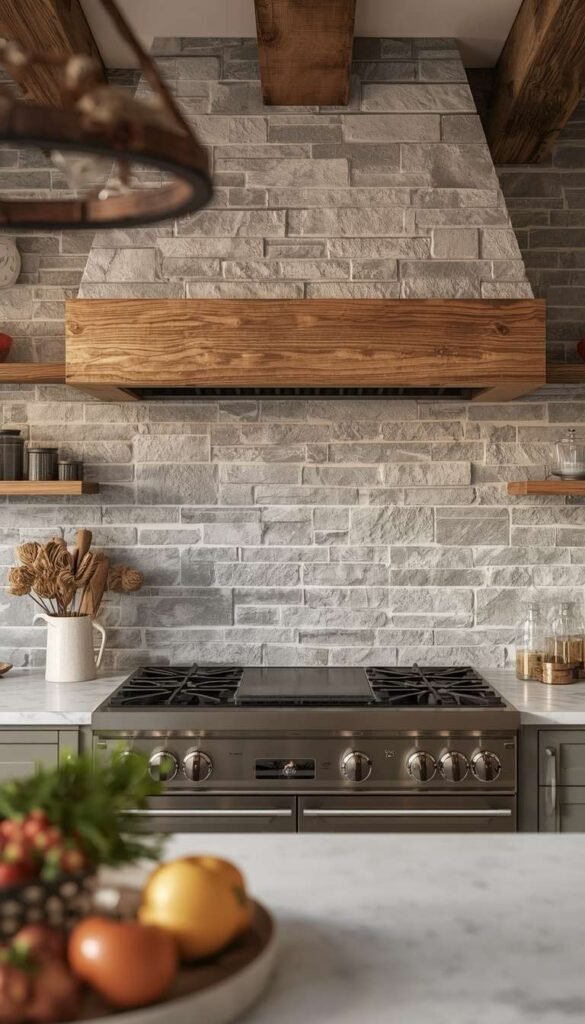
Natural stone veneer brings that rustic, lived in feel that so many farmhouse kitchens are built around. Whether it’s a soft gray ledgestone or a warmer tan fieldstone, this backsplash style works especially well in kitchens with exposed beams, open shelving, or a vintage range as the centerpiece.
A couple of practical notes worth keeping in mind:
- Stone veneer is heavier than tile, so check that your wall can support it
- It’s textured enough that grease and splatter need a quick wipe more often than smooth tile
I usually recommend this look behind the range as a feature wall rather than wrapping the whole kitchen, both for cost reasons and so it doesn’t compete with other rustic elements in the room.
10. Tin Ceiling Tile Backsplash
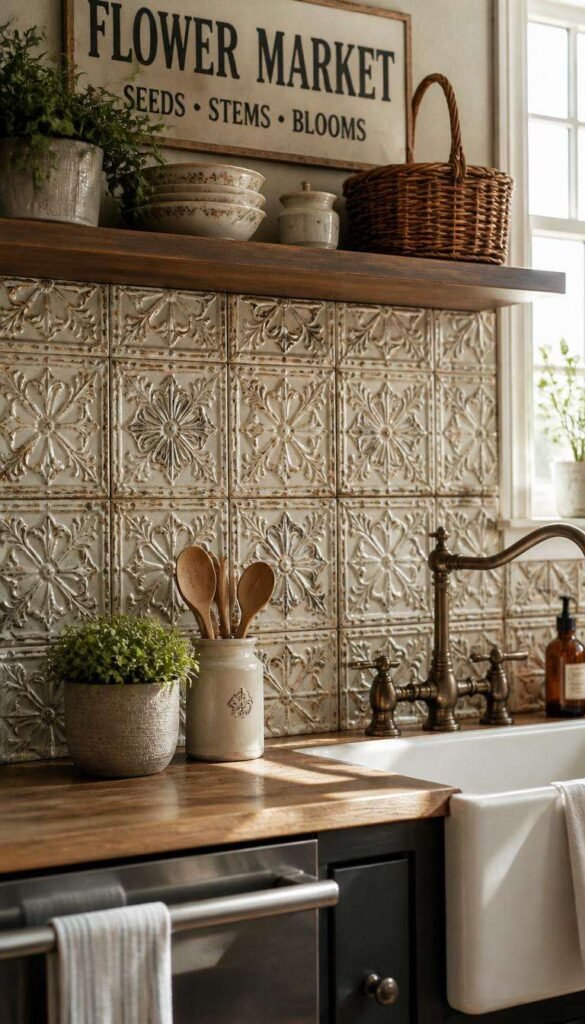
If you want farmhouse character on a real budget, tin ceiling tile is one of the most underrated options out there. These pressed metal panels, often found in antique or salvage shops, bring a vintage patina that feels collected over generations rather than installed last weekend.
What I love about tin tile is how forgiving it is. A little rust or unevenness only adds to the charm, and it’s genuinely one of the easier backsplash materials for a confident DIYer to install over a weekend. The main thing to plan for is cutting around outlets and switches carefully, since the metal edges can be sharp if you’re not used to working with it.
11. Limestone or Travertine Full Wall Backsplash
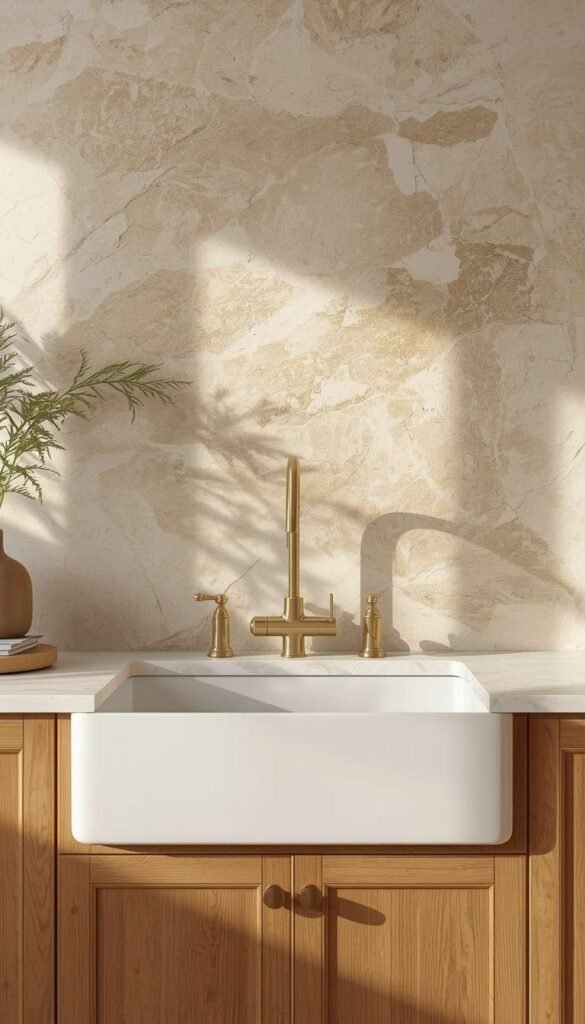
A full wall of limestone or travertine is one of the quickest ways to make a small farmhouse kitchen feel bigger and calmer. The soft, neutral tones and subtle texture create a sense of continuity that’s hard to achieve with patterned tile, and it pairs especially well with natural wood cabinetry and brass or black hardware.
Both stones are porous, so sealing is non negotiable here, particularly around the sink and range where moisture and oil splashes happen most. I always tell clients to think of sealing as part of their annual kitchen maintenance, right alongside checking grout lines and tightening cabinet hardware. Done that way, it stays beautiful for years.
If you could only change one thing in your kitchen this year, would it be the backsplash?
12. Beadboard Backsplash
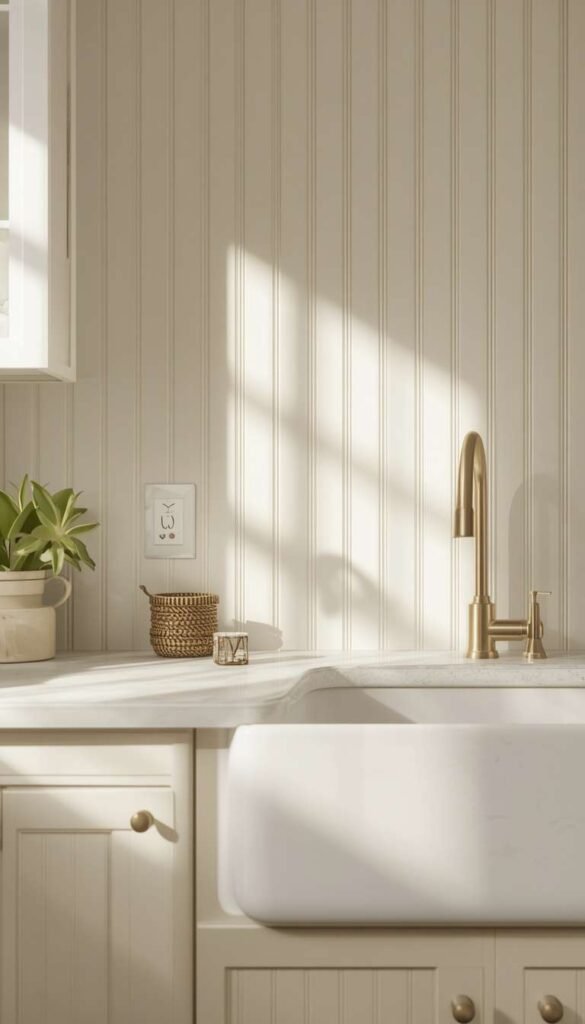
Beadboard might be the most classic cottage farmhouse backsplash there is, and it’s earned that reputation honestly. Those slim vertical grooves bring instant texture and a sense of history, especially when painted a soft white or cream to match shaker style cabinetry.
It’s also one of the most budget friendly options on this entire list, which makes it a smart pick for a starter farmhouse kitchen or a rental refresh. The tradeoff is similar to shiplap. Beadboard near water sources needs a good primer and paint job, and I’d avoid it directly behind a sink unless it’s protected by a small ledge or strip of tile. Used everywhere else, it brings warmth without straining the budget.
Which Backsplash Path Is Yours?
By Budget
Starter Friendly
- Beadboard for that instant cottage charm without the splurge
- Shiplap walls for big visual impact at a low cost per square foot
- Classic white subway tile for a timeless look that won’t blow the budget
Luxury Investment
- Marble slab for a seamless, high end farmhouse look
- Handmade zellige for one of a kind handcrafted texture
- Natural stone veneer for a rustic feature wall with real presence
By Lifestyle
Busy Families and Heavy Cooks
- White subway tile with darker grout for easy daily wipe downs
- Tin ceiling tile, since a little wear only adds character
- Limestone or travertine, sealed once a year and built to last
Small Kitchens and Cozy Cottages
- Black and white hex tile to add personality without clutter
- Patterned cement tile as a focal point in a galley layout
- Beadboard for a soft, airy feel that won’t crowd the space
Frequently Asked Questions
What is the most popular backsplash for a farmhouse kitchen?
White subway tile remains the top choice across the country, and it’s not hard to see why. It’s affordable, timeless, and works with nearly every cabinet color.
How much does it cost to install a farmhouse kitchen backsplash?
Most homeowners spend between $600 and $2,500 for a standard kitchen, depending on material and labor. Beadboard and shiplap sit at the lower end, while zellige and marble push costs higher.
Can I install a farmhouse backsplash myself?
Yes, materials like beadboard, shiplap, and peel and stick tin tile are very DIY friendly. Anything involving natural stone or large format tile is usually best left to a pro.
What backsplash works best behind a farmhouse sink?
Subway tile and marble slab are the most popular choices, since both hold up well to daily splashes. Just plan on a slightly darker grout or regular sealing to manage hard water marks.
Does a farmhouse backsplash need to match the countertop?
Not at all, and contrast often looks better. A white or wood backsplash against a dark stone countertop is one of the most requested combinations I see.
Conclusion
Your kitchen is where so much of daily life actually happens, the morning coffee, the homework at the counter, the late night snack runs. A backsplash might seem like a small detail in the bigger picture, but I promise it changes how the whole room feels every single day. You don’t have to decide everything tonight. Order a tile sample, grab a paint swatch, or just stand in your kitchen and picture one of these looks on your wall.
That first small step is usually all it takes to get the momentum going.
So tell me, which one of these caught your eye first, the moody dark wood, the classic subway tile, or something a little more unexpected?
