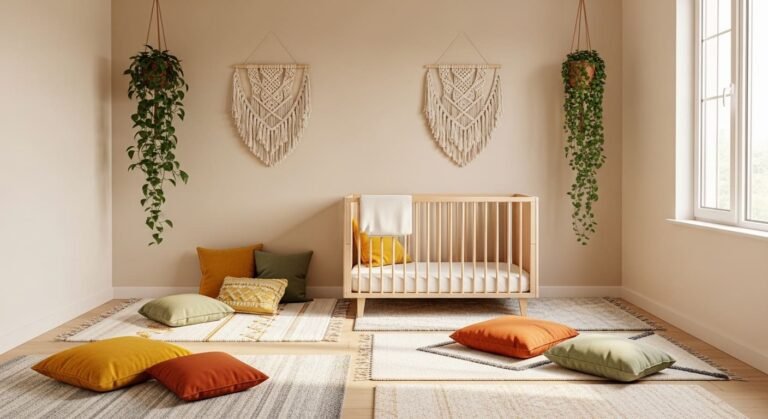
13 Japandi Bedroom Ideas for a Calm Minimalist Home
1. Soft Neutral Palette with Warm Wood Tones

A serene japandi bedroom ideas theme begins with a soft neutral palette that instantly promotes calm and balance. Shades like warm beige, off-white, and soft greys create a gentle backdrop, allowing the room to feel open and uncluttered. A low-profile wooden bed crafted from natural oak or walnut becomes the focal point, grounding the space with organic warmth. Minimal color contrast, clean lines, and natural textures are essential to maintaining the Japandi aesthetic while ensuring the room feels cozy yet refined.
To enhance the look, incorporate layered textiles such as linen bedding, cotton throws, and a subtle woven rug. Keep décor minimal with simple ceramic vases, neutral cushions, and a touch of greenery like a small indoor plant. Soft natural lighting through sheer curtains adds an airy quality, making the space feel peaceful and inviting. The key is to strike a balance between Japanese simplicity and Scandinavian comfort without overcrowding the room.
2. Low Platform Bed for Grounded Living
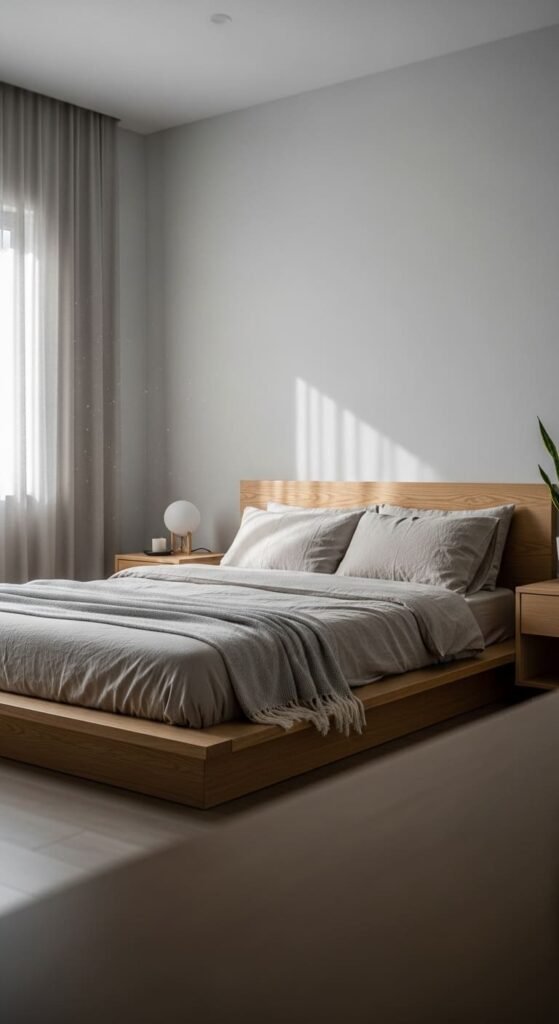
A defining feature of japandi bedroom ideas is the use of a low platform bed that emphasizes simplicity and connection to the ground. These beds create a sense of openness by visually expanding the vertical space in the room. Typically made from natural wood, they highlight craftsmanship and understated beauty. Clean silhouettes, low height, and sturdy construction help achieve a grounded and tranquil environment that aligns perfectly with Japandi principles.
Pair the bed with soft, neutral bedding and avoid heavy or ornate headboards. Instead, consider a simple wood panel or no headboard at all for a clean, modern look. Add a lightweight throw or textured blanket to introduce depth without clutter. The low bed design also encourages a relaxed lifestyle, reinforcing a calm and intentional living experience within the bedroom.
3. Minimalist Décor with Purposeful Styling
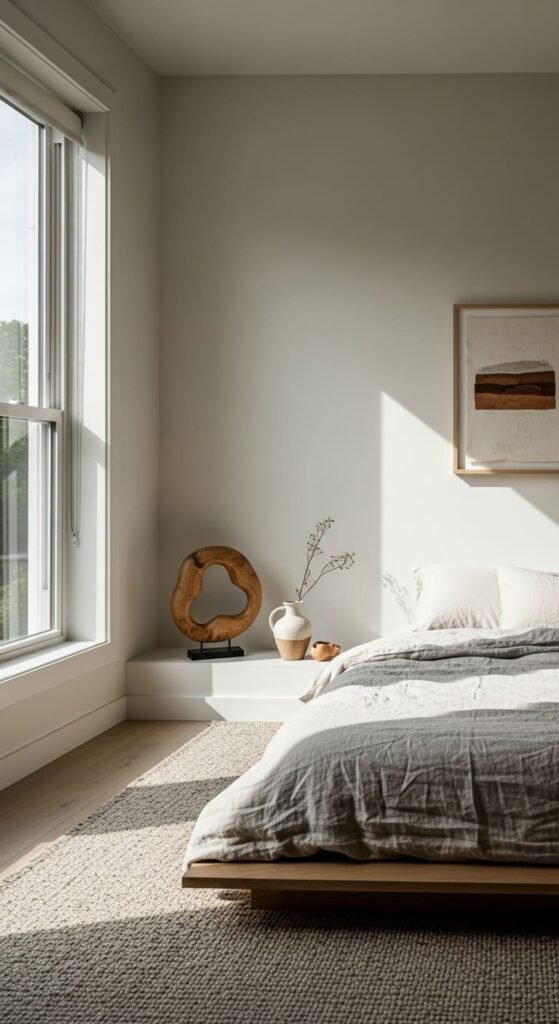
In japandi bedroom ideas, every décor element serves a purpose, contributing to both beauty and functionality. The focus is on intentional styling, clutter-free surfaces, and meaningful pieces rather than decorative excess. A single piece of wall art, a handcrafted vase, or a small sculpture can make a statement without overwhelming the room. This approach ensures that the space feels curated and peaceful rather than busy.
Choose décor items made from natural materials like wood, clay, or linen to stay true to the Japandi aesthetic. Keep nightstands simple with only essential items such as a lamp, a book, or a small plant. Avoid overcrowding shelves or surfaces, as negative space is just as important as the objects themselves. This balance helps create a harmonious and visually calming bedroom environment.
4. Natural Light with Sheer Window Treatments
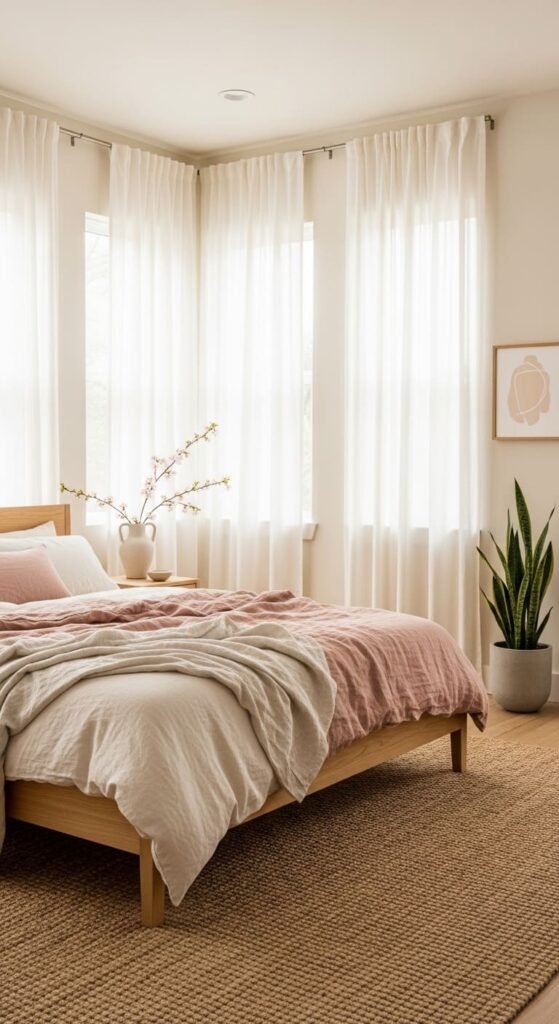
Lighting plays a crucial role in shaping japandi bedroom ideas, with a strong emphasis on natural light. Large windows dressed in sheer curtains allow sunlight to gently filter into the room, creating a soft and soothing glow. Diffused light, airy fabrics, and unobstructed windows enhance the feeling of openness and tranquility, making the bedroom feel more connected to nature.
In the evening, complement natural light with warm, ambient lighting such as paper lanterns or soft-glow bedside lamps. Avoid harsh or overly bright fixtures, as they disrupt the calm mood. Instead, focus on layered lighting that feels gentle and relaxing, maintaining a cozy atmosphere throughout the day and night.
5. Earthy Textures and Organic Materials
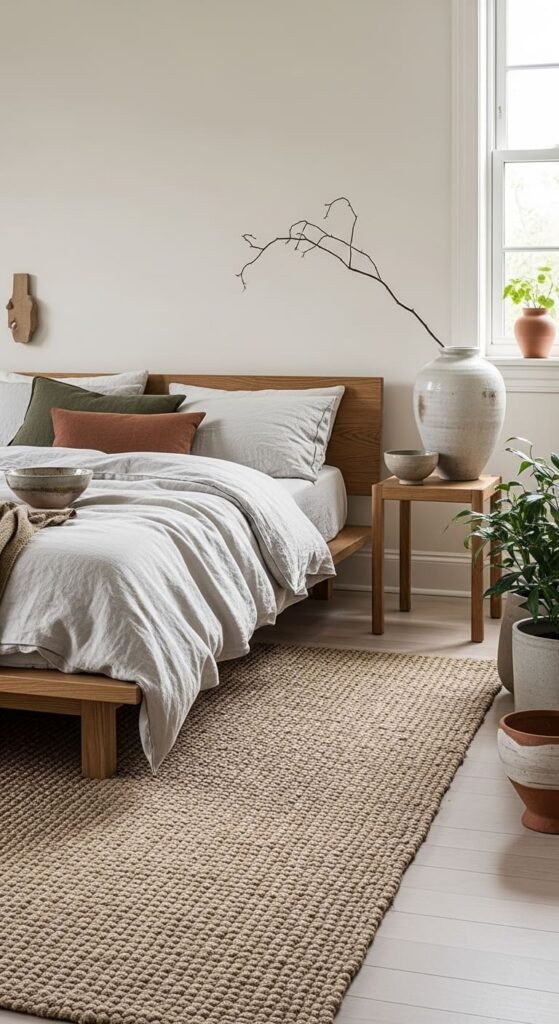
A key aspect of japandi bedroom ideas is the use of earthy textures and organic materials that bring warmth and depth to the space. Incorporate elements like linen bedding, woven rugs, wooden furniture, and ceramic accents to create a tactile and inviting environment. These natural materials not only enhance visual appeal but also add a sense of authenticity and comfort.
Balance textures carefully to avoid overwhelming the room. Pair smooth surfaces like wood with soft textiles and subtle patterns for contrast. Introduce small touches like handmade pottery or a textured throw blanket to add character without clutter. The result is a harmonious blend of simplicity and coziness that defines the Japandi style perfectly.
6. Sliding Shoji Inspired Panels for Serenity

In japandi bedroom ideas, sliding panels inspired by traditional Japanese shoji screens bring both elegance and functionality. These panels, often made with wood frames and translucent paper or glass, allow light to pass through softly while maintaining privacy. Clean lines, light diffusion, and natural materials make them perfect for dividing spaces or replacing heavy curtains, creating a calm and uncluttered visual flow.
You can use these panels as closet doors, window coverings, or subtle room dividers to enhance the Japandi feel. Pair them with neutral tones and wooden textures to maintain harmony throughout the space. Their minimal design and soft lighting effect help create a peaceful retreat that feels both modern and timeless.
7. Muted Earth Tone Color Accents
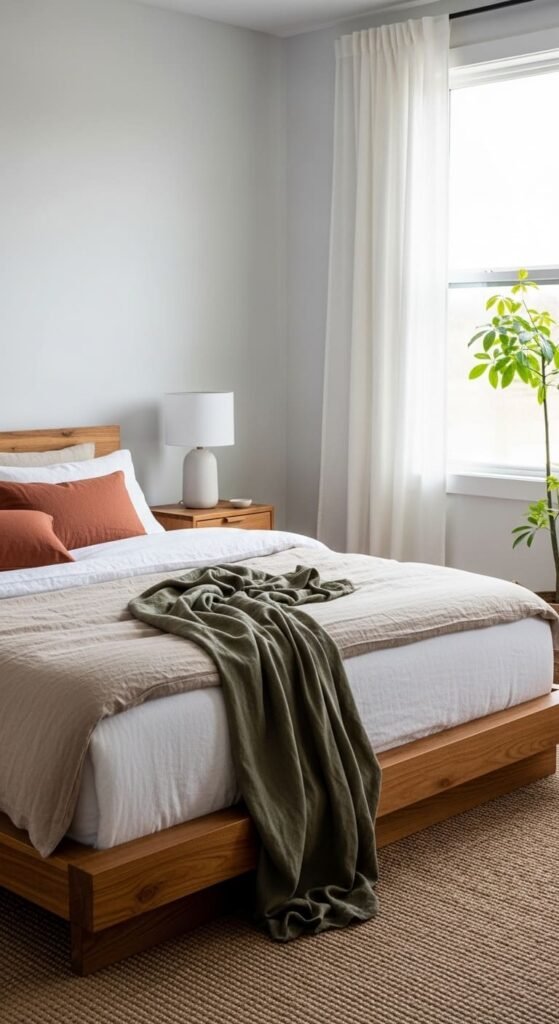
A japandi bedroom ideas approach often includes muted earth-tone accents to add depth without overpowering the space. Colors like terracotta, olive green, dusty brown, and charcoal blend beautifully with neutral bases. Subtle contrast, grounded hues, and soft layering bring visual interest while maintaining the calm, minimalist aesthetic that defines Japandi interiors.
Introduce these tones through cushions, throws, or small décor pieces rather than large surfaces. This keeps the room feeling light and uncluttered while still adding personality. Balanced color placement and restraint are key, ensuring the accents enhance rather than dominate the peaceful environment.
8. Simple Wooden Nightstands with Clean Lines

Furniture in japandi bedroom ideas is all about simplicity and craftsmanship, and wooden nightstands are no exception. Choose designs with clean lines, smooth finishes, and minimal detailing to maintain a clutter-free look. Natural wood tones like oak, ash, or walnut help create warmth while staying true to the organic feel of the style.
Keep the surface of the nightstand minimal by placing only essentials such as a lamp, a book, or a small decorative item. Avoid overcrowding to preserve negative space. Functional design and visual simplicity ensure the nightstand complements the room without drawing unnecessary attention.
9. Indoor Plants for a Natural Touch
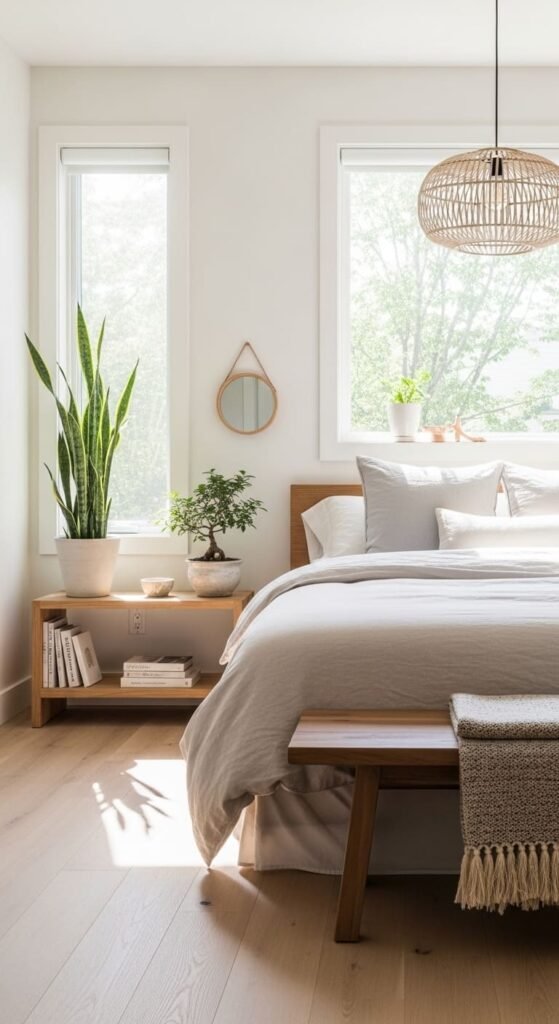
Adding greenery is an essential element in japandi bedroom ideas, bringing life and freshness into the space. Choose low-maintenance plants like snake plants, bonsai, or small potted greenery that align with the minimalist aesthetic. Natural elements, fresh air, and subtle greenery help create a connection with nature, enhancing the calming atmosphere of the bedroom.
Place plants strategically in corners, on shelves, or beside windows to maximize their impact without cluttering the room. Use simple ceramic or clay pots to maintain the natural theme. Minimal placement and organic beauty ensure the plants complement the space while keeping the overall design clean and balanced.
10. Soft Layered Bedding with Cozy Textiles
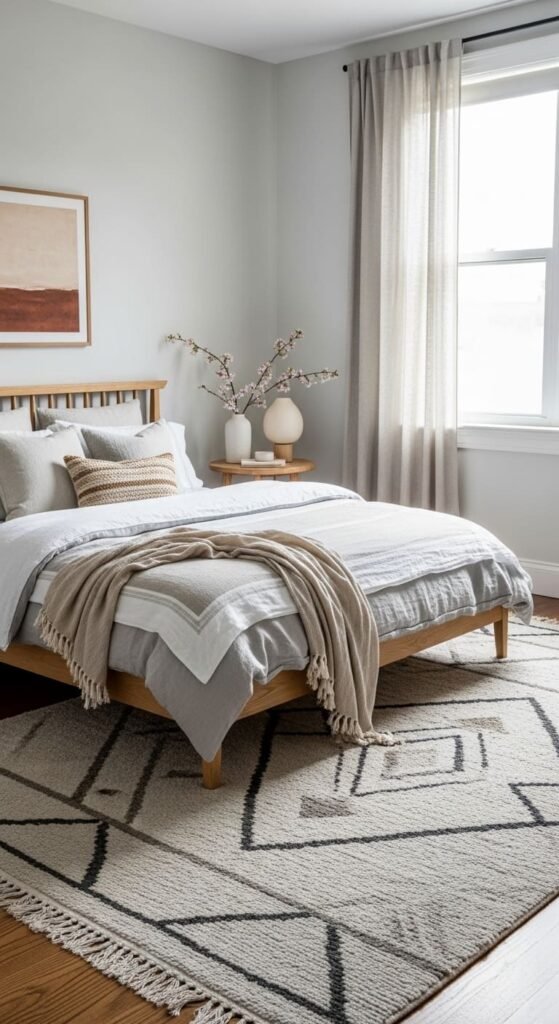
Comfort is a key part of japandi bedroom ideas, and layered bedding plays a major role in achieving it. Use soft linen sheets, cotton duvets, and lightweight throws in neutral tones to create a cozy yet breathable sleeping environment. The layering adds depth while maintaining a simple and elegant look that aligns with Japandi principles.
Focus on texture rather than bold patterns to keep the design cohesive. Mix materials like linen and wool subtly for added warmth and comfort. Understated luxury and tactile softness make the bed inviting while preserving the minimalist charm of the space.
11. Minimalist Storage Solutions
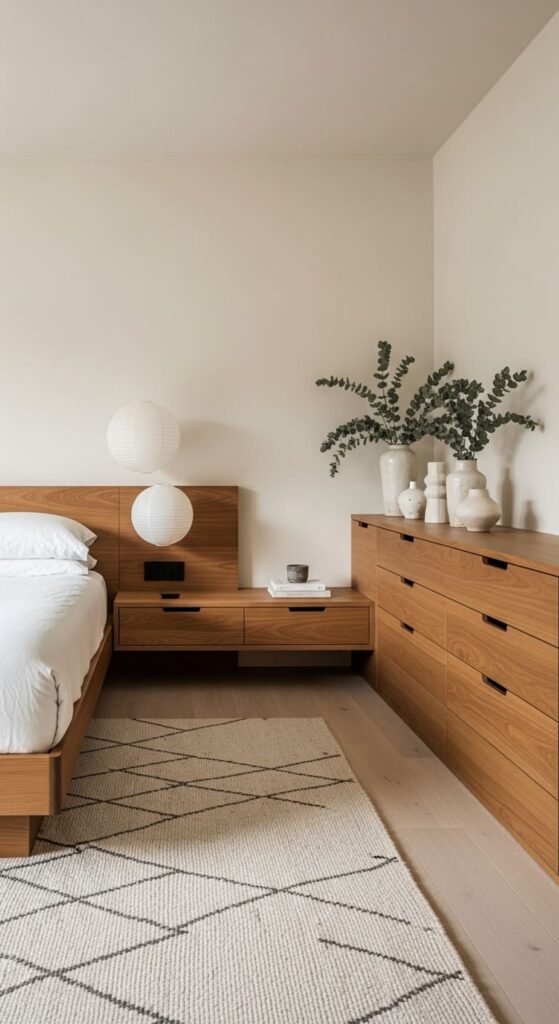
Japandi bedroom ideas emphasize keeping spaces clutter-free, and minimalist storage solutions are essential for achieving this balance. Built-in closets, under-bed drawers, or sleek wooden chests help hide belongings while maintaining the clean, open feel of the room. Streamlined designs, hidden compartments, and natural materials ensure storage is functional yet visually unobtrusive.
Choose storage pieces that complement the room’s wood tones and neutral palette. Avoid excessive handles or decorative features that distract from the minimalist vibe. Smart organization and subtle design allow the bedroom to remain serene and relaxing, reinforcing the calm and uncluttered atmosphere central to Japandi style.
12. Natural Fiber Rugs for Warmth
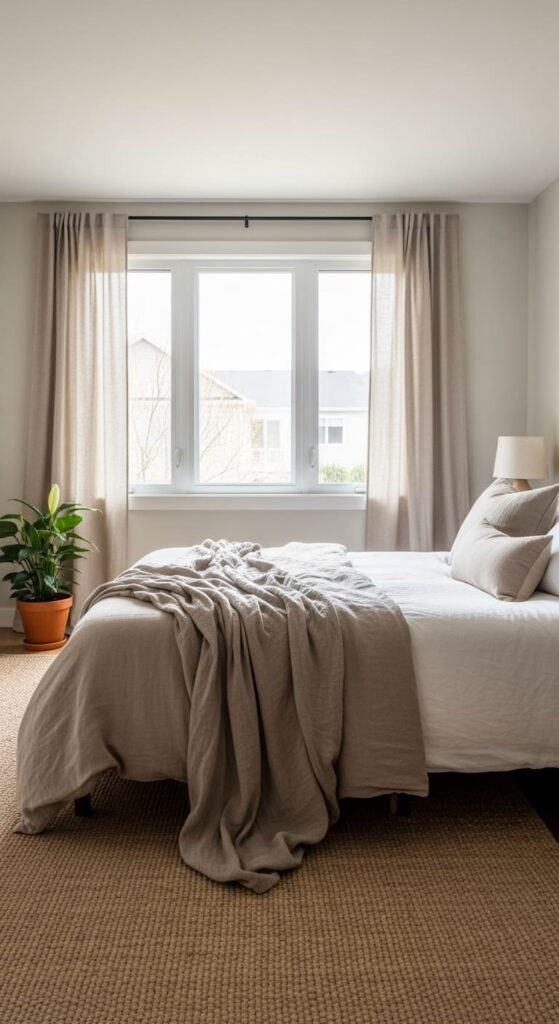
In japandi bedroom ideas, natural fiber rugs like jute, sisal, or wool add warmth and texture without overwhelming the minimalist aesthetic. These rugs provide a soft foundation for bare feet and help define different areas of the room. Organic materials, subtle textures, and earthy tones bring comfort and visual interest while keeping the space grounded.
Layer rugs subtly under the bed or in seating areas to create depth without clutter. Keep patterns minimal or monochromatic to maintain harmony with the neutral palette. Textural contrast and natural elegance make the bedroom feel cozy, tactile, and aligned with the Japandi philosophy of calm simplicity.
13. Statement Lighting with Subtle Design
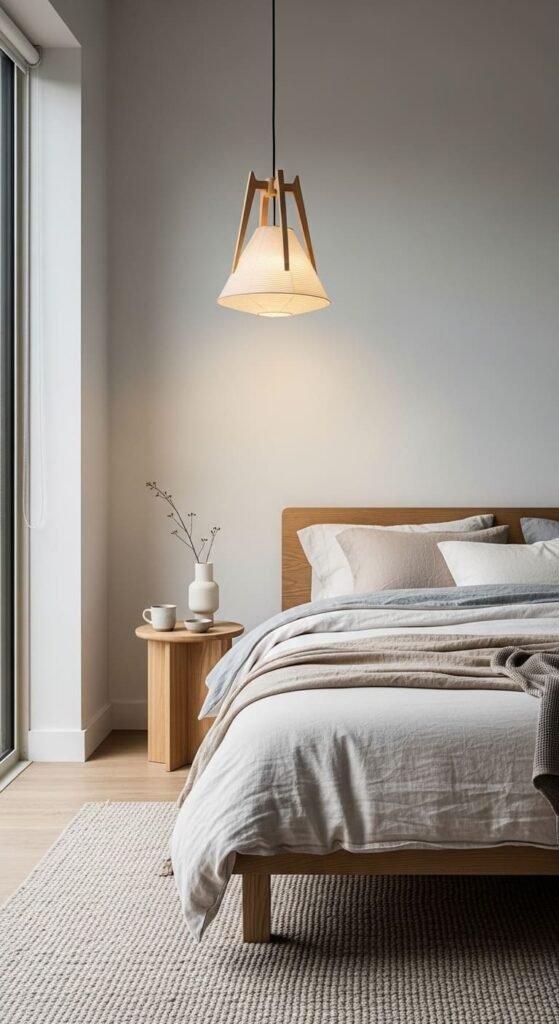
Lighting is a vital element in japandi bedroom ideas, and statement fixtures with subtle designs can elevate the space. Choose pendant lights, lantern-style lamps, or wall sconces crafted from natural materials like wood, paper, or ceramic. Soft illumination, clean lines, and minimal ornamentation ensure the lighting adds character without disrupting the serene environment.
Position lighting to highlight key areas like bedside tables, reading corners, or artwork while keeping the overall mood warm and calming. Avoid harsh or overly decorative fixtures that clash with the minimalist theme. Balanced lighting and elegant simplicity enhance the peaceful retreat-like quality of a Japandi bedroom.
Conclusion
Japandi bedroom ideas combine the best of Japanese minimalism and Scandinavian warmth to create serene, balanced retreats. By focusing on neutral palettes, natural materials, clean lines, and purposeful décor, these bedrooms feel both calming and inviting. Thoughtful details like layered bedding, soft lighting, and subtle textures enhance comfort without clutter, making the space a true sanctuary.
The essence of Japandi style lies in simplicity, functionality, and harmony with nature, allowing every element to serve a purpose while promoting relaxation. Whether through low-profile furniture, earthy accents, or indoor greenery, these bedrooms offer a perfect blend of elegance and coziness for a peaceful, minimalist lifestyle.