
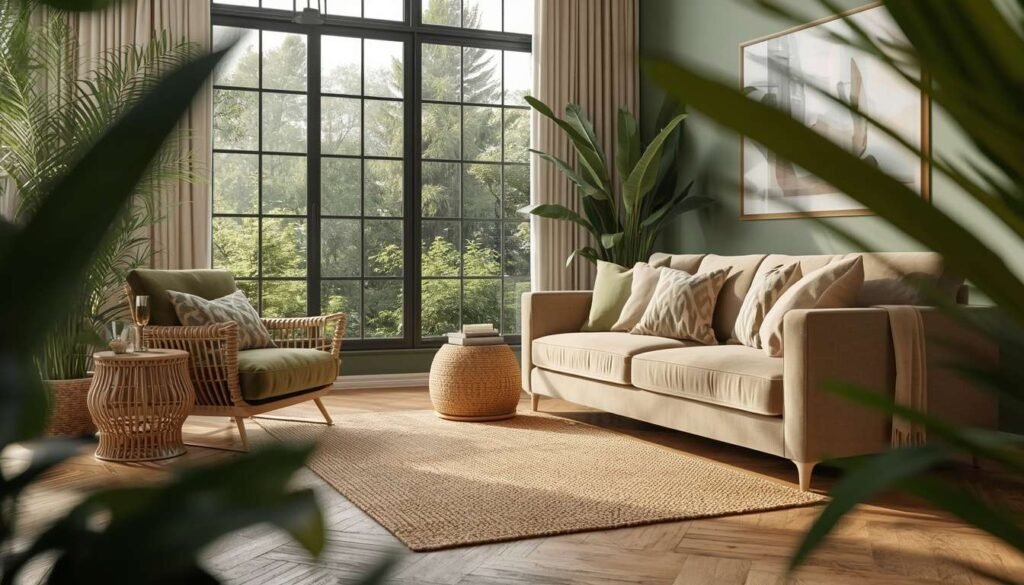
Most living rooms make you pick a lane, either bold and trendy or safe and forgettable. Green and beige refuse to choose, and that is exactly why this pairing has become one of my go to recommendations for clients who want a room that feels expensive without feeling cold or staged. I have used this combo in projects ranging from a tiny Brooklyn rental to a sprawling Connecticut colonial, and it works in almost every kind of space and light. Sage walls, a warm beige sofa, maybe one olive velvet chair, and suddenly the room feels grounded instead of generic. If you want a living room that reads cozy and luxe at the same time, these 14 ideas will get you there.
My Design Notes
A few years back I worked on a living room in a Colonial style home in Connecticut, and the owners told me upfront that they were scared of green. Their last house had a bold green accent wall that ended up feeling like a doctor’s office waiting room, so they avoided the color completely after that.
The room faced north, which meant it stayed flat and grey looking no matter what neutral we tried on the walls. I brought over a stack of sage swatches and we taped them up in three different spots, checking how they looked in the morning, midday, and once the sun went down.
What surprised all of us was that the green wasn’t the problem. The beige underneath it was too cool, so every green we tried looked muddy. Once we warmed up the base with a creamy beige sofa and rug, the sage finally clicked.
We ended up painting just the fireplace wall in a soft sage grasscloth and added a single olive velvet chair in the corner. The client called me a few weeks later and said it was the first room in the house guests didn’t rush out of, even in the middle of winter.
Stunning Green and Beige Living Room Ideas for an Elevated, Cozy Luxe Look
1. Sage Green Accent Wall with a Warm Beige Sectional
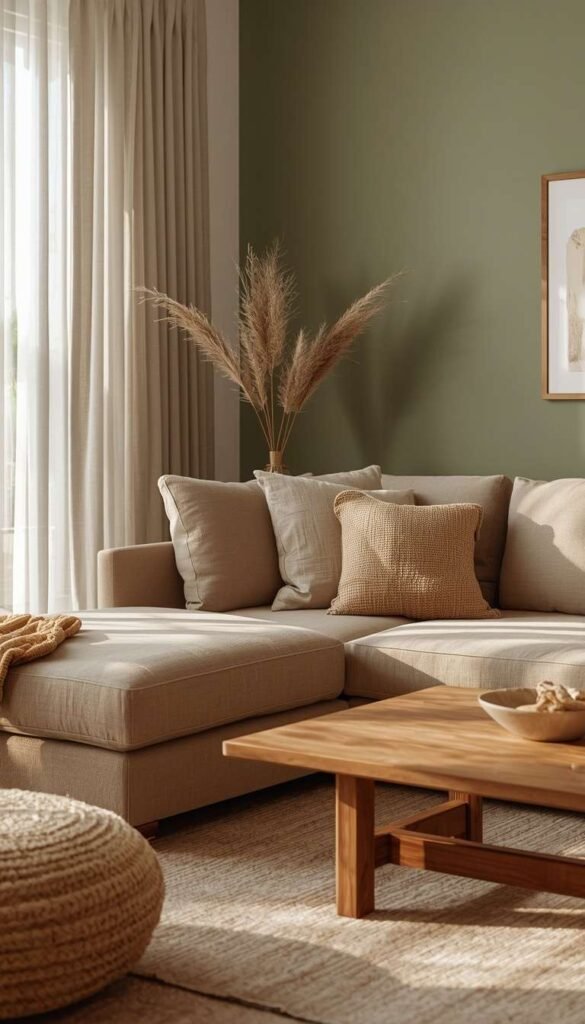
This is the combination I reach for most often when a client wants something calm but not boring. A single wall in soft sage, paired with a deep beige or oatmeal sectional, instantly makes a living room feel like it belongs in a magazine without trying too hard. The trick is choosing a green that leans grey rather than yellow, because yellow based sage can start to look minty under certain bulbs. I usually test the paint on the actual wall, not a sample board, since light bouncing off your floors and furniture changes everything. One thing I’ve learned the hard way is that this look needs at least one warm wood element, like an oak coffee table, or the room can start to feel a little flat. Once that balance is right, the space feels grounded, current, and surprisingly easy to live in.
2. Olive Green Velvet Sofa on a Beige Base
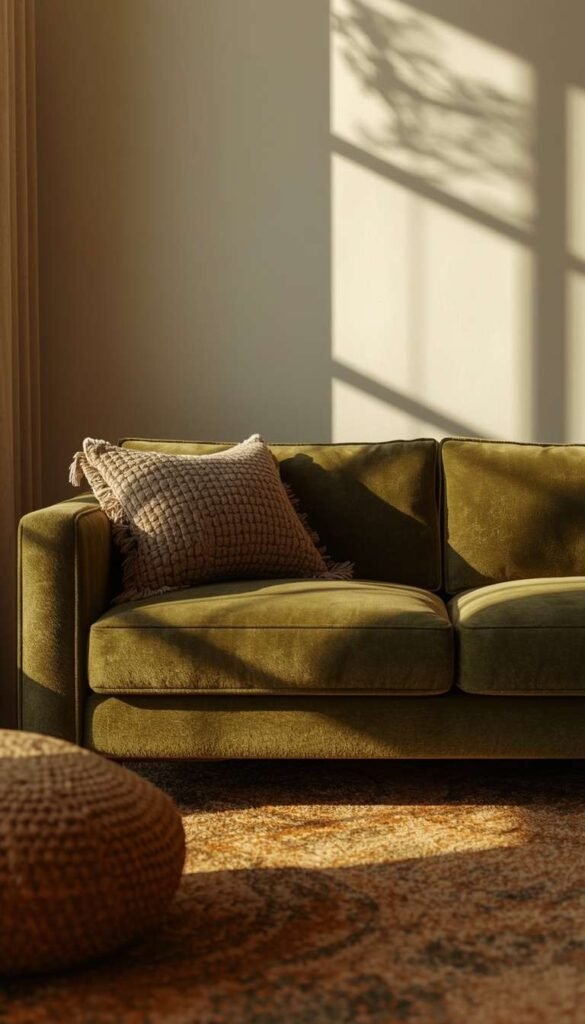
An olive velvet sofa against creamy walls is one of the fastest ways to make a room feel rich without going dark. It photographs beautifully, but I always have an honest conversation with clients before they commit.
- Velvet shows every paw print and crumb, so this works best in low traffic living rooms.
- A removable, washable cover or a velvet with a tighter weave holds up much better with kids or pets.
- Pairing it with a beige boucle throw softens the look and hides minor wear between cleanings.
3. Beige Grasscloth Walls with Green Velvet Accents
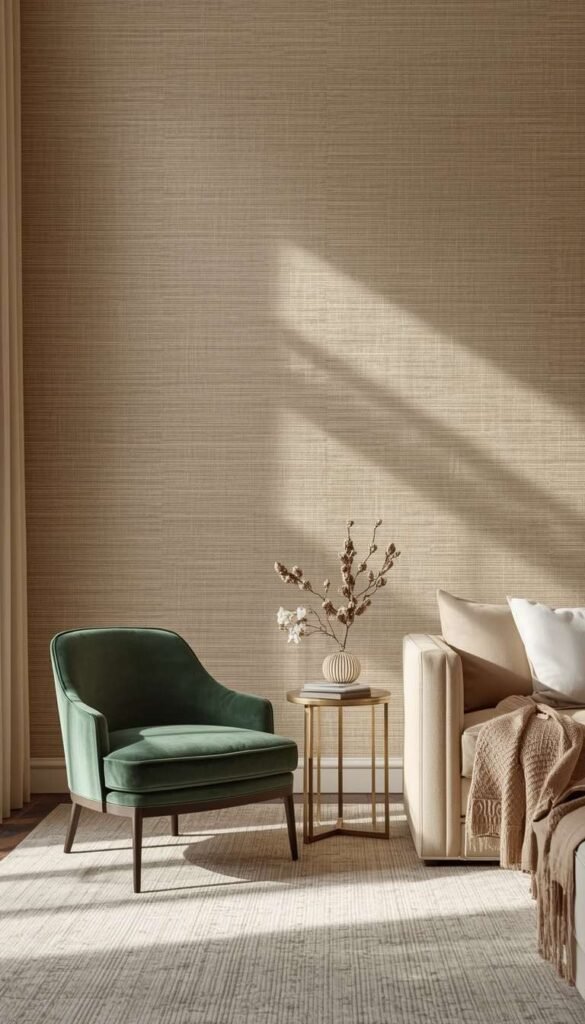
Grasscloth wallpaper has a textured, almost woven look that paint simply cannot replicate, and pairing it with green velvet pillows or a small accent chair feels instantly elevated. It’s the kind of detail that makes a living room feel custom, even in a rental friendly version with removable wallpaper. A quick trick I’ve learned is to keep the green pieces small and let the grasscloth do the heavy lifting, since the texture alone adds so much warmth and depth. If the budget doesn’t stretch to full wallpaper, even one accent wall can give you most of that same elegant, layered feeling.
4. Modern Farmhouse Sage Cabinetry with Linen Beige Sofa
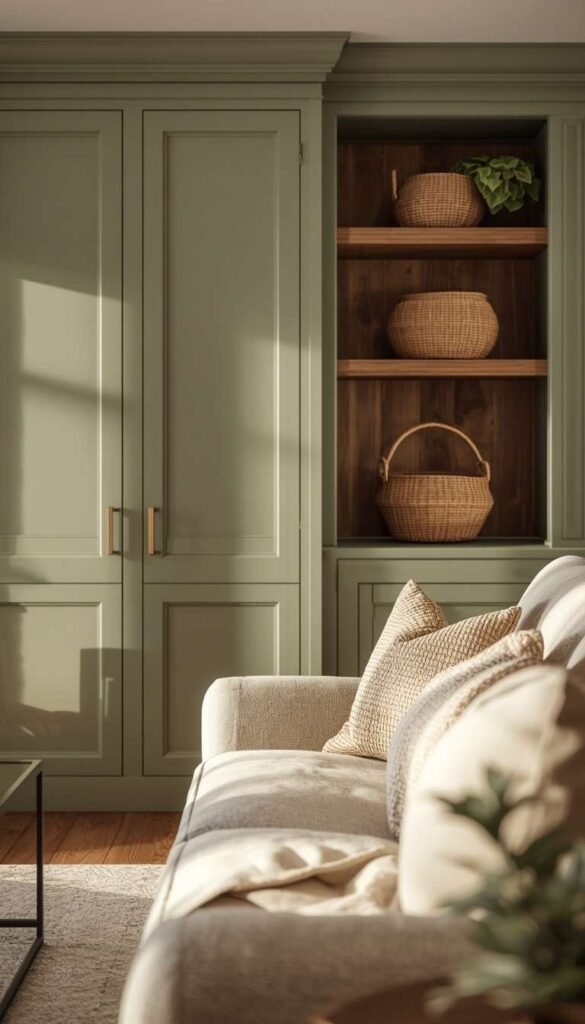
Modern farmhouse living rooms have moved past the all white phase, and sage green built ins or a painted media cabinet are quietly taking over. Pair that with a slouchy linen sofa in warm beige and you get a room that feels collected, not matchy. A few paint names I’ve had great results with for this look include Sherwin Williams Evergreen Fog, Behr Cottage Charm, and Benjamin Moore Saybrook Sage, all of which read as a soft, muted green rather than bright or minty. The cabinetry color tends to anchor the whole room, so I’d choose that first and then build the beige tones around it.
- Stick to one or two wood tones in the room so the cabinetry doesn’t compete with too many finishes.
- Brass or aged bronze hardware tends to feel more farmhouse than chrome.
Top 6 Green and Beige Living Room Ideas:
| Idea | Estimated Price | Maintenance |
|---|---|---|
| Sage Green Accent Wall with Beige Sectional | Paint 50 to 80 per gallon, sectional 800 to 2500 | Low |
| Olive Green Velvet Sofa on a Beige Base | 900 to 3000 for sofa | High |
| Green Bouclé Accent Chairs with Beige Sofa | 150 to 400 per chair | Medium |
| Modern Farmhouse Sage Cabinetry | 200 to 600 for paint and supplies | Low |
| Green Built Ins or Bookshelves | 300 to 1200 depending on existing shelving | Low |
| Cozy Reading Nook in Olive and Beige | 150 to 500 for chair, lamp, and throw | Low |
5. Transitional Hunter Green Drapes Against Cream Walls
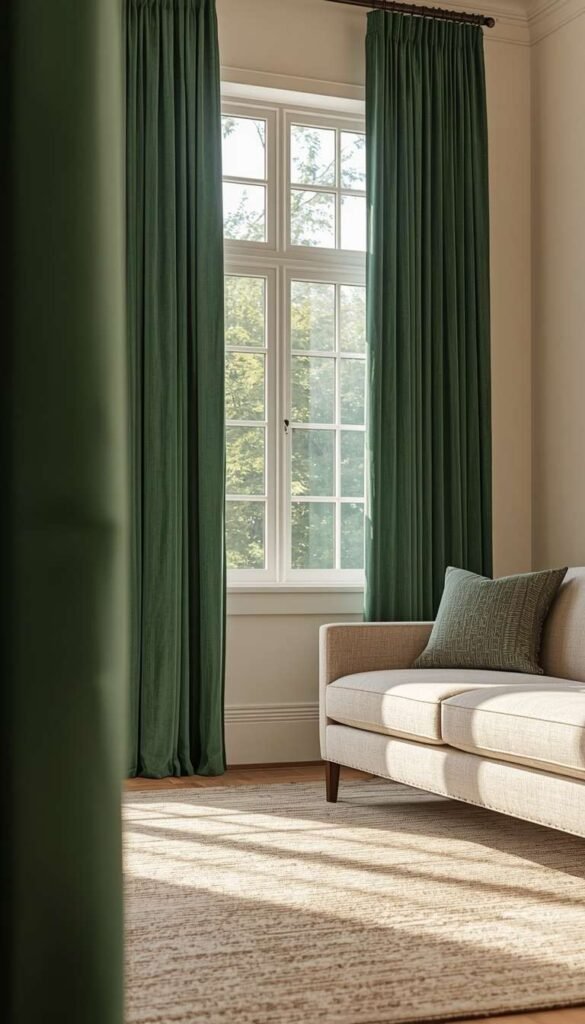
If you want drama without committing to paint, hunter green drapes are one of my favorite shortcuts. Against cream or warm white walls, they frame the windows beautifully and add a sense of height to the room, especially when hung close to the ceiling rather than right above the window frame. This look fits transitional spaces particularly well because it bridges something classic, like a tailored sofa, with something a little more current, like brass curtain rods or a textured rug. One thing to watch out for is fabric weight. A heavy hunter green velvet drape can make a smaller room feel closed in, so for living rooms under about 200 square feet, I’d lean toward a lighter linen blend in the same color family instead.
6. Color Drenched Sage and Beige for Small Living Rooms
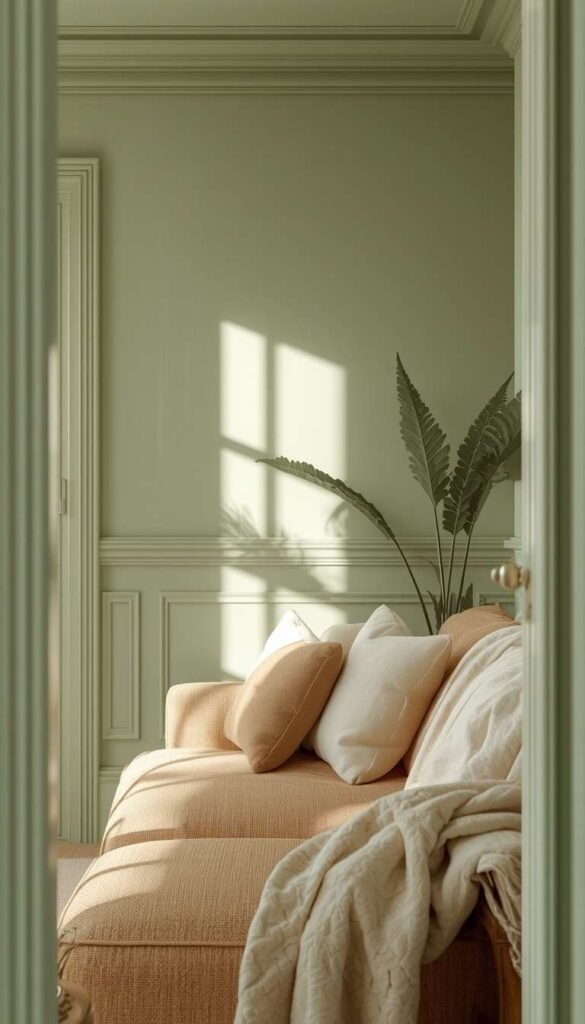
Color drenching, where walls, trim, and even the ceiling are painted the same shade, sounds counterintuitive for a small space. But I’ve used this in a few tiny apartment living rooms and it genuinely works. When everything is one continuous sage tone, your eye doesn’t stop at the trim or ceiling line, so the room feels larger and more cohesive rather than chopped up.
- Choose a sage with some grey undertone so it doesn’t feel like a kid’s nursery.
- Keep furniture in warm beige or cream so it stands out softly against the green rather than blending in completely.
This approach also tends to photograph beautifully because there’s no visual clutter from contrasting trim colors competing for attention.
7. Green Built Ins or Bookshelves Against Beige Walls
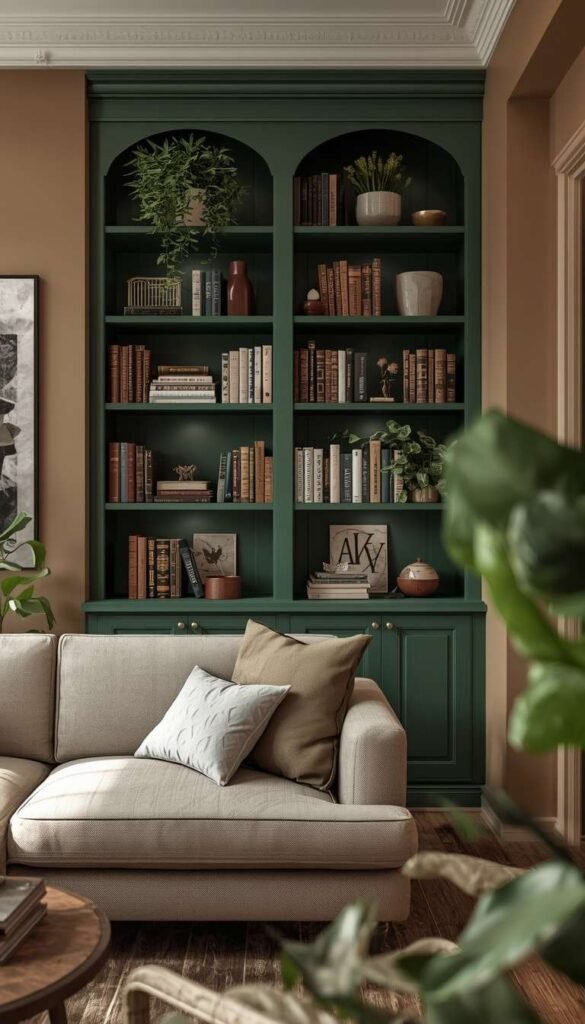
Built in shelving painted in a deep green, like a forest or bottle green, against beige walls creates an instant focal point, and it’s also a clever way to camouflage a television. Once a TV is surrounded by books, plants, and decor on shelving in the same dark tone, it tends to disappear into the wall rather than dominating the room. I usually suggest painting the back panel of the shelving the same green as the frame, since a contrasting back panel can sometimes look unfinished. If you’re renting and can’t paint built ins, a large green framed mirror or artwork in a similar spot can give a smaller version of the same effect.
Does your current living room already have a beige piece, like a sofa or rug, that you could build a green accent around?
8. Green Bouclé Accent Chairs with a Beige Linen Sofa
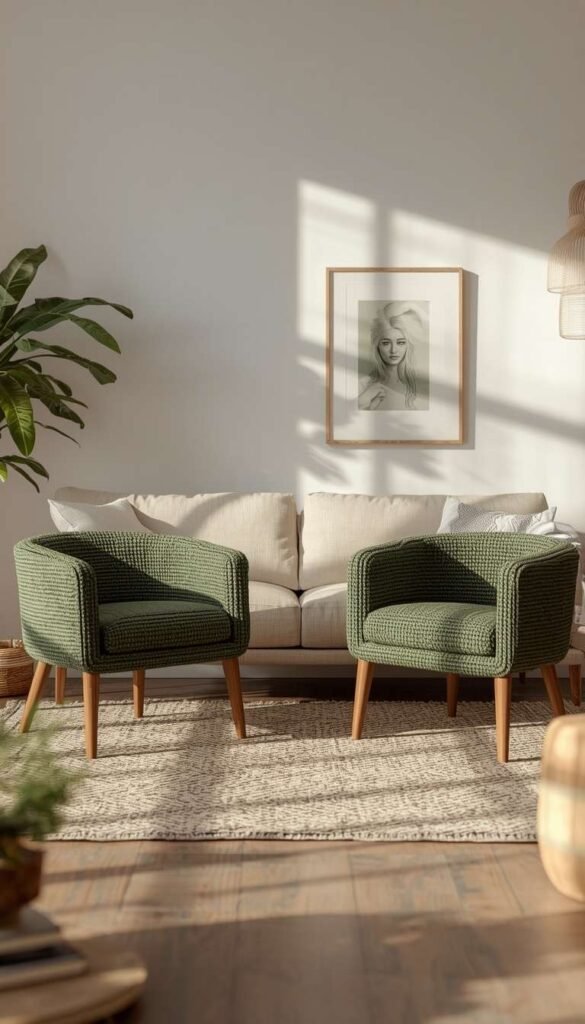
This is the lowest commitment way to bring green into a living room, and it’s where I start with clients who are nervous about color. A pair of green bouclé chairs flanking a beige linen sofa adds personality and texture without requiring any paint or major furniture investment. Bouclé in particular has a soft, nubby texture that reads as cozy rather than formal, which fits the warm neutral aesthetic so many people are after right now. If down the line you decide green isn’t working, swapping out two chairs is a lot easier and cheaper than repainting a wall or replacing a sofa, which makes this a smart starting point for anyone still finding their style.
9. Two Tone Paneling: Beige Below, Green Above
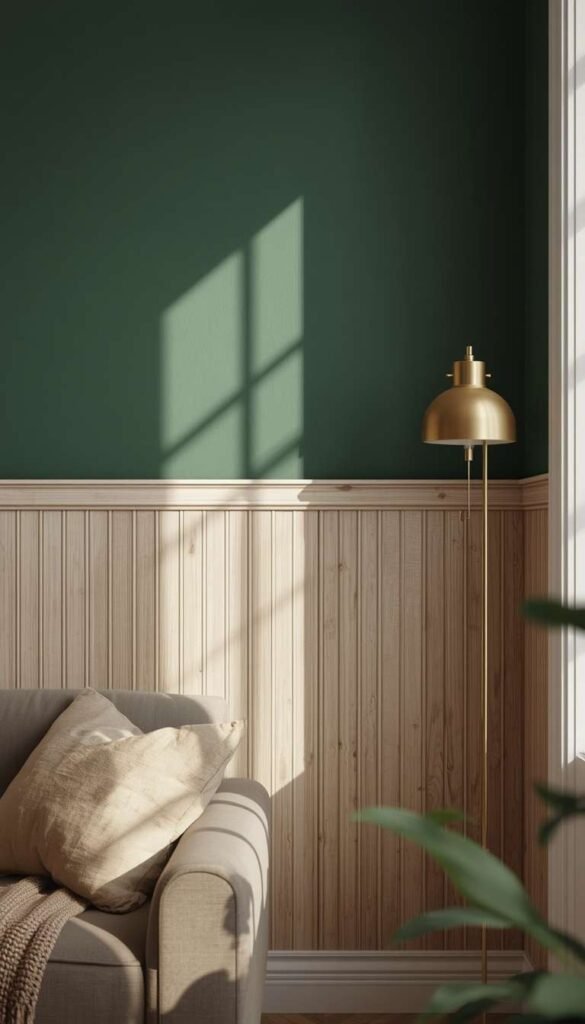
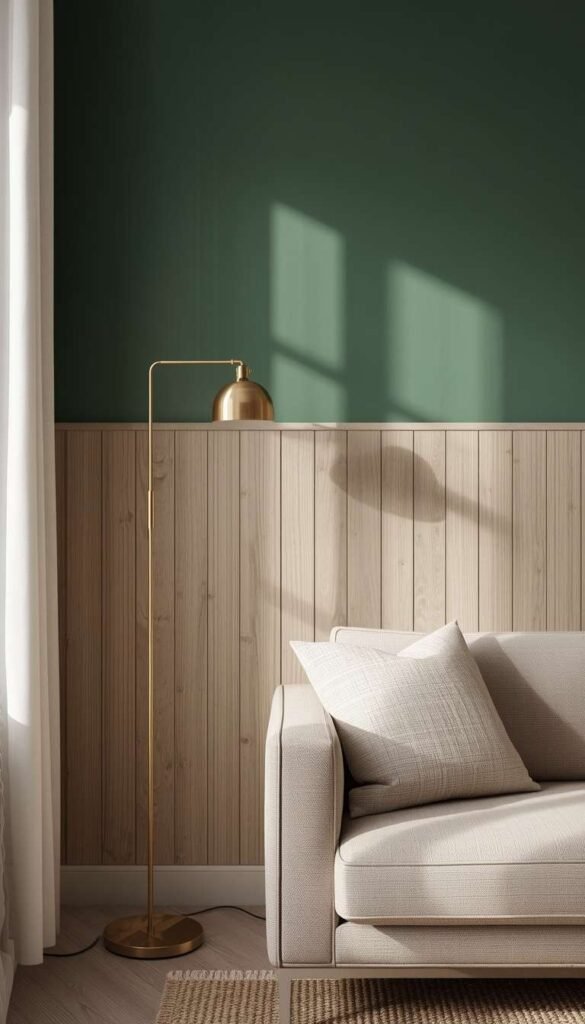
Two tone walls, where the lower portion is paneled in beige or a warm white and the upper wall is painted a deep green, add a level of architectural interest that flat painted walls just can’t match. This look feels current and a little bit moody, especially in living rooms with crown molding or existing trim work. One thing to keep in mind is proportion. In rooms with standard eight foot ceilings, I usually keep the paneling around a third of the wall height, otherwise the green portion can start to feel like it’s pressing down on the room. In taller rooms with nine or ten foot ceilings, you have more flexibility, and a higher panel line actually makes the ceiling feel even more dramatic.
10. Layered Greens on a Beige Base for a Nature Inspired Look
This is the idea I come back to whenever someone says they want their living room to feel like the outdoors found its way in. Instead of picking one green, layer several, sage on the walls, olive on a sofa, and a deeper forest green in throw pillows or a vase. Beige acts as the connective tissue that keeps all those greens from feeling busy. The key is sticking to greens that share the same undertone, so either all warm or all cool, rather than mixing a yellow based green with a blue based one.
- Add a few real plants, since they tie the painted and fabric greens together in a way that artificial greenery never quite does.
- Woven baskets or rattan accents add another earthy layer without introducing a new color.
11. Green and Beige with Matte Black Accents
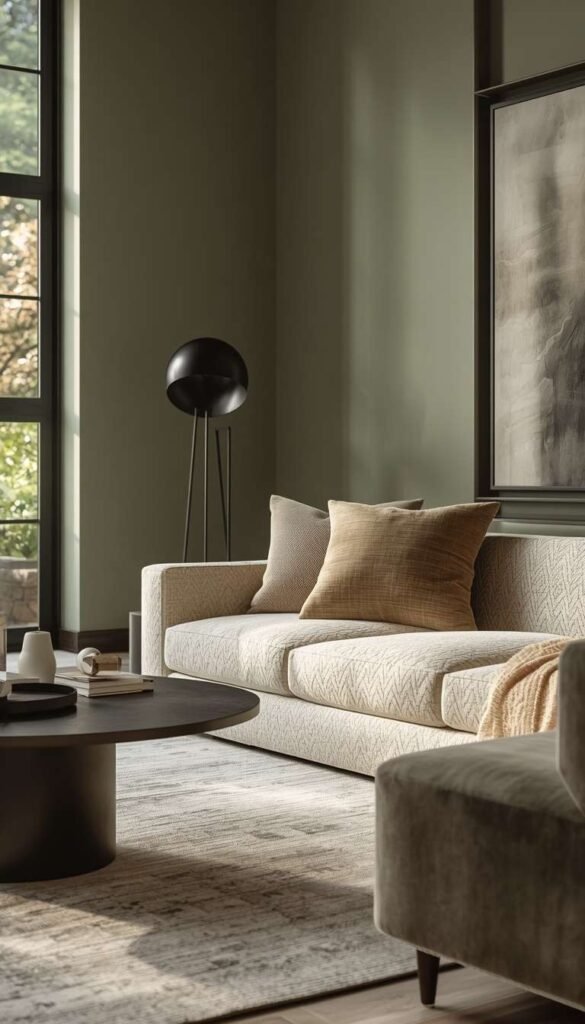
Matte black is one of the easiest ways to make a green and beige living room feel more contemporary and a little less soft. Think black metal lamp bases, window frames, or even a black coffee table against sage walls and a beige sofa. The contrast keeps the palette from feeling too monochromatic and gives the eye something crisp to land on. I’d avoid going overboard though. A couple of black accents read as intentional, while five or six can start to feel scattered. Sticking to one material, like matte black metal across a few pieces, keeps the whole look feeling curated rather than random.
12. A Statement Green Sofa as the Room’s Focal Point
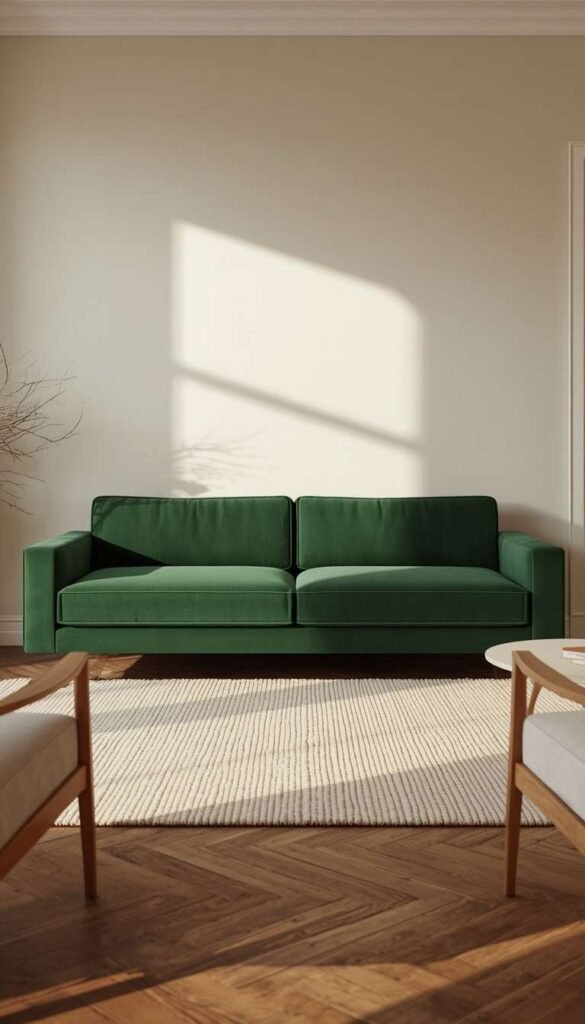
A full green sofa is a big move, and honestly, it’s not for everyone. I’ve done this in a handful of living rooms and the reaction is always strong, people either love walking into the room or they tell me it feels like too much. If you’re drawn to this look, a deep, slightly muted green like a forest or olive tends to age better than a bright emerald, which can start to feel dated faster.
- Keep walls, rugs, and curtains in beige or cream so the sofa has room to be the star.
- Before committing, live with a large fabric swatch draped over your current sofa for a week to see how you feel about it in different lighting.
A green sofa is one of those choices that’s hard to undo once it’s in the room, so I always tell clients to sit with the decision a little longer than feels necessary.
13. Minimalist Green and Beige with Negative Space
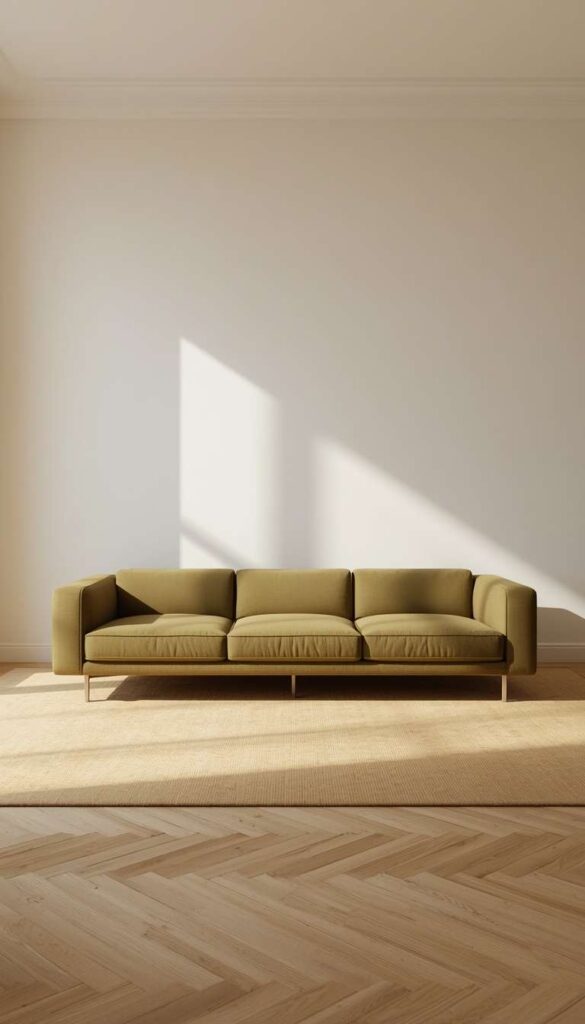
Minimalist living rooms often get a reputation for feeling cold, but green and beige solve that problem naturally. The trick here is restraint. A beige base, one statement green piece, like a sofa or a large piece of art, and then a lot of breathing room around it. I tend to pull back on rugs in this style too, sometimes letting natural flooring show on the edges of the room instead of covering every inch. Negative space isn’t empty space, it’s space that lets the green and beige actually register instead of competing with ten other colors and patterns. When a room has fewer elements, each one carries more visual weight, so choose your green piece carefully because it’s doing a lot of the work.
If you could only make one change this weekend, an accent wall or a new sofa, which one would you pick?
14. A Cozy Reading Nook in Olive and Warm Beige
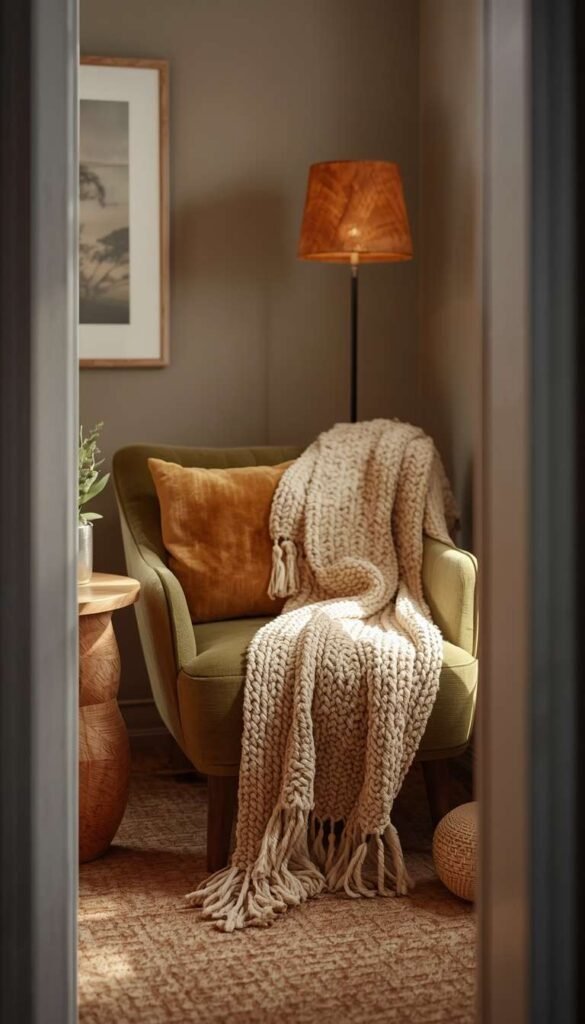
This last idea is one of my favorites for smaller apartments or awkward corners that never seem to find a purpose. An olive accent chair, a warm beige throw, and a small side table can turn a dead corner into the most used spot in the house.
- A floor lamp with a warm toned shade adds light without taking up floor space.
- Layering a sheepskin or chunky knit throw over the chair brings in texture without adding another color.
I’ve tucked this exact setup into a corner of a New York apartment living room that had an awkward angle no furniture seemed to fit, and it ended up being where the client read every morning with coffee. Sometimes the smallest, most personal corner of a room ends up meaning the most.
Your Quick Styling Map
By Budget
- Starter Friendly: Green bouclé accent chairs, a cozy reading nook in olive and beige, or a single sage accent wall
- Investment Worthy: An olive velvet sofa, a full statement green sofa, or beige grasscloth with green velvet accents
By Lifestyle
- Busy Households with Kids or Pets: Sage accent wall, modern farmhouse cabinetry, two tone paneling, layered greens with washable textiles
- Quiet or Adult Only Spaces: Olive velvet sofa, statement green sofa, beige grasscloth walls, color drenched small rooms
- Small Apartments: Color drenched sage and beige, cozy reading nook, green bouclé chairs, minimalist negative space layout
- Open Layouts: Two tone paneling, green built ins, layered greens for a nature inspired feel, matte black accents for contrast
Frequently Asked Questions
Does green and beige make a living room look dated?
No, not when you choose the right shades. Sage, olive, and warm beige have stayed popular for years because they lean natural rather than trendy.
What is the best beige for a green living room?
A warm, creamy beige with no grey undertone usually works best. It keeps the green from looking cold or washed out, especially in rooms with limited natural light.
Can I use green and beige in a small living room?
Yes, and it often makes the room feel calmer rather than smaller. Stick to lighter sage tones and keep contrast soft for the best result.
How do I add green without painting my walls?
Start with a sofa, accent chairs, or curtains in green instead. It’s the easiest way to test the color before committing to paint.
What colors pair well with green and beige in a living room?
Black, rust, and warm wood tones all work beautifully. They add depth without competing with the natural, earthy feel of green and beige.
Conclusion
Your living room is where your day starts and ends, and it deserves to feel like a place you actually want to be. You don’t need a full renovation to get there. Sometimes it’s one sage paint sample on the wall, or one olive throw pillow, that finally makes the room click. Pick one idea from this list and try it this weekend, even on a small scale, and see how the room feels afterward.
Which of these looks are you most drawn to, and does your current space already have a piece or two that could work with it?
